
Eduniversal Best Masters Ranking 2026 in Energy and Natural Resources
This comprehensive article explores the evolving landscape of Master's programs in Energy and Natural Resources in North America for 2026. It analyzes market size, demand, macroeconomic trends, curriculum developments, and employability factors influenced by technology and sustainability. The report also delves into quality assurance, global competitiveness, funding, and future outlooks through 2028.

Master’s in Energy and Natural Resources: Specialization, Application and Career Opportunities.
Energy and natural resources is one of the defining professional fields of the coming decades. The shift toward renewable infrastructure, the complexity of global resource governance, and the growing demand for energy policy expertise have made graduate programmes in this specialisation among the most relevant on the market today. Universities across Western Europe, North America, and Far East Asia have developed programmes that combine engineering fundamentals, environmental economics, and strategic management to prepare graduates for a sector in rapid transition.
The Eduniversal Best Masters Ranking brings together the top Masters, MS and MBA programmes in Energy and Natural Resources from across the world, evaluated annually on three independently verified criteria: reputation on the job market, first employment salary, and student satisfaction. The ranking covers programmes in 137 countries across 9 global regions, making it the only worldwide reference that compares programmes in this specialisation across all geographies in a single, consistent methodology.
Whether you are a recent graduate targeting a career in renewable energy development, an engineer looking to add strategic management skills, or a professional considering a pivot into energy policy or sustainability consulting, this ranking offers a structured, data-grounded starting point. Use it as a first filter, then apply your own priorities: location, programme format, language of instruction, tuition level, and the specific sector focus that matches your goals.
What Is the Eduniversal Ranking for Energy and Natural Resources?
The Eduniversal Best Masters Ranking evaluates and ranks the top Masters, MS and MBA programmes in Energy and Natural Resources across 137 countries, based on three criteria: reputation on the job market, first employment salary, and student satisfaction. Now in its 12th edition (2026), the ranking covers nearly 6,000 programmes across more than 50 specialisations and 9 global regions, with results updated annually to reflect current programme quality and graduate outcomes.
For the energy and natural resources specialisation, this means programmes are assessed not on institutional prestige alone, but on whether graduates find well-compensated employment, whether recruiters recognise the programme, and whether students who have completed it would recommend it. This three-criteria model makes the ranking directly relevant to prospective students comparing programmes across very different national contexts and academic traditions.
How Schools Are Evaluated
Every program in the Eduniversal Best Masters Ranking is assessed through a single, consistent methodology built on three criteria, each worth 5 points for a maximum final score of 15.
- Reputation on the job market (5 points) - Half of this score reflects the opinions of recruiters, and half reflects the level of the school's Palme d'Excellence.
- First employment salary (5 points) - Reported by each program and verified by Eduniversal, weighted by country and by the average annual salary of executives, with three scales applied according to the type of program (full-time MBA, Executive MBA, and all other programs).
- Student satisfaction (5 points) - Measured through an 11-question survey sent to graduating students, scored only when at least 10% of a program's graduating cohort responds.
The combined score places each program on a four-star scale: 1 star (1-5.99), 2 stars (6-8.99), 3 stars (9-11.99), and 4 stars (12-15). This is the Eduniversal Best Masters Ranking methodology applied identically to every program worldwide.
Why Use a Ranking to Choose an Energy and Natural Resources Master's?
The range of graduate programmes in this field has expanded significantly, spanning energy systems engineering, environmental economics, natural resource management, and energy policy. Each programme varies in depth, format, sector focus, and geographic orientation. Navigating this offer without a structured reference point is genuinely difficult.
A ranking like the Eduniversal Best Masters Ranking provides a practical first filter: it narrows the field to programmes that have earned concrete recognition from recruiters, demonstrated measurable salary outcomes, and gathered validated feedback from their own graduates. That said, a ranking is a starting point, not a final decision. The right programme for you depends on factors no ranking can resolve alone: your technical background, your target sector within energy, the region where you want to build your career, and whether you need a full-time or part-time format.
What to Expect from a Master in Energy and Natural Resources
A Master in Energy and Natural Resources is a postgraduate degree designed to prepare graduates for professional roles at the intersection of energy systems, environmental policy, resource economics, and strategic management. Most full-time programmes run for 12 to 24 months, with duration varying by country and academic tradition. Executive and hybrid formats are increasingly common, particularly in North America and Western Europe, catering to professionals who want to formalise or redirect existing technical or policy expertise.
The thematic scope is deliberately broad in most programmes, reflecting the cross-disciplinary nature of the energy transition itself. Students develop technical literacy in energy systems alongside analytical frameworks for evaluating policy, regulatory, and commercial dimensions of natural resource management. The most competitive programmes combine rigorous quantitative training with exposure to real-sector projects, international placements, and case-based learning drawn from actual energy and resource governance challenges.
Core Curriculum Areas
While curricula vary across institutions, the following areas appear consistently across top-ranked programmes in this specialisation:
- Energy systems and infrastructure: analysis of electricity grids, oil and gas systems, renewable generation technologies, and energy storage solutions
- Environmental economics and natural capital: valuation of natural resources, carbon pricing mechanisms, and the economic analysis of environmental regulation
- Energy policy and regulation: national and international regulatory frameworks, including the EU Green Deal, International Energy Agency scenarios, and national decarbonisation mandates
- Renewable energy technologies: solar, wind, hydrogen, marine energy, and the technical and commercial conditions for their deployment at scale
- Sustainability strategy and ESG management: corporate sustainability frameworks, ESG reporting standards, and the strategic integration of environmental considerations into business decisions
- Data analytics and digital tools for energy: machine learning applied to grid modelling, consumption forecasting, and resource optimisation across complex systems
Formats and Locations
Full-time MSc and MS programmes remain the dominant format for candidates entering the energy sector without prior industry experience. These are concentrated in Western Europe, particularly in France and the United Kingdom, where strong engineering schools and environmental policy research centres provide direct access to the academic community and industry partners.
Executive and part-time formats cater to engineers, consultants, and public sector professionals looking to develop energy management credentials alongside their existing careers. Hybrid and online delivery has expanded significantly, making internationally recognised programmes accessible to candidates who cannot relocate. Programmes in North America and Far East Asia increasingly offer dual-degree or joint-programme options with technical universities, reflecting the demand for professionals who can bridge engineering and business.
Career Paths After an Energy and Natural Resources Master's
A Master in Energy and Natural Resources prepares graduates for careers in renewable energy, resource policy, environmental management, and energy transition, among the fastest-growing professional fields globally. Graduates are employed by a wide range of organisations: utility companies, oil and gas majors undergoing energy transition, renewable energy developers, international institutions such as the International Energy Agency and IRENA, national energy regulators, consulting firms advising on decarbonisation strategy, and NGOs working on natural resource governance.
The breadth of potential employers reflects the fact that energy and resource management expertise is now relevant across virtually every sector, from infrastructure and finance to agriculture and urban planning. Graduates who combine technical fluency with policy literacy and strategic management skills are particularly sought after in roles that require translating complex regulatory or technological changes into operational decisions.
Key Roles in the Energy and Natural Resources Sector
The roles most frequently pursued by graduates of programmes in this specialisation include:
- Energy Analyst: evaluating market conditions, consumption trends, and the financial performance of energy assets for utilities, investment firms, or public agencies
- Sustainability Consultant: advising corporate clients on decarbonisation strategies, ESG compliance, and the integration of renewable energy sourcing into operations
- Energy Project Manager: overseeing the development, financing, and commissioning of renewable energy infrastructure or resource extraction projects
- Public Sector Energy Advisor: providing technical and policy support to ministries, regulatory bodies, or international organisations working on energy transition frameworks
- LNG and Gas Markets Specialist: managing commercial and logistical dimensions of natural gas supply chains, including contract negotiation and market analysis
- Natural Resource Governance Officer: working for multilateral institutions or NGOs on the sustainable management of water, mineral, forest, and biodiversity resources
- Energy Risk Analyst: assessing commodity price risk, regulatory risk, and physical climate risk for financial institutions and energy companies with significant asset exposure
For graduates drawn to the financial dimensions of the energy transition, programmes focused on green finance and sustainable investment offer a complementary pathway that many energy management graduates pursue at mid-career level.
Salary Outlook
Compensation in the energy and natural resources sector varies by function, geography, employer type, and the level of technical specialisation required. Entry-level positions in renewable energy development, energy consulting, and public sector advisory tend to offer competitive graduate packages, with significant differentiation as professionals move into project management, investment analysis, or senior policy roles.
Technical specialists with both energy systems expertise and strategic management credentials are increasingly rare and command strong salary premiums in markets where the energy transition is generating high volumes of complex infrastructure projects. Private sector roles in investment banking, infrastructure funds, and large consulting firms covering the energy sector typically offer the highest compensation at senior levels, while international organisations and NGOs offer strong non-salary benefits and geographic mobility. Salary levels vary considerably across the 9 regions covered by the ranking, reflecting differences in purchasing power, labour market conditions, and the maturity of the local energy sector.
How to Use This Ranking to Choose Your Programme
The Eduniversal Best Masters Ranking identifies the best programmes in Energy and Natural Resources globally, but choosing the right programme for your specific goals requires a second layer of analysis. Rank position is one data point, not a complete decision framework.
Sector focus within energy: programmes in this specialisation range from those with a strong engineering and technical core (grid management, renewable systems, LNG logistics) to those that emphasise policy analysis, environmental economics, or sustainability strategy. Identify which part of the energy value chain interests you most, and verify that the programme's curriculum and alumni trajectories align with that sector. You can also explore the adjacent sustainable development and environmental management ranking for programmes with a stronger environmental governance focus.
Programme format and duration: the energy sector recruits from both one-year intensive programmes and two-year degrees with integrated research or industry projects. Longer programmes often provide access to fieldwork, international exchanges, or in-depth quantitative training, which can be decisive for technical roles. Shorter programmes are better suited to professionals who need to re-enter the labour market quickly.
Language of instruction and geographic network: programmes taught in English across non-anglophone countries, such as those in France, Germany, or Scandinavia, provide strong sector expertise while building an international cohort and alumni network. Local-language programmes often offer deeper integration with the national energy industry and regulatory ecosystem.
Tuition and funding: costs vary significantly between public universities, grandes ecoles, and private institutions. Many energy-focused programmes have specific scholarships tied to the energy transition, funded by regional authorities, energy companies, or international foundations. Consider total cost against the average salary trajectory of alumni in the three to five years following graduation.
For students who also want to develop expertise in quantitative risk evaluation applied to energy assets and commodity markets, risk management specialisations in the energy sector offer a closely related curriculum that complements energy management training.
Specialisation vs Generalist Programmes
A generalist MSc in Energy Management gives you a broad foundation across technologies, sectors, and geographies, which is valuable if you are not yet certain which part of the energy field you want to work in. A more specialised programme, such as one focused on renewable energy systems, LNG trading, or natural resource governance, offers deeper immersion in a specific professional context and tends to be preferred by employers with very precise profiles to fill.
The distinction matters more at senior levels than at entry level. For a first graduate role, broad foundations are often an advantage. For candidates targeting competitive positions at international energy institutions, investment funds, or specialised consultancies, a demonstrable depth of technical or policy expertise typically carries more weight.
Regional Strengths
Energy and natural resources programmes are distributed across all 9 regions covered by the Eduniversal Best Masters Ranking, with distinct regional strengths reflecting the structure of local energy industries and academic traditions. Note that the ranking is updated annually; consult the current edition for exact positions.
- Western Europe: institutions such as Imperial College London, CentraleSupelec, Ecole Polytechnique (France), the University of Edinburgh, Grenoble Ecole de Management, WU Vienna University of Economics and Business, Aalto University (Finland), and the University of Bologna (Italy) represent a strong concentration of technically rigorous and internationally recognised programmes
- North America: McGill University and the University of British Columbia (Canada) lead a regional offer that also includes Stanford University, Cornell University, UC Berkeley, Johns Hopkins University, Purdue University, and Rice University, reflecting the breadth of the North American energy market
- Far East Asia: the National University of Singapore (NUS Business School), Fudan University School of Management (China), Kyoto University (Japan), City University of Hong Kong College of Business, and the Asian Institute of Technology (Thailand) represent a rapidly developing regional offer aligned with Asia's central role in global energy investment
FAQ: Frequently Asked Questions About Energy and Natural Resources Master's
What is the difference between a Master in Energy Management and a Master in Energy and Natural Resources?
A Master in Energy Management typically focuses on the operational, commercial, and strategic dimensions of energy systems: how energy is produced, traded, distributed, and consumed at scale. A Master in Energy and Natural Resources takes a broader scope, integrating the management of non-energy natural assets, including water, minerals, forests, and biodiversity, alongside energy systems. In practice, the two degrees overlap significantly in curriculum, and employers in the energy transition sector recruit from both. The distinction matters most when the programme includes a strong natural resource governance or environmental economics component that goes beyond energy alone.
Which countries offer the best Masters programmes in Energy and Natural Resources?
The Eduniversal Best Masters Ranking covers programmes across 137 countries, and top-ranked programmes in this specialisation are distributed across multiple regions. Western Europe has a high concentration of recognised programmes, particularly in France, the United Kingdom, Finland, and Austria, reflecting strong engineering schools and active energy policy research environments. North America, led by Canada and the United States, offers a range that spans research-intensive universities and professionally oriented programmes. Singapore and other Far East Asian centres are increasingly prominent. The best approach is to consult the current edition of the ranking directly to compare programmes across regions in the most recent evaluation cycle.
What careers can you pursue after a Master in Energy and Natural Resources?
Graduates work across the full energy and resource value chain. Common roles include Energy Analyst, Sustainability Consultant, Energy Project Manager, LNG and Gas Markets Specialist, Public Sector Energy Advisor, and Natural Resource Governance Officer. Employers range from utility companies, renewable energy developers, and oil and gas majors undergoing energy transition to international institutions such as the International Energy Agency, IRENA, and the World Bank, as well as management consulting firms and infrastructure investment funds. The profile of an energy management graduate, combining technical literacy with policy and strategic management skills, is in demand across a growing range of sectors beyond energy itself.
Is a Master in Energy and Natural Resources worth it in 2026?
For candidates targeting careers in the energy transition, renewable infrastructure, or natural resource governance, a specialised master's degree provides structured access to technical training, professional networks, and career pathways that are difficult to build without formal credentials in the field. The pace of investment in clean energy globally, driven by national decarbonisation commitments and international frameworks, has significantly increased demand for qualified professionals in this specialisation. According to the International Energy Agency, clean energy investment has been growing consistently, and the need for professionals who can manage complex energy projects, navigate regulatory environments, and develop sustainability strategies shows no sign of slowing. A programme ranked by Eduniversal ensures the degree is evaluated against consistent market criteria, not self-reported data alone.
How does the Eduniversal ranking evaluate Energy and Natural Resources programmes?
Programs are ranked using the Eduniversal Best Masters Ranking methodology, which scores each one on three criteria: reputation on the job market, first employment salary, and student satisfaction. Reputation combines the opinions of recruiters (50%) with the level of the school's Palme d'Excellence (50%). First employment salary is reported by each programme and verified by Eduniversal against national executive salary benchmarks. Student satisfaction is gathered through an 11-question survey, counted only when at least 10% of the graduating cohort responds. Each criterion is scored out of 5, for a maximum of 15 points, which translates to a star rating between 1 and 4 stars. The ranking is updated annually and applied identically to every programme worldwide, making it directly comparable across regions.
What is the typical duration and format of a Master in Energy?
Most full-time Masters and MS programmes in Energy and Natural Resources run for 12 to 24 months, depending on the country, academic institution, and whether the programme includes an integrated research component or extended industry project. One-year programmes are common in the United Kingdom, while two-year formats are standard in France, Germany, and many North American universities. Part-time and executive formats exist for working professionals and typically extend the duration to two to three years. Online and hybrid delivery has expanded across the specialisation, particularly in North America, making accredited programmes accessible to candidates who cannot or do not want to relocate. Duration and format should be matched to your current career situation and the depth of technical training you need to reach your target role.
Latest news

Discover which business schools let you study in 3 different countries within a single degree. Compare ESCP, Skema, EM Normandie, and EDHEC on campus access, costs, and degree recognition.
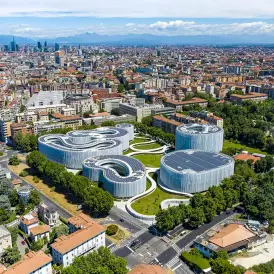
Explore Bocconi's visionary 2026–2030 Strategic Plan, aimed at bolstering executive leadership, management training, and global expansion.

HEC Paris unveils “Dare the Impossible,” a new brand signature highlighting innovation, leadership, and its vision for education in a rapidly changing world.
