
Eduniversal Best Masters 2026 in Energy and Natural Resources in France
Rankings updated annually. Next full edition: September 2026.
Explore the evolving landscape of Master's programs in Energy and Natural Resources in France for 2026. This in-depth article covers market trends, curriculum developments, job prospects, regulatory insights, and international competitiveness. Ideal for prospective students and education stakeholders focused on sustainability and innovation.
Discover the Eduniversal Best Masters for Energy and Natural Resources

France
France
France
Discover in detail the Master in Energy and Natural Resources in France
Summary: Explore the evolving landscape of Master's programs in Energy and Natural Resources in France for 2026. This in-depth article covers market trends, curriculum developments, job prospects, regulatory insights, and international competitiveness. Ideal for prospective students and education stakeholders focused on sustainability and innovation.
Energy Transition and Education: The French Response
France's higher education sector is experiencing a major shift, responding to global imperatives like climate urgency, digital transformation, and sustainable economics.
Among the most impacted areas are Master’s programs in Energy and Natural Resources, which have become pivotal to the country's strategy to develop green talent and foster innovation.
As of 2026, these advanced degrees are not only adapting to climate mandates but are actively influencing future strategies in governance, policy, and green technology.
This trend is closely related to France’s broader commitments, which are also seen in fields like Environmental Risk and Security, revealing a multidisciplinary approach to energy education.
Growth of the Market and Student Demographics
France aims to achieve a 33% share of renewable energy in gross final energy consumption by 2030, and this ambition is mirrored in its academic growth.
Since 2005, the country's renewable share rose from 9.3% to 22.3% in 2023, growing around 5% annually. With over 15,000 students reportedly enrolled in relevant Master's programs, an increase of 25% over five years reflects a booming sector.
Internationalization is notable: nearly 40% of students come from abroad, many from developing regions like Africa and Southeast Asia.
Female participation has also grown substantially, now representing 38% of enrollees. This demographic shift aligns with parallel growth in domains such as Human Resources Management.
Policy, Innovation, and Industry Demand
Macro drivers are spearheading educational investment in energy and sustainability. Policy measures like France’s climate energy laws and EU directives are fueling demand for qualified professionals in energy systems, natural capital, and climate risk analysis.
A reported 30% gap in skilled workers in related sectors is creating intense demand for energy-focused education.
Programs are rapidly evolving to include tools like machine learning, big data, and AI. These technical integrations create opportunities for cross-sectoral growth with related fields such as Data Analytics and Cybersecurity and Data Protection.
Curriculum Evolution: Specialization and Technology
In 2026, standout topics in these Master's programs include renewable energy infrastructure, energy policy, sustainable development, and environmental econometrics.
Specialized niches like carbon capture, hydrogen technologies, and climate justice are gaining academic traction. Universities are blending engineering, social sciences, and economics to meet interdisciplinary demand.
Programs emphasize experiential learning and often incorporate internships, research projects, and partnerships with industrial players.
This mirrors academic practices found in innovative areas such as Entrepreneurship and Innovation and Project Management.
Career Outlook and Graduate Skills
Graduates are entering a job market with high absorption rates. Over 85% of alumni typically land employment within six months of completing the program.
Popular roles span energy consulting, green project finance, sustainability policymaking, and smart grid engineering. Typical starting salaries range from €35,000 to €50,000, with significant growth in technical and managerial pathways.
Employers seek technical prowess in areas like energy modeling and impact assessment, paired with soft skills in communication, project leadership, and ethical governance—skills often cultivated in cross-listed programs such as Corporate Social Responsibility.
Quality Assurance and International Recognition
Programs are rigorously accredited by national agencies like the Conférence des Grandes Écoles and align with EU benchmarks via the Bologna Process. France's collaborative higher education frameworks allow for smooth credit transfer and global recognition.
Visa and residence policies remain favorable, encouraging international talent to settle and contribute to the green economy.
Such regulatory harmonization is also seen in sectors like International Management, demonstrating France's commitment to academic mobility and global best practices.
Affordability, Funding, and Access to Education
Costs for these Master’s programs vary from €2,000 to €15,000 annually, depending on the nature of the institution. Scholarships, public grants, and EU development funds facilitate access.
Industry-sponsored degrees and employer-funded upskilling options are increasingly common. Return on investment remains high, with rapid post-graduate employability and career growth.
Flexible financing and modular delivery formats are being replicated in adjacent programs like Executive MBAs, enhancing lifelong learning across disciplines.
Future Outlook: 2026 to 2028
The outlook for Master’s in Energy and Natural Resources in France is strongly positive. Expected growth is underpinned by green policy incentives, digital transformation, and rising employer demand. Opportunities for innovation include AI-powered forecasting, smart city applications, and circular economy system designs.
Upside trajectories may include further globalization, expanded hybrid delivery, and policy innovation.
With convergence happening across industries, these programs are well positioned to interface with domains like Green Finance and Oil and Gas Trade, offering greater adaptability for graduates entering diverse sectors.
Latest news

Discover which business schools let you study in 3 different countries within a single degree. Compare ESCP, Skema, EM Normandie, and EDHEC on campus access, costs, and degree recognition.
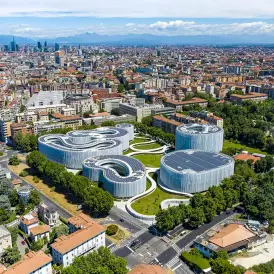
Explore Bocconi's visionary 2026–2030 Strategic Plan, aimed at bolstering executive leadership, management training, and global expansion.

HEC Paris unveils “Dare the Impossible,” a new brand signature highlighting innovation, leadership, and its vision for education in a rapidly changing world.
