Eduniversal Best Masters 2026 in International Management in Morocco
Rankings updated annually. Next full edition: September 2026.
Discover the 2026 landscape of Master's programs in International Management in Morocco. This article explores market dynamics, academic trends, employability, costs, regulations, and future opportunities. Learn how Morocco is positioning itself as a regional hub for management education.
Discover the Eduniversal Best Masters for International Management

Morocco
Morocco
Other programs ranked among master degrees Launching Awards
France
Other programs ranked among master degrees Trempline Awards
Lebanon
Discover in detail the Master in International Management in Morocco
Morocco is rapidly transforming into a prominent destination for graduate business education. A Master’s in International Management is increasingly viewed as a gateway to global career opportunities. This article examines the current state of this specialization in Morocco, including market growth, curriculum innovations, employability factors, regulatory progress, costs, and strategic challenges for the period 2026–2028.
Growth and Demographics of the Moroccan Master's Market
The graduate education sector in Morocco has seen a notable expansion in recent years. With over 56% of young adults aged 18–35 now holding post-secondary qualifications, the demand for Master's programs has surged.
Among these, International Management has emerged as one of the most popular specializations.
Currently, more than 300 Master's programs are offered across 83 accredited institutions. Although specific statistics for International Management are limited, trends clearly demonstrate a robust uptick in enrollment, outpacing other fields over the last three years.
Domestic students remain the majority. However, international enrollment is steadily rising, particularly from sub-Saharan Africa and Europe. This shift aligns with Morocco’s ambition to become an educational gateway bridging Africa, Europe, and the Middle East.
The typical Master's student is now younger, career-driven, and looking for global exposure and practical outcomes. These preferences reflect broader macroeconomic pressures such as youth unemployment, digital transformation, and Morocco’s evolving geopolitical relevance.
Students interested in related specializations might explore General Management programs or Corporate Finance degrees to gain a versatile academic background.
Evolving Curriculum and Learning Formats
In 2026, Master’s programs in International Management are witnessing significant curriculum enhancements to meet evolving industry demands. Popular subfields include:
- Data analytics tailored for global business
- International business law
- Entrepreneurship
- Sustainable management
Courses are increasingly interdisciplinary, merging business, technology, and social sciences. Experiential learning is prioritized, with internships, live projects, and corporate partnerships becoming core program elements.
Modules in artificial intelligence, data-driven decision-making, and digital transformation are now commonplace. There’s also rising demand for flexible formats like hybrid and online delivery. Modularity enables stackable degrees, supporting a trend toward lifelong learning.
Students seeking creative learning approaches might also explore Creativity, Innovation, and Design Thinking programs.
Skills for Global Employability
Graduates of Moroccan International Management Master’s programs are expected to master a blend of technical and soft skills. Key technical proficiencies include:
- Data analytics
- Digital marketing
- Project and operations management
Equally important are transversal skills such as communication, critical thinking, leadership, and adaptability. Most graduates begin careers as consultants, operations managers, risk managers, entrepreneurs, or supply chain specialists.
Key hiring industries include finance, logistics, consulting, and technology. Entry-level monthly salaries usually range from MAD 15,000 to MAD 25,000, and experienced professionals can earn up to MAD 50,000 monthly.
Internships – often hosted by multinational firms – are mandatory in nearly all programs and are instrumental in securing jobs. For career-oriented students, exploring Consulting and Strategy or Supply Chain Management could further expand opportunities.
Accreditation, Quality and Global Recognition
The regulatory framework for Master’s programs in Morocco is undergoing refinements to meet international standards. While Moroccan national accreditation remains essential, quality benchmarks vary between institutions.
Increasingly, educational institutions are pursuing prestigious global accreditations such as AACSB, AMBA, and EFMD. Cross-border recognition enhances the mobility of graduates and supports global employability.
Programs with foreign partnerships often offer credit transferibility and dual-degree options. Additionally, improvements in visa rules and post-study work permits are making Morocco a more appealing destination for international students.
Students pursuing a globally portable degree may also consider pathways such as International Management rankings by region.
Cost of Education and Financing Options
The average tuition for Master’s degrees in Morocco ranges from MAD 20,000 to MAD 60,000 annually. While public universities are more affordable, private institutions typically command higher fees.
Financial support is limited but growing. New government initiatives and employer-sponsored executive programs are expanding opportunities for funding. Scholarships remain scarce and highly competitive.
Return on investment (ROI) is a pressing concern. While graduates from international management programs often enjoy higher employment rates and salaries, upfront costs still discourage many potential applicants.
Those exploring niche disciplines can look into specialized sectors such as Health Management or Luxury Management, both of which offer distinctive career potentials.
Competitive Landscape and Internationalization
Domestic competition within Morocco's academic sector is fierce, with numerous schools and universities vying to attract top students. Additionally, inbound interest from international students is growing, particularly due to Morocco’s strategic regional positioning.
Although many Moroccan students still opt to study abroad, local schools are responding by forming dual-degree arrangements and foreign university partnerships, primarily with European and North American institutions.
Digital transformation is also reshaping program offerings. Educational technologies and online learning platforms are becoming integral to program delivery and student engagement.
Innovation-driven programs such as Innovation and Project Management are growing in popularity due to the demand for forward-thinking leadership.
Risks and Challenges Ahead
Affordability remains a barrier to equitable access to graduate education. Without expanded scholarship schemes, many students are unable to pursue advanced degrees.
Another challenge is the retention of faculty with global experience. Many institutions also struggle with limited research output and uneven technological infrastructure.
Moreover, aligning curricula with the needs of evolving labor markets remains inconsistent. Fast-growing sectors—green tech, AI, and digital innovation—often outpace academic updates, making curriculum updating a critical priority.
For those looking to specialize in emerging niches like Environmental Risk and Security or Green Finance, early curriculum alignment will be crucial.
Future Outlook: 2026 to 2028
From 2026 onward, continued growth in demand for International Management programs is expected. Under an optimistic scenario, Morocco could solidify its position as a regional leader in graduate management education with high employability rates and strong international academic ties.
Key policy developments to monitor include:
- Expansion of scholarship availability
- Stronger regulatory frameworks for accreditation and quality
- Incentives for partnering with international institutions
Projected innovation trends include AI-integrated learning, focus on sustainability, and expansion of digitally enhanced education delivery. Areas such as Digital Law and Big Data Management are also expected to grow rapidly in relevance.
Latest news

Discover which business schools let you study in 3 different countries within a single degree. Compare ESCP, Skema, EM Normandie, and EDHEC on campus access, costs, and degree recognition.
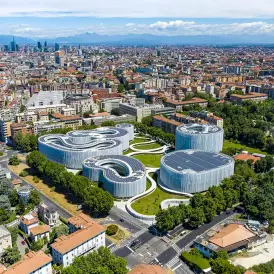
Explore Bocconi's visionary 2026–2030 Strategic Plan, aimed at bolstering executive leadership, management training, and global expansion.

HEC Paris unveils “Dare the Impossible,” a new brand signature highlighting innovation, leadership, and its vision for education in a rapidly changing world.
