
ESCP boosts sustainability strategy with expert council
As sustainability becomes a defining challenge for business education, ESCP Business School is taking a step further by opening its strategy to external expertise. With the launch of its Sustainability Advisory Council, the institution signals a clear ambition: to move from commitment to accountability.
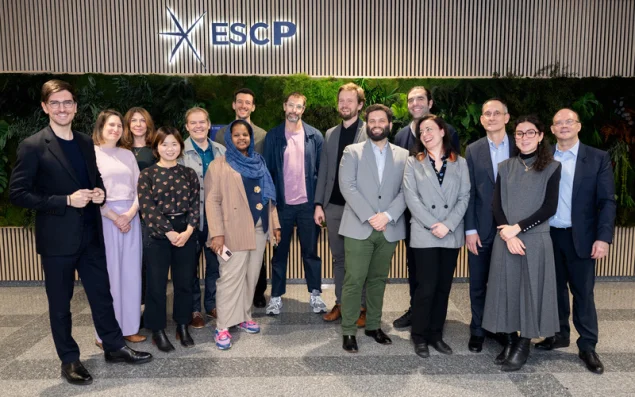
Bringing together 13 international experts from fields such as climate science, finance, public policy and activism, this initiative aims to challenge, refine and strengthen the School’s approach to sustainability.
A strategic shift towards accountability in sustainability
The creation of the Council reflects a broader transformation in higher education. Sustainability is no longer about declarations — it requires measurable impact and continuous scrutiny.
By inviting external experts to review its strategy, ESCP positions itself within a more transparent and collaborative model.
During its first in-person meeting in Paris in December 2025, Council members engaged directly with the School’s roadmap, questioning assumptions and contributing diverse perspectives.
This approach marks a shift: sustainability is no longer treated as an isolated topic, but as a strategic pillar subject to critical evaluation.
Rethinking the role of business schools in systemic change
At the heart of the discussions lies a key question: what responsibility do business schools have in the sustainability transition?
For many experts, the answer is clear. These institutions are not neutral — they shape the leaders who will influence economic systems and corporate decisions.
As a result, their role goes beyond teaching sustainability concepts. They must embed environmental and social considerations into the way future leaders think, decide and act.
This perspective redefines business education as a driver of systemic change rather than a simple provider of knowledge.
From awareness to action: training future decision-makers
One of the main conclusions from the Council is that sustainability education must evolve.
It is no longer enough for students to understand climate issues — they must also be able to act on them.
This means developing a sense of agency: the ability to identify where they can create impact, whether at the level of organisations, systems or individual decisions.
At ESCP, where all students already receive sustainability training, the challenge is now to deepen this approach. The goal is to prepare graduates not only to understand complexity, but to navigate it and make responsible decisions in real-world contexts.
Sustainability becomes a core leadership skill
Another key takeaway from the Council’s discussions is the evolving nature of leadership.
Sustainability is no longer a niche expertise reserved for specialists. It is becoming a core competency for all future managers.
Leaders are now expected not only to contribute to reducing environmental impact, but also to anticipate and adapt to the consequences of climate change.
In this context, business education must equip students with the ability to make informed decisions in uncertain and complex environments — balancing economic performance with long-term responsibility.
Towards a new model of business education
With its Sustainability Advisory Council, ESCP is moving towards a more open and interdisciplinary model.
The initiative reflects the idea that sustainability challenges cannot be addressed by a single discipline or institution alone. Collaboration, external input and continuous dialogue are essential.
The first meeting in Paris laid the groundwork for a shared roadmap, identifying priorities that will shape the School’s strategy in the coming years.
The ambition is clear: to make sustainability not an add-on, but a fundamental principle guiding how business is taught and practised.

Discover which business schools let you study in 3 different countries within a single degree. Compare ESCP, Skema, EM Normandie, and EDHEC on campus access, costs, and degree recognition.

Explore Bocconi's visionary 2026–2030 Strategic Plan, aimed at bolstering executive leadership, management training, and global expansion.

HEC Paris unveils “Dare the Impossible,” a new brand signature highlighting innovation, leadership, and its vision for education in a rapidly changing world.
