
Which Business Schools Let You Study in 3 Different Countries?

Summary: Several top business schools now offer degree programs spanning three different countries, moving beyond the traditional semester abroad. This article compares how ESCP, Skema, EM Normandie, and EDHEC structure their multi-country tracks, covering campus access, degree recognition, cost implications, and what prospective students should verify before applying.
A single semester abroad has become almost standard. What sets certain business schools apart today is the option to build an entire degree across three countries, without ever leaving the same program. Here are the schools that genuinely offer this format, and what distinguishes one from another.
ESCP: a Bachelor where each year takes place in a different country
ESCP is the most frequently cited reference for this format. The school operates six European campuses (Paris, London, Berlin, Madrid, Turin, Warsaw), and its Bachelor in Management allows students to complete each of the program's three years in a different country.
In practice, a student could start in Paris, continue in Berlin, and finish in Madrid, while staying enrolled in the same program throughout.
At the Master's level, the same logic extends through a multiple-degree system depending on the path chosen: a student can earn the ESCP master's degree together with a degree from a partner university, such as Spain's Carlos III University in Madrid or London's City University.
Skema: the same principle, extended beyond Europe
Since 2021, Skema has applied a similar model to its Bachelor program: each of the three years takes place in a different country.
The school operates seven campuses in France and abroad, including one in Raleigh, North Carolina, where programs are state-recognized and graduates can obtain a one-year student visa to work in the US.
This means a student can combine a France–Europe–United States trajectory, a level of integration no other French school currently matches.
EM Normandie: an expanding multi-country network
EM Normandie partners with more than 100 universities across 60 countries, and the school hosts students on its own campuses in Oxford and Dublin, with a Dubai location in preparation.
The French international campus network also includes schools such as EDHEC, ESSCA, KEDGE, and emlyon, each with different arrangements: fully integrated campuses, associate campuses, or specialized hubs.
EDHEC: a track built entirely around three countries
More recently launched, EDHEC's "Global Economic Transformation & Technology" track goes further than standard geographic mobility: it allows students to study in three different countries across several prestigious universities, built into the Grande École Program from the outset rather than offered as an optional exchange selected later.
Why this format changes the game for international careers ?
For a prospective student, this three-country format changes three concrete things compared to a standard Erasmus exchange:
Curricular continuity. The program stays consistent from one country to the next, unlike a classic exchange where the student temporarily joins a different foreign curriculum for a semester.
Controlled cost. Skema makes this point explicitly: studying at an integrated campus abroad is often cheaper than a classic academic exchange, since tuition fees remain those of the home school.
Local degree recognition. At campuses like Skema's in Raleigh, the degree is locally recognized, opening temporary work rights in the country — an advantage a standard exchange semester doesn't offer.
What to check before applying ?
Before choosing a school based on this criterion, three points deserve close verification, since arrangements vary significantly between institutions:
Is the international campus accessible to every cohort and every program (Bachelor, Grande École Program, MSc), or limited to specific tracks? A school can advertise several international locations without every student automatically having access to them.
Is the format mandatory or optional? At ESCP and Skema, the three-country mobility is built into the Bachelor curriculum; elsewhere, it remains one option among several possible tracks.
Is the final degree single or multiple? Some tracks award one final degree, while others grant several degrees simultaneously depending on the campuses completed, a distinction that changes the resume's value, particularly for a career planned outside France.
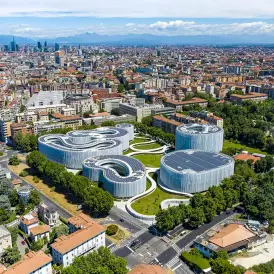
Explore Bocconi's visionary 2026–2030 Strategic Plan, aimed at bolstering executive leadership, management training, and global expansion.

HEC Paris unveils “Dare the Impossible,” a new brand signature highlighting innovation, leadership, and its vision for education in a rapidly changing world.
KEDGE Bachelor evolves in 2026 with flexible formats, new specializations and hybrid skills to meet student expectations and job market demands.
