
Eduniversal Best Masters 2026 in MBA full time in Taiwan Region, China
Rankings updated annually. Next full edition: March 2027.
Explore the full-time MBA landscape in Taiwan for 2026, including current market trends, evolving curricula, technical and leadership skills demand, cost insights, and international relevance. This article outlines the growth potential and strategic outlook of Taiwan’s MBA programs amid global economic and digital transformation. Learn how local institutions maintain competitiveness while responding to student needs and industry standards.
Discover the Eduniversal Best Masters for MBA full time

Taiwan Region, China
Taiwan Region, China
Taiwan Region, China
Other programs ranked among master degrees Trempline Awards
Lebanon
Discover in detail the Master in MBA full time in Taiwan Region, China
Summary: Explore Taiwan’s evolving full-time MBA landscape for 2026. This guide provides a deep dive into market size, curriculum directions, skills demanded by employers, admissions accessibility, international competitiveness, and forward-looking projections for business education in the region.
Market Context and Growth of Taiwan’s Full-Time MBA Programs
As of 2026, Taiwan's full-time MBA sector holds a prominent place within the nation’s flourishing graduate education system. The growing economy—projected to expand between 3.1% and 3.7%—continues to fuel demand for high-caliber business professionals. This trend is closely tied to Taiwan’s global reputation in innovation, particularly across manufacturing and semiconductor industries.
The past three to five years have seen moderate but consistent growth in the MBA student population. This trend is not only driven by local demand but is increasingly influenced by strong international interest thanks to broader English-language offerings.
Demographically, full-time MBA programs are seeing a younger intake with increased gender diversity. These students prize interdisciplinary, ethical, and experience-driven business education that aligns academic learning with evolving real-world challenges.
Factors influencing this growth include the shift to a service-centered economy, digital innovation, sustainability imperatives, and the need for strong strategic and geopolitical business understanding.
For a regional comparison of top-ranking MBA programs, visit our MBA full-time rankings.
Curriculum Trends and Future-Skills Focus in 2026
In 2026, MBA programs in Taiwan are innovating to deliver education aligned with both immediate industry needs and long-term professional competencies. Popular specializations now include digital transformation, artificial intelligence, data analytics, global business strategy, and entrepreneurship.
Capstone projects, internships, and cross-sector collaborations provide real-world engagement and enhance employability. There is also a shift toward micro-credentialing, offering modular and stackable coursework adaptable to lifelong learning.
Although virtual and hybrid learning modes gained popularity during the pandemic, most students in 2026 value immersive on-campus study for enhanced networking and peer collaboration.
Elective flexibility allows students to tailor their academic path, whether focusing on entrepreneurship or newer areas such as AI-driven analytics.
Skills Development and Career Prospects for MBA Graduates
Employers across Asia prioritize MBA graduates who possess a balance of technical and soft skills. On the technical side, finance, logistics, digital marketing, and cybersecurity are in high demand. Transversal abilities—such as leadership, negotiation, and a global mindset—are equally essential.
With robust industry tie-ups, most MBA programs offer internships that lead directly into employment. Popular sectors hiring MBA grads include finance, consulting, supply chains, tech startups, and manufacturing sectors.
Full-time MBA graduates from Taiwan generally command competitive starting salaries, with high job placement ratios observed within the first six months of graduation.
Want to specialize in risk and security? Related programs in Cybersecurity and Environmental Risk offer strong synergy with MBA curriculums.
Quality Assurance, Regulation, and Global Recognition
Taiwan's higher education system, including MBA programs, is regulated by quality agencies ensuring academic and industry relevance. Many business schools are accredited to international standards, promoting student mobility through exchange programs and credit recognition schemes.
Visa and employment policies for international graduates are relatively flexible, although political conditions with mainland China may present challenges for recruitment in specific student segments. Nevertheless, international partnerships and academic mobility serve to enhance Taiwan’s academic openness and talent attraction.
Dual degrees and international pathways are becoming increasingly common, helping graduates stay globally competitive. Programs linked with global sectors like environmental sustainability offer new opportunities and recognition.
Accessibility, Tuition, and Financial Aid
Compared to Western countries, Taiwan offers a more affordable full-time MBA option, especially through its public universities. Tuition fees vary depending on institutional ranking and program format.
Numerous scholarship programs are available for both domestic and foreign students. Additionally, many employers now co-fund MBA studies for their employees as part of long-term professional development plans.
Most graduates report favorable return on investment (ROI), deriving value from increased employability and substantial salary increments. However, affordability remains a limiting factor for some minority student groups.
Students interested in financial management pathways may also explore rankings in Financial Markets for cost-comparative options globally.
Internationalization and Competitive Differentiation
Increasingly, Taiwan competes on a regional and global scale for both inbound and outbound MBA talent. Thanks to its English-taught programs and recognized credentials, the island is becoming a favored destination for Southeast Asian students in particular.
While many Taiwanese students still seek prestigious degrees abroad, this trend is stabilizing as MBA programs at home improve in quality and prestige. Cross-border academic partnerships, hybrid models, and EdTech integrations support innovation in curriculum delivery.
Furthermore, Taiwan-based MBAs often participate in dual-degree collaborations and global study modules that build international experience and networks—key for careers in areas like International Management.
Institutional Challenges and Risk Factors
Despite positive growth, Taiwan's full-time MBA system faces several challenges. Primary among them are affordability barriers for underrepresented students, extensive competition for top-tier faculty, and technological infrastructure gaps hampering rapid innovation adoption.
Also, some programs lag in research outputs and deep integration of emerging industries into curricula. Strategic alignment with real-time labor market needs requires continuous feedback from employers and academic flexibility to adjust promptly.
Furthermore, sustainability-focused domains like sustainable development are still under-integrated in some programs and must be scaled further to meet global business expectations.
Future Outlook: 2026–2028
The trajectory for Taiwan’s full-time MBA programs points to steady growth. Favorable macroeconomic factors create a reliable foundation, and digital transformation will continue to push curriculum evolution and digital integration.
In a baseline scenario, enrollment and modernization will maintain steady momentum. Optimistically, stronger government policy support, further dual-degree integrations, and increasing use of AI and data to personalize learning could significantly raise the sector's global competitiveness.
Programs are likely to adopt technologies such as augmented reality, smart simulations, and AI-assisted learning strategies. These innovations aim to deepen graduate preparedness and align with rising demand for tech-savvy global managers.
The convergence of strategic business thinking and technological leadership also opens doors to career pathways in areas such as innovation and project management.
Latest news

Discover which business schools let you study in 3 different countries within a single degree. Compare ESCP, Skema, EM Normandie, and EDHEC on campus access, costs, and degree recognition.
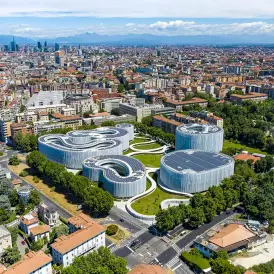
Explore Bocconi's visionary 2026–2030 Strategic Plan, aimed at bolstering executive leadership, management training, and global expansion.

HEC Paris unveils “Dare the Impossible,” a new brand signature highlighting innovation, leadership, and its vision for education in a rapidly changing world.
