
Eduniversal Best Masters 2026 in Energy and Natural Resources in Spain
Rankings updated annually. Next full edition: September 2026.
Explore the evolving landscape of Master's programs in Energy and Natural Resources in Spain by 2026. Discover how academic institutions are adapting to meet sustainability goals through cutting-edge curricula and internationalization. Learn about market trends, skills in demand, and future opportunities in this rapidly growing field.
Discover the Eduniversal Best Masters for Energy and Natural Resources

Spain
Spain
Spain
Discover in detail the Master in Energy and Natural Resources in Spain
Overview of Master’s in Energy and Natural Resources in Spain (2026)
Spain is at the helm of Europe's energy transition, and academia is rising to the challenge. As the energy sector evolves due to decarbonization policies, digital innovation, and global sustainability goals, Master’s degrees in Energy and Natural Resources are experiencing surging demand.
In 2026, academic institutions in Spain are offering forward-thinking, interdisciplinary programs aimed at shaping the next wave of experts in renewable energy, circular economy, and smart energy systems.
To see how these Master’s degrees compare globally, refer to our ranking of Master’s in Energy and Natural Resources in Spain.
Market Demand and Program Size in 2026
The postgraduate market in Energy and Natural Resources has expanded notably. Since 2020, Master’s programs related broadly to sustainability and engineering have grown by 15–20%, with over 3,000 students currently enrolled in Spain. Interestingly, 30–40% of these are international students, indicating Spain’s increasing global academic appeal for affordable, high-quality studies in green innovation fields.
This trend mirrors similar interest in related disciplines such as Sustainable Development and Environmental Management, drawing students from Latin America, Asia, and Africa.
The typical student profile is shifting too: younger, more diverse, and increasingly gender-balanced, with an average age of 24–28 and many mid-career professionals opting for upskilling.
Key Growth Drivers: Policy and Tech Innovation
Spain’s energy transformation is driven by robust policy frameworks like the PNIEC and the EU Green Deal.
These policies target full decarbonization by 2050, propelling investments into electricity grid upgrades, energy efficiency, and renewables. This environment cultivates innovation and educates a workforce tailored to market needs.
Emerging technologies—AI, smart grids, blockchain—are shaping new job roles.
There’s also a pressing need for skills related to project management and digital transformation, aligning well with programs also found in Innovation and Project Management.
Curriculum Trends and Delivery Modes
In 2026, curricula emphasize a multidisciplinary approach, combining engineering, policy, data science, and environmental studies.
Courses now frequently offer content on hydrogen technology, circular economy, energy storage, and AI-driven analytics. Electives and specializations increasingly target in-demand niches such as carbon capture and smart infrastructure.
Hands-on experience is also central—students participate in capstones, real-world case studies, and industry internships. Programs mirror adaptations seen in consulting and strategy-related fields, where applied knowledge and practical exposure determine employability.
Flexibility is growing. Alongside traditional on-campus modes, hybrid and online options allow professionals to learn while they work.
Stackable micro-credentials and modular course structures support a lifelong learning approach that suits both millennials and working professionals.
Top Skills and Career Outcomes
Graduates are equipped with a mix of technical and soft skills. Crucial competencies include renewable energy systems design, energy modeling, digital analytics, and predictive modeling.
Additionally, employers value transversal abilities like strategic communication, collaboration, and adaptability.
Graduates typically secure roles in consultancies, utilities, international NGOs, or sector-specific public agencies. Typical entry-level salaries ranged from €25,000 to €35,000 in 2026, with mid-level professionals exceeding €60,000 annually.
Roles such as sustainability consultant and energy project manager are increasingly common, paralleling demand seen in business strategy disciplines.
Quality Assurance and Academic Recognition
Spain’s education quality is evaluated through agencies like ANECA, which monitor standards and ensure programs are accredited.
Many Master’s programs align with EU-wide Bologna Process protocols, facilitating international recognition and mobility for graduates across Europe and beyond.
Spain also hosts favorable post-study visa policies, enabling international students to remain and find employment post-graduation. This policy boosts not just graduate retention but also strengthens Spain’s labor pool in the energy sector.
Affordability and Access to Funding
Spanish universities offer competitive pricing for Master’s students. Public programs charge EU students between €1,500–€4,000 annually, while private institutes demand €8,000–€15,000.
Although non-EU students often pay higher fees, the value proposition remains attractive relative to other European countries.
Scholarships, research grants, and employer-sponsored studies support access. The increasing alignment of sustainability with corporate goals has also led to more private funding initiatives, similar to trends observed in green finance education.
International Competition and Strategic Partnerships
While Spain leads in blending affordability, quality, and climate appeal, it faces competition from countries like Germany and the Netherlands.
To maintain its edge, Spanish universities are investing in global partnerships, particularly with institutions in Latin America and Africa, further enhancing dual-degree and exchange program options.
In tandem, EdTech-based delivery and partnerships aim to attract global practitioners through online and blended formats. Similar strategies are being adopted in domains like E-Business and Digital Marketing and others where accessibility and upskilling for professionals are vital.
Risks and Strategic Considerations
Despite strong growth, challenges remain. Tuition affordability continues to be a barrier for some international students. Talent retention is strained by faculty shortages, particularly in AI, data analytics, and blockchain domains. Moreover, greater infrastructure investment is necessary to keep research facilities on par with global standards.
Strategic investments in faculty, labs, and access can help Spanish institutions manage these risks while continuing to lead energy learning innovation—much like their peers in other cutting-edge fields such as Digital and Technology Law.
Future Outlook: 2026–2028
The forecast for Energy and Natural Resources Master's programs in Spain is optimistic. With regulatory push, technological innovation, and internationalization accelerating, programs will likely evolve rapidly.
Key areas to watch include expanded use of AI in energy analytics, integration of hydrogen technologies, and broader collaborations with global peers.
This baseline trajectory, paired with new EU carbon laws and funding schemes, will further solidify Spain’s standing in the global sustainability education landscape—on par with sectors related to environmental risk and security.
Latest news

Discover which business schools let you study in 3 different countries within a single degree. Compare ESCP, Skema, EM Normandie, and EDHEC on campus access, costs, and degree recognition.
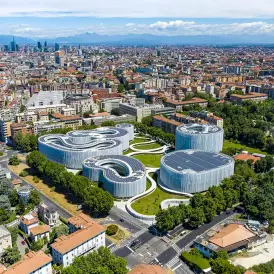
Explore Bocconi's visionary 2026–2030 Strategic Plan, aimed at bolstering executive leadership, management training, and global expansion.

HEC Paris unveils “Dare the Impossible,” a new brand signature highlighting innovation, leadership, and its vision for education in a rapidly changing world.
