
Eduniversal Best Masters 2026 in MBA full time in Portugal
Rankings updated annually. Next full edition: September 2026.
Discover how Portugal’s full-time MBA landscape is evolving in 2026, fueled by internationalization, digital transformation, and growing demand for interdisciplinary skills. This guide explores market size, curriculum changes, employability trends, and strategic innovations shaping the future of MBA education in Portugal.
Discover the Eduniversal Best Masters for MBA full time

Portugal
Other programs ranked among master degrees Trempline Awards
Lebanon
Discover in detail the Master in MBA full time in Portugal
Discover how Portugal’s full-time MBA landscape is evolving in 2026, fueled by internationalization, digital transformation, and growing demand for interdisciplinary skills. This guide explores market size, curriculum changes, employability trends, and strategic innovations shaping the future of MBA education in Portugal.
Portugal’s MBA Market Landscape in 2026
Portugal is solidifying its reputation as an emerging destination for high-quality business education in Europe, particularly in full-time MBA programs.
Although specific figures for MBA-only enrollments remain undisclosed, overall Master’s programs in the country have seen 10–15% growth over the last few years. This rise is indebted to international student mobility and a burgeoning local appetite for business management training.
Several top programs feature cohort diversity, with international students making up between 35% and 70% of enrollments, representing over 20 nationalities on average. These developments are aligned with macroeconomic confidence in Portugal, strengthened visa policies, and the country’s alignment with European Higher Education Area guidelines.
Notably, a diverse range of student backgrounds is enriching Portuguese MBA programs. Enrollees now come from [STEM fields](https://www.best-masters.com/master-data-analytics-ranking.html) as well as business, law, and other disciplines, signaling rising interdisciplinary interest.
Portugal’s economic revitalization—led by sectors like tech and green finance—also underpins MBA demand. Strong focus areas include digitalization and sustainability leadership, making the country a driver of innovation-minded business training.
Curriculum Evolution & In-Demand Trends
The curriculum for full-time MBAs in Portugal has evolved rapidly to meet market needs in 2026. Increasingly emphasized domains include artificial intelligence, data analytics, digital strategy, and ESG-focused decision-making. Sustainability is no longer a fringe topic—it’s core to leadership training.
Thanks to world-class business schools, portfolios now feature interdisciplinary courses combining business with data, ethics, and innovation. This pedagogical shift promotes project-based learning and includes consulting labs, capstone projects, industry-based internships, and global immersions. Such shifts align with the best practices in Consulting and Strategy.
Moreover, microcredentials—short, stackable certificates—are reshaping professional development with customizable upskilling opportunities. Integrated AI platforms further personalize learning paths, enabling greater alignment with evolving business and technological landscapes.
While full-time MBAs remain primarily campus-based, hybrid learning formats are now common, serving diverse international learners and providing learning flexibility.
Career Outlook and Skill-Building
Portuguese MBAs boast high employability—up to 97% of graduates from leading institutions find employment within 6 months. Growing sectors include finance, consulting, ESG investment roles, digital transformation leadership, and entrepreneurship. Those aiming for venture capital and business design roles benefit from tech-integrated MBA tracks.
Employers consistently value a mix of hard and soft competencies, such as data fluency, strategic agility, AI understanding, creative leadership, and emotional intelligence. Core transversal skills like teamwork, decision-making under uncertainty, and sustainability orientation are increasingly critical, echoing best practices seen in global full-time MBA programs.
Salary uplift is another significant draw: full-time MBAs in Portugal typically experience post-graduation salary increases between 60% and 90% within three years. Executive MBA graduates show even higher jumps, often nearing USD 200,000 annually.
Internships remain more prevalent in full-time paths compared to executive formats, embedding hands-on training in corporate or startup ecosystems to build cultural and sectoral readiness.
Quality Assurance, Accreditations & Global Recognition
Portuguese MBAs meet the European quality assurance benchmark through EHEA compliance. Institutional accreditation from AACSB and EQUIS continues to expand prestige and strengthens degree portability across Europe and globally.
Institutions also sustain strong international academic ties, often partnering for dual degrees or global immersion with elite universities such as MIT, ensuring employability on a transnational scale. These collaborations benefit students strategically pursuing international management education.
Portugal’s favorable visa regime for international learners adds to the country’s appeal as a business education hub. Graduates enjoy working permissions that support easier onboarding into the European labor market.
Affordability, Access & ROI Factors
Tuition fees for full-time MBA programs in Portugal typically range between €20,000 and €40,000. While Executive MBA fees can be higher, various scholarships—merit-based, impact-driven, and entrepreneurship-oriented—ease financial barriers.
Employer sponsorships are also common for executive tracks, particularly when MBAs align closely with organizational goals for innovation, digital transformation, and talent retention. Favorable mid-term ROI metrics substantiate these investments, particularly for high-ranking schools offering solid career placement services.
Accessibility still remains a hurdle for some, especially where public MBA funding is limited. Closing this access gap is essential for nurturing future leadership across social and economic strata. Scholarships targeting entrepreneurial leaders and impact-driven professionals serve a vital role in democratizing business education.
Global Competitiveness & Cross-Border Collaboration
Portuguese MBAs now contend globally, especially with peer programs in Spain and France. Yet, they’re capitalizing on their strengths: diverse international cohorts, world-class faculty, and rich academic-industry partnerships.
Outbound mobility remains notable, with many Portuguese students seeking MBAs in Anglophone nations. However, an increase in collaborative programs (joint or dual degrees) encourages returnees by blending Portuguese strengths with global exposure.
Institutions collaborate with foreign universities to integrate cross-border experiences—offering modules or semesters abroad. These formats benefit MBA specializations in innovation, sustainability, and digital strategy, equipping graduates with globally relevant leadership capabilities.
Moreover, growing adoption of AI-powered learning platforms, microlearning, and digital labs enhances learner engagement and differentiates Portugal in the competitive EdTech education space.
Key Risks and Sector Challenges
Despite its positive trajectory, the Portuguese MBA market faces critical challenges. Affordability remains a constraint for low- and middle-income groups, and public financial support is still underwhelming. Private sector collaborations and grant-based models are increasingly essential.
Talent attraction is another friction point, particularly the need for globally experienced, research-active faculty. Without adequate investments in faculty and infrastructure, quality may stall and innovation could flatten.
Some institutions still lag in fully integrating AI, adaptive tech, or smart learning. To satisfy digital-native cohorts, continuous upgradation of tech-stack and curriculum adaptability is imperative—especially around domains like digital law and cyber leadership.
Portugal must also ensure curriculums remain aligned with evolving corporate realities. Skills around ESG, AI ethics, and climate-positive business practices are moving targets. Faster feedback loops between schools and industry are needed to maintain educational relevance.
Strategic Outlook Through 2028
Portugal’s MBA space is forecasted to enjoy sustained growth, with enrollment numbers and internationalization continuing on their upward path. Experiential formats and microcredentials will become mainstays, underpinned by AI-based personalized learning systems.
Portugal is also well-positioned to claim a niche as a Southern European innovation and sustainability education hub. More institutions are expected to scale modular lifelong learning, sustainability R&D labs, and international linkages with top-tier programs in entrepreneurship, innovation and design.
Critical indicators to watch include EU-wide policy changes around mobility, funding incentives for innovation-oriented programs, and international alignment on sustainability teaching frameworks.
Strategic emphasis on inclusivity, digital scalability, and real-industry connections will be vital. By closing affordability gaps, embracing agile curriculum design, and expanding its global footprint, Portugal stands to redefine how full-time MBAs are delivered in Europe.
Latest news

Discover which business schools let you study in 3 different countries within a single degree. Compare ESCP, Skema, EM Normandie, and EDHEC on campus access, costs, and degree recognition.
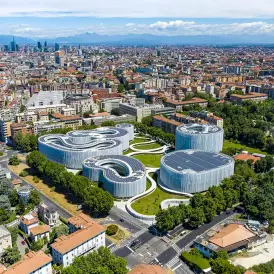
Explore Bocconi's visionary 2026–2030 Strategic Plan, aimed at bolstering executive leadership, management training, and global expansion.

HEC Paris unveils “Dare the Impossible,” a new brand signature highlighting innovation, leadership, and its vision for education in a rapidly changing world.
