
Eduniversal Best Masters 2026 in Information Systems Management in Finland
Rankings updated annually. Next full edition: September 2026.
Explore a complete overview of pursuing a Master’s in Information Systems Management in Finland for 2026 and beyond. This article covers market size, curriculum trends, skill demand, tuition, international competitiveness, and future outlook. Understand how this program aligns with Finland’s digital growth and internationalization strategies.
Discover the Eduniversal Best Masters for Information Systems Management

Finland
Finland
Discover in detail the Master in Information Systems Management in Finland
Summary:
Explore a complete overview of pursuing a Master’s in Information Systems Management in Finland for 2026 and beyond. This article covers market size, curriculum trends, skill demand, tuition, international competitiveness, and future outlook. Understand how this program aligns with Finland’s digital growth and internationalization strategies.
1. Context and Market Size: Finland’s ISM Master’s Landscape
Finland’s Master’s education system is undergoing a digital transformation, fueling the demand for studies in Information Systems Management (ISM).
ISM specializations, although not always separately reported, align with strong application trends in IT and management programs. For example, Åbo Akademi’s IT program saw more than 1,200 applicants in 2026 alone, with limited seats available, reflecting the competitive interest in this sector.
The macroeconomic environment also supports demand with Finland advancing in national digital transformation and AI strategies.
This has triggered steady growth in the ISM and tech-related Master’s programs over recent years. Notably, internationalization plays an increasingly critical role. Non-EU/EEA students often pay full tuition while EU/EEA applicants benefit from tuition-free public education, reinforcing Finland’s reputation for inclusive higher education.
Gender balance is also improving, driven by national STEM strategies encouraging greater female participation in fields like ISM and tech.
As Finland continues to invest in sustainability and digital technology, Master’s programs, including Information Systems Management, are becoming more relevant and globally recognized.
Factors such as skills shortages in AI and cybersecurity, regulated digital policies, and the integration of sustainable concepts also serve as key enrollment catalysts—creating a powerful case for pursuing advanced technology studies in Finland.
Related programs are also benefiting from these trends, such as Business Intelligence and Strategy.
2. Curriculum Innovations and Future-Ready Learning
The ISM programs in Finland are continually adapting to modern digital requirements. Curricula now emphasize subfields like AI, data analytics, cloud technologies, and cybersecurity. These focus areas align with national AI education policies and industry needs, ensuring students are prepared for highly demanded roles after graduation. Ethical AI development has also emerged as a central curriculum theme, reflecting current EU tech governance frameworks.
In addition, green-digital transitions and sustainable IT practices are slowly becoming mainstream, often integrated with supply chain analytics and digital growth forecasting.
Many programs embrace interdisciplinary formats—merging technical IT training with essential managerial and leadership skills. Internships, capstone projects, and company collaborations remain central, ensuring students apply classroom learning to real-world challenges.
Another rising trend is the adoption of modular learning paths and stackable micro-credentials in data science and cybersecurity, echoing Finland’s commitment to lifelong learning.
Finnish universities also work to embrace hybrid and online learning modes, though the traditional on-campus format remains dominant. These shifts align with modern delivery preferences similar to those seen in domains like Cybersecurity and Data Protection.
3. In-Demand Skills and High Employability
Graduates of ISM Master’s programs in Finland enter the workforce with in-demand technical skills like programming, AI/ML, data analytics, and cloud platform management. They also develop soft leadership capabilities, allowing them to fill strategic managerial roles where business and IT intersect. Ethical decision-making and communication proficiencies are consistently emphasized, especially vital in AI-governed industries.
Career outcomes for graduates include titles such as business analyst, digital transformation consultant, data strategist, and IT operations manager. These experts are often recruited by tech firms, consultancies, manufacturing giants, and financial institutions.
Starting salaries are estimated between €40,000 and €60,000 annually with noticeable wage growth linked to specialization and leadership experience.
Most programs embed internships in the academic structure, making transitions into employment smoother. These practical placements give students real-world tech exposure even before graduation. The emphasis on employability aligns well with programs in areas such as Data Analytics.
4. Quality Assurance, Recognition, and Accreditation
Master's programs in Finland undergo rigorous quality control under national supervisory authorities. Finnish universities leverage the European Credit Transfer and Accumulation System (ECTS), ensuring student mobility across the EU and global recognition of academic credentials.
Graduates hold degrees that satisfy employers and immigration authorities in various EU member states, providing additional advantages like easier transitions to employment and work residency. Finland’s alignment with EU digital policies enhances recognition of study paths, providing credibility for those seeking global tech careers.
International comparability of Finnish ISM degrees makes them competitive among other globally acknowledged domains, similar to Digital Law and New Technologies.
5. Tuition Fees, Scholarships, and Return on Investment
In public universities across Finland, tuition remains free for EU/EEA citizens. For international (non-EU/EEA) applicants, tuition costs for ISM programs generally start around €15,000 per academic year. While considered a significant investment, this is offset by Finland’s exceptional education infrastructure, high living standards, and early access to professional networks within the tech economy.
Numerous funding options exist including government scholarships, merit-based grants from universities, and employer co-sponsorships. Competition for financial aid is usually high, so early action is advisable. Finland's clear value-to-cost proposition offers a compelling return on investment, particularly when compared to business-focused programs like General Management.
6. Internationalization and Competitive Landscape
Finland’s ISM Master’s offerings continue to gain global attention with rising demand from international students, especially for English-taught programs. Admission competition is growing due to these diverse applicant pools. Domestic candidates are also increasingly seeking dual degrees or short-term exchange programs across Europe, driven by well-supported mobility schemes.
The Finnish higher education ecosystem encourages strategic partnerships—collaborations with global universities lead to joint degrees and research projects. These links enrich the student experience and add value to Finland’s academic standing in global IT education.
Digital platforms supporting hybrid learning allow flexibility for enrolled students—a feature shared by programs such as E-Business and Digital Marketing.
7. Operational Challenges and Strategic Risks
Despite many strengths, challenges persist. High tuition fees and elevated cost of living in cities like Helsinki may deter budget-conscious applicants from non-EU regions. At the same time, universities face difficulty in recruiting expert faculty to keep up with rapidly evolving technologies like AI and cybersecurity.
There's also continued demand for advanced research capabilities and modern digital infrastructure to keep programs agile and adaptive. Additionally, aligning course content with rapid labor market developments and emergent regulations around technologies such as ethical AI remains a key hurdle.
Programs that intersect technology with environmental integrity face similar constraints—such as those addressing Sustainable Development.
8. Forecast: Strategic Path for 2026–2028
Looking ahead, Finland’s Master’s programs in Information Systems Management are set to expand in both size and specialization. Baseline scenarios project a continued rise in enrollments, driven by AI innovations and shifting tech infrastructures. More optimistic projections envision diversified specializations in green IT, ethical AI, cloud governance, and modular lifelong education models.
Impending policy updates on AI education and digital skill mandates will influence curriculum design significantly. In this context, Finland will likely consolidate its role as a leader in tech-centric graduate education, particularly for students seeking globally recognized and interdisciplinary programs in emerging sectors.
With its forward-looking academic design, a Master’s in ISM in Finland is poised to deliver global value by combining trusted pedagogy, technology application, sustainability frameworks, and innovation-driven leadership practices.
Latest news

Discover which business schools let you study in 3 different countries within a single degree. Compare ESCP, Skema, EM Normandie, and EDHEC on campus access, costs, and degree recognition.
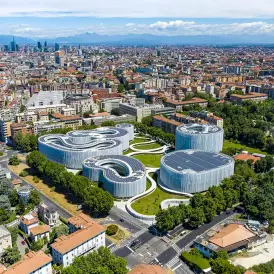
Explore Bocconi's visionary 2026–2030 Strategic Plan, aimed at bolstering executive leadership, management training, and global expansion.

HEC Paris unveils “Dare the Impossible,” a new brand signature highlighting innovation, leadership, and its vision for education in a rapidly changing world.
