
Eduniversal Best Masters 2026 in Innovation and Project Management in Portugal
Rankings updated annually. Next full edition: March 2027.
Discover the Eduniversal Best Masters for Innovation and Project Management

Portugal
Portugal
Other programs ranked among master degrees Launching Awards
France
Discover in detail the Master in Innovation and Project Management in Portugal
Overview of Portugal's Master’s Landscape in Innovation and Project Management (2026)
The Master’s programs in Innovation and Project Management in Portugal are witnessing significant growth, especially as 2026 unfolds.
The number of enrolled students now surpasses 1,200 annually, out of over 15,000 pursuing management and business Master’s degrees. Since 2020, these programs have observed an impressive 18–22% enrollment surge—well ahead of the EU average.
International interest is rising sharply. The proportion of students from outside Portugal has grown from 25% in 2020 to between 35% and 40% in 2026. This increase is fueled by the balance of affordability and academic quality Portugal offers.
A notable demographic shift shows that 45% of the participants are mid-career professionals. These individuals typically seek to reskill or upskill to meet evolving demands in sustainability and digital transformation sectors.
The average age of candidates now ranges between 26 and 28, maintaining gender parity across cohorts.
Several macro drivers support this expansion: robust public investment in R&D (standing at 185.8% of the EU average), heightened focus on digitalization, sustainability mandates, and talent shortages in ICT and innovation roles. Portugal’s geopolitical stability and strong EU integration also play key roles.
Emerging Curriculum and Program Formats
New academic trends define program curricula in 2026. Core demand areas include digital project management, sustainable innovation, the integration of AI and data analytics, and agile leadership practices.
Universities are increasingly designing interdisciplinary programs that combine business acumen with technical and social science insights.
Capstone projects, internships, and real-world consulting opportunities are standard across the board to boost experiential learning. Micro-credentials like PMP and Agile certifications are integrated into the main academic journey, promoting flexible and stackable learning pathways.
Courses in AI and data literacy are now embedded within most modules.
Diverse delivery formats have also become common. Around 60% of the programs remain on-campus, while 30% are hybrid, and the remaining 10% are offered fully online.
The inclusion of short-term courses and executive education options enhances lifelong learning opportunities, particularly vital for working professionals.
Top Skills and Career Opportunities for Graduates
Employers are increasingly looking for graduates with both technical and soft skills. Commonly sought-after competencies include:
- Project management methodologies: PMP, Agile, Scrum
- Data analytics and visualization
- Strategic thinking and innovation leadership
- Change and transformation management
- Effective communication and teamwork
Graduates tend to pursue professions in consulting, IT services, digital change management, sustainability, ESG, as well as operations. Many of these paths intersect with specialized fields such as data analysis or operations management.
The job outlook is strong: 85–90% of graduates secure employment within six months. Starting salaries range from €35,000 to €50,000 depending on sector and employer. Additionally, internships play a critical role—about 70% of students complete at least one during their degree journey.
Quality Assurance and Regulatory Framework
The Portuguese higher education system is tightly regulated by A3ES (Agency for Assessment and Accreditation of Higher Education). These agencies ensure rigorous quality control mechanisms and adherence to international academic standards.
Programs enjoy EU-wide recognition, simplifying credit transfers and academic mobility. Visa and work policies remain supportive, offering international graduates accessible pathways to employment post-graduation—a significant incentive for non-EU applicants eyeing innovation hubs in Portugal.
Recognition parity also empowers students to pursue opportunities abroad, from international management roles to cross-border education expansion.
Tuition Costs, Financial Support, and ROI
Tuition fees for Master’s degrees in Innovation and Project Management typically fall between €5,000 and €12,000 annually. Public universities tend to be more affordable than private institutions, attracting a broader pool of national and international applicants.
Students have access to scholarships and public funding that can cover up to 30% of costs. Additionally, employer-sponsored tracks are rapidly growing, particularly suited for mid-career professionals upgrading their skills for leadership roles.
Return on investment (ROI) remains robust. Graduates often see a 20–25% increase in income within three years, especially those leveraging training in risk management or entrepreneurial innovation.
International Landscape and Competitive Edge
Portugal is gaining a reputation as a cost-effective and high-value alternative to traditional hubs like Germany, the Netherlands, and the UK.
With international student growth outpacing national averages, Portuguese universities are investing in cross-border initiatives, dual degrees, and partnerships with leading European institutions.
Outbound flows remain low—most domestic students opt to study either within Portugal or in neighboring EU countries. However, international learning collaborations, including online EdTech participation and modular program design, are expanding Portugal’s global presence.
The rise in global rankings for innovation programs further supports Portugal’s academic competitiveness worldwide.
Challenges Facing Institutions
Despite the growth, the system faces some critical challenges. Affordability can still be a barrier for non-sponsored students. Recruiting top-tier academic and industry professionals is increasingly difficult amid global talent competition.
Investments in research and digital infrastructure are needed to keep programs cutting-edge.
Maintaining relevance in a rapidly evolving job market is also a constant concern. Programs that fail to adapt—especially in AI integration, ESG practices, or project automation—may struggle with long-term recognition and enrollment.
To sustain positive momentum, Portuguese institutions must remain future-focused and continuously align with employer needs and technological frontiers.
Future Outlook (2026–2028)
Looking ahead, the market shows positive growth trajectories. Enrollment in Innovation and Project Management Master’s programs is expected to reach between 1,500 and 1,800 students by 2028. Curriculum refinement towards niche areas such as digital health and circular economy could accelerate expansion.
Anticipated policy developments include boosts in public funding for innovation-centered education, enhanced visa flexibility, and greater integration of sustainability themes into academic offerings.
Key innovation areas poised for further development:
- AI-led project and workflow automation
- Climate-focused innovation
- Advanced data visualization and insight tools
Portugal’s focus on developing a sustainable, inclusive, and innovation-driven higher education ecosystem positions it as a global force in career-driven Master’s education.
Latest news

Discover which business schools let you study in 3 different countries within a single degree. Compare ESCP, Skema, EM Normandie, and EDHEC on campus access, costs, and degree recognition.
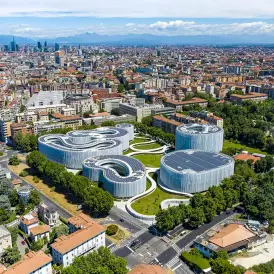
Explore Bocconi's visionary 2026–2030 Strategic Plan, aimed at bolstering executive leadership, management training, and global expansion.

HEC Paris unveils “Dare the Impossible,” a new brand signature highlighting innovation, leadership, and its vision for education in a rapidly changing world.
