
Eduniversal Best Masters 2026 in Public Administration / Management in India
Rankings updated annually. Next full edition: September 2026.
Explore a comprehensive 2026 overview of the Master's in Public Administration/Management landscape in India. This article analyzes current trends, emerging skills, demand drivers, program formats, regulations, and international competitiveness. Gain insights into career pathways and future outlooks in this evolving graduate education sector.
Discover the Eduniversal Best Masters for Public Administration / Management

India
India
India
Other programs ranked among master degrees Trempline Awards
Lebanon
Discover in detail the Master in Public Administration / Management in India
Explore a comprehensive 2026 overview of the Master's in Public Administration/Management landscape in India. This article analyzes current trends, emerging skills, demand drivers, program formats, regulations, and international competitiveness. Gain insights into career pathways and future outlooks in this evolving graduate education sector.
Market Context and Growth Potential
India’s postgraduate education sector is growing rapidly, especially in the area of Master’s in Public Administration or Management. While precise enrollment numbers for Public Administration remain scarce, the broader master's program ecosystem enrolls several hundred thousand students yearly.
Public Administration is a smaller but steadily expanding component of this ecosystem.
This growth trajectory has remained consistent over the past three to five years. Factors such as the demand for skill-equipped public service professionals and the rise of hybrid and online delivery models are fueling this expansion. Notably, the rise in female enrollments and participation by mid-career professionals is reshaping the student demographic.
Several macro-level factors are influencing this growth:
- Robust economic development requiring capable public management professionals
- The implementation of National Education Policy (NEP) 2020, encouraging interdisciplinary and skill-based education
- Accelerated urbanization and corresponding demand for governance stakeholders
- Expansion in India’s Digital Public Infrastructure (DPI)
- Focus on sustainability and innovation in the public sector
- Pressures from geopolitical volatility necessitate agile administrative capacities
As India strives to modernize its administration and governance capabilities, Master’s in Public Administration programs stand well-positioned to meet future state-building needs.
Curriculum Trends and Program Delivery
The curriculum landscape is undergoing a transformation. Classic concentrations such as administrative law and governance remain foundational, while new electives such as public sector innovation, disaster management, and AI-powered policy analysis are gaining traction.
Programs are increasingly interdisciplinary, melding economics, law, and analytics with traditional policy studies. Students are encouraged to engage in experiential learning through internships and capstone projects, ensuring alignment with real-world applications and public challenges. This improvement is aligned with broader educational shifts happening in sectors like General Management and Innovation & Project Management.
Popular delivery models now include:
- On-campus learning for traditional full-time students
- Hybrid formats that mix virtual instruction and periodic in-person sessions
- Fully online models, supported by policy and infrastructure
Flexible, modular formats allow students to stack learning and credentials over time, building their degree progressively—a response to the evolving nature of public service careers and lifelong learning needs.
Skillsets and Employability
Employers today are seeking graduates who bring a nuanced mix of technical abilities and soft or transversal skills. Desired competencies include:
- Technical Skills: Policy and budget analysis, digital governance, and data-driven decision-making
- Transversal Skills: Leadership, communication, adaptability, ethics, and problem-solving
This blend mirrors similar trends seen in fields such as Human Resources Management and International Public Administration.
Career opportunities span roles within ministries, NGOs, municipal bodies, and international organizations. Typical job titles include:
- Policy Analyst
- Urban Development Specialist
- Public Sector Consultant
- Civil Services Officer
Salary expectations vary:
- Entry-level: INR 2–4 lakh/year
- Mid-career: INR 4–10 lakh/year
- Senior roles: Up to INR 40 lakh/year for high-profile consultancy positions
Quality Assurance and Accreditation
The NEP 2020 has initiated sweeping structural reforms in India's higher education space. One of its marquee implementations is the formation of the Higher Education Commission of India (HECI), which aims to centralize and standardize accreditation processes, replacing multiple regulatory authorities.
Quality parameters now emphasize:
- Industry-responsive curriculums
- Research output and faculty credentials
- Experiential and outcomes-based learning mechanisms
These improvements align India closer to global standards, as students and programs seek greater international recognition and mobility, paralleling recognition enjoyed by specialized fields such as Environmental Risk and Security.
Affordability, Access, and Funding Options
India's Master's in Public Administration programs are highly affordable compared to Western counterparts:
- Low-cost institutions: INR 20,000–50,000
- Mid-tier programs: INR 1–3 lakh
- Premium/private institutes: INR 3 lakh and above
Public funding options, merit-based scholarships, and employer sponsorships partially address affordability barriers, especially for marginalized or under-represented groups. Government initiatives continue to enhance access and wider participation.
Thanks to low tuition and rising job demand, the return on investment remains favorable. However, aligning salary expectations with chosen sectors remains crucial, much like in domains such as Health Management.
Comparative Landscape: National and International Competition
Domestic competition is heating up with the proliferation of new programs, especially those offering hybrid and digital formats. Leading public universities now compete with private and autonomous institutions for both domestic and international student attention.
On the international front:
- Developed nations offer attractive alternatives with global exposure
- Many Indian students still prefer domestic study options due to cultural and financial factors
- Joint degree programs and collaborations with foreign universities are beginning to gain academic cachet
- Platforms are emerging that integrate AI and real-time feedback into coursework, akin to trends evolving in E-Business and Digital Marketing
Challenges and Strategic Considerations
Despite strong potential, the sector faces critical challenges:
- Affordability: Economic disparities limit access despite low base costs
- Talent pipeline: Recruiting and retaining high-quality educators remains a hurdle
- Limited research orientation: India’s public administration research output still lags global standards
- Urban-rural divide: Infrastructure gaps limit outreach in non-metro areas
- Skill alignment: Course content must keep pace with real-time public sector demands
Future Outlook (2026–2028)
Looking ahead, enrollment is projected to grow steadily between 2026 and 2028. Positive changes will hinge on:
- Successful implementation of the HECI framework
- Better public funding for research and infrastructure
- Wider adoption of flexible, micro-learning credentials
- Expanded international collaborations
Digital adoption, sustainability-centric policy making, and AI-driven governance curriculum design are also poised to shape program evolution. The infusion of such elements supports wider alignment with dynamic sectors including Sustainable Development and Environmental Management.
Latest news

Discover which business schools let you study in 3 different countries within a single degree. Compare ESCP, Skema, EM Normandie, and EDHEC on campus access, costs, and degree recognition.
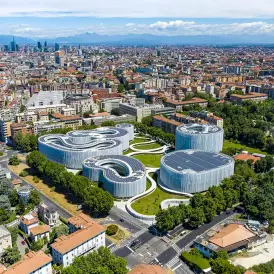
Explore Bocconi's visionary 2026–2030 Strategic Plan, aimed at bolstering executive leadership, management training, and global expansion.

HEC Paris unveils “Dare the Impossible,” a new brand signature highlighting innovation, leadership, and its vision for education in a rapidly changing world.
