Eduniversal Best Masters 2026 in E-Business and Digital Marketing in Portugal
Rankings updated annually. Next full edition: September 2026.
Get a detailed 2026 overview of studying for a Master’s in E-Business and Digital Marketing in Portugal. This analysis examines shifting market dynamics, programme redesign and specialisations, career pathways, Portugal’s position in the global education market, and medium-term prospects—offering clear guidance for both students and working professionals deciding on their next step.
Discover the Eduniversal Best Masters for E-Business and Digital Marketing

Portugal
Portugal
Portugal
Portugal
Discover in detail the Master in E-Business and Digital Marketing in Portugal
Explore an in-depth analysis of pursuing a Master's in E-Business and Digital Marketing in Portugal for 2026. This article provides insights into curriculum innovation, graduate employability, global competition, and the sector’s future outlook—helping both local and international students make strategic education choices.
Context and Market Growth of E-Business Education in Portugal
The Portuguese market for Master’s degrees in E-Business and Digital Marketing is expanding steadily, reflecting the broader rise of the digital economy. Although specific enrollment data for this field is limited, the upward trend in overall Master’s degrees—especially in digital and tech domains—is significant.
Key institutions such as NOVA IMS have elevated Portugal’s academic reputation in this sector. Its program was recently named the top in Portugal and the second-best in Western Europe E-Business and Digital Marketing programs.
The student base is diversifying, with a growing number of international enrollees from Lusophone and European countries opting for English-taught programs. Approximately 20–30% of students in these programs are international.
Lisbon and Porto remain core academic hubs, especially appealing to mid-career professionals seeking to enhance their digital and marketing expertise. Sectoral growth in AI, machine learning, and analytics further underscores the transition to a knowledge economy.
These dynamics are supported by government-led initiatives in digital education and Portugal’s attractive location, geopolitical stability, and favorable visa frameworks—paralleling trends seen in sectors such as Sustainability development education.
Evolving Curriculum and Industry-Driven Learning
Curricular updates for Master’s in Digital Marketing and E-Business reflect real-time market demands. Programs are becoming increasingly interdisciplinary, blending business acumen with data analytics, marketing strategy, and artificial intelligence.
Popular concentrations include AI-powered marketing analytics, SEO/SEM, e-commerce logistics, social media management, and influencer marketing. Programs often feature experiential learning components—like internships and case-based capstone projects—bridging academia and practice.
A growing number of institutions integrate micro-credentials that enable students to build flexible and stackable qualifications, aligning with labor market shifts. These modular structures are especially beneficial to mid-career learners.
Course delivery is evolving too, with flexible hybrid and online formats supporting remote and international participation—again aligning with how sectors like Marketing have adapted digitally.
Career Prospects and In-Demand Competencies
One of the strongest draws for these programs is employability. Graduates acquire both technical and soft skills that are highly sought across the industry. Technical mastery areas include machine learning for marketing, CRM platforms like HubSpot, and performance analytics with tools such as Google Analytics.
Soft skills—such as communication, adaptability, and multilingualism—are critical as well, especially for roles in multinational settings. Common job titles include SEO specialists, digital marketing analysts, content strategy managers, and e-commerce consultants.
Lisbon and Porto offer robust career ecosystems featuring thriving startups, international agencies, and multinational headquarters. Entry-level salaries generally range from €15,000–18,000, while mid-to-senior roles can yield up to €25,000 annually.
Programs often embed internships and corporate projects. Many institutions have close ties with Portuguese and international employers—similar to fields like Business Intelligence and Strategy.
Quality Assurance, International Recognition, and Visa Opportunities
Portuguese Master’s programs comply with rigorous quality standards applied under the Directorate-General for Higher Education (DGES), operating in line with the European Higher Education Area framework.
Such accreditation supports degree portability across EU institutions while enhancing global mobility. Portugal’s visa policy is another advantage—international students benefit from streamlined access to post-study work permits, enhancing employment prospects across the EU.
Educational parity across borders encourages mobility, a trend exemplified in other global programs focused on domains like International Management.
Tuition Costs, Funding, and ROI
Tuition fees average around €6,000 for EU nationals and approximately €7,500 for non-EU applicants. Despite relatively low tuition compared to other Western European markets, affordability remains a constraint for some.
Scholarships are available both from institutions and public bodies. There’s also growing interest in employer-sponsored upskilling, especially aligned with national strategies to boost digital capabilities.
Strong ROI metrics back these programs: job placement, salary progression, and international work mobility demonstrate favorable career trajectories—as seen in similarly data-intensive fields like Data Analytics.
Portugal’s Global Educational Positioning
Portuguese universities are enhancing their global footprint through rising international enrollments and improving institutional rankings. Portugal remains cost-competitive when compared with countries offering similar programs, making it an attractive option.
Institutions are also adopting global trends—like integrating EdTech platforms and partnering with digital learning providers to enable hybrid and AI-enhanced learning. International joint degrees are growing gradually, which will further improve student offerings and mobility.
This aligns with comparable expansion in domains like Entrepreneurship, where Portugal also demonstrates rising academic influence.
Sector Challenges and Future Trajectory (2026–2028)
Challenges remain. While Portugal excels in program quality and internationalization, cost and accessibility barriers still impact some learners. Furthermore, the talent pipeline is constrained by a shortage of faculty deeply experienced in AI, machine learning, and emerging marketing strategies.
Some universities lag in immersive tech integration, highlighting a digital divide within the education sector itself. Additionally, institutions must stay agile to keep curricula aligned with fast-moving market requirements.
Looking ahead, the sector is poised for growth backed by national policy incentives, digital innovation, and pan-European employment prospects. Programs are expected to scale efforts around AI-powered tools, green marketing, and privacy-centric strategies, influenced by EU regulations like the Digital Markets Act.
Eventually, Portugal could become Southern Europe’s leading digital education hub, leveraging its strengths in affordability, quality, and tech alignment—comparable with how Corporate social responsibility programs are making similar strides in academic reputation.
Latest news

Discover which business schools let you study in 3 different countries within a single degree. Compare ESCP, Skema, EM Normandie, and EDHEC on campus access, costs, and degree recognition.
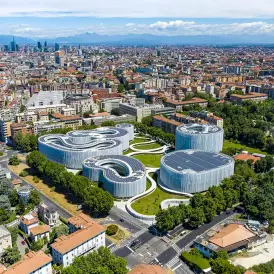
Explore Bocconi's visionary 2026–2030 Strategic Plan, aimed at bolstering executive leadership, management training, and global expansion.
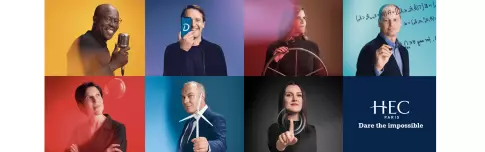
HEC Paris unveils “Dare the Impossible,” a new brand signature highlighting innovation, leadership, and its vision for education in a rapidly changing world.
