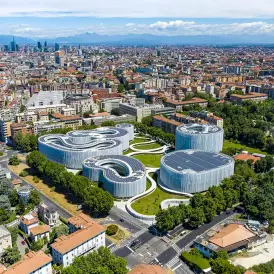

Summary: Explore how Malaysia’s Master’s programs in Energy and Natural Resources are evolving in 2026, driven by renewable energy goals, government policies, and growing demand for green skills. Learn about market trends, curriculum evolution, employability factors, funding options, and the nation’s competitive position in the Southeast Asian education landscape.
Market Landscape and Growth in Malaysia (2026)
The Master’s education landscape in Energy and Natural Resources in Malaysia is undergoing rapid transformation backed by national and regional sustainability agendas.
As of 2026, developments are fueled by policies targeting Malaysia’s green transition, especially the goal to boost renewable energy capacity from 13.3% to 18.2% by 2026 and up to 36.4% by 2035.
Although exact enrollment data specific to energy and natural resources are scarce, broader graduate education statistics indicate rising interest in sustainability-aligned studies.
This reflects a global shift that's also visible in sectors like Green Finance and Sustainable Development.
Demographics, Economic Drivers, and Market Challenges
Young, tech-oriented students are gravitating toward interdisciplinary master’s programs that combine energy technologies with digital skills. Malaysia’s solid GDP growth of 5.1% in 2024 supports research investment and stable educational infrastructure.
Key policy drivers include the National Energy Policy and NETR roadmap (2022–2040), promoting decarbonization and energy diversification.
This ambition fuels the talent demand in specialized areas—ranging from carbon management to renewables integration.
The influence of emerging professions is mirrored in other sectors as well, such as Industrial and Operations Management, where skill shortages also push up value for cross-trained graduates.
Evolving Curriculum and Learning Modalities
Master’s programs are shifting towards interdisciplinary curricula grounded in engineering, energy economics, environmental studies, and public policy. Current high-demand focus areas include:
- Renewable energy engineering (solar, hydro, wind, biomass)
- Energy storage and smart grid systems
- Carbon neutral strategies and decarbonization
- Policy modeling and regulatory economics
- AI, IoT applications in energy management
To enhance career readiness, most programs incorporate experiential elements such as industry internships, capstone projects, and collaborative research. Similarly, fields such as Innovation and Project Management embrace these applied learning strategies.
The delivery of these programs is diversified: while traditional campus formats dominate, online and hybrid systems are gaining traction to accommodate both domestic professionals and international students.
Key Skills and Graduate Employability
Graduates are expected to master both domain-specific knowledge and soft skills, making them adaptable in an evolving green economy. Key employer-desired skills include:
- Technical: Smart grid design, energy modeling, carbon capture tech, data analytics, sustainable technologies
- Transversal: Problem solving, interdisciplinary collaboration, public communication, and agile project execution
Target industries span government agencies, utility companies, environmental NGOs, renewable energy companies, and consultancies with roles such as energy analysts, policy advisors, and sustainability managers.
Master’s in energy fields often correlate with rising pay bands—reflecting the demand curve evident in other evolving disciplines like Data Analytics.
Academic Quality, Accreditation, and International Recognition
All Malaysian Master's degree programs are subject to approval and accreditation by the Malaysian Qualifications Agency (MQA), ensuring standardized quality in curriculum, faculty, and assessment protocols. This bolsters graduate confidence and enhances institutional credibility both locally and abroad.
Malaysia’s alignment with ASEAN mutual recognition agreements also enhances cross-border academic mobility and adds international weight. This is relevant for students interested in dual-degree options or global career pathways—similar to opportunities seen in Executive MBA programs regionally.
Access, Affordability, and Financial Support
Annual tuition fees for Master’s programs in energy-related disciplines typically range between MYR 20,000 to 50,000 (USD 4,500–11,000), making Malaysia a cost-effective study destination compared to Western countries.
Public funding schemes, national scholarships, and bursaries prioritize sectors aligned with Malaysia’s energy transition roadmap, such as STEM and green innovation fields. Financial support options also include working professional sponsorships and flexible payment structures.
These pathways echo payment flexibility in programs such as Accounting for part-time and upskilling candidates.
Regional Competition and Global Dynamics
Malaysia’s Master’s programs in Energy and Natural Resources face increasing competition from Southeast Asian neighbors—especially Singapore, Indonesia, and Thailand—as they expand their academic infrastructure in similar domains.
To stay competitive, many Malaysian universities are integrating joint-degree structures with international institutions and implementing modular content compatible with remote learning. The role of online education in hybrid formats strengthens reach—this is also seen in programs like Digital Marketing where remote and hybrid pathways dominate.
Challenges and Forward Outlook (2026–2028)
Despite positive momentum, Master’s education in Energy and Natural Resources contends with several challenges:
- Affordability and socioeconomic barriers to accessibility
- Continual need to attract qualified faculty in AI and carbon technologies
- Research output and infrastructure investment gaps
- Need for rapid curriculum evolution in sync with fast-moving job markets
Looking ahead to 2028, baseline projections anticipate steady growth in enrollments, underpinned by Malaysia’s renewable energy ambitions. Emerging innovations—including AI-led grid optimization, cross-border green energy exchange, and modular credentialing—will likely define the next educational frontier.
Adaptation of policies around student quotas and curriculum updates in response to energy market incentives will remain important watchpoints for policymakers and academic planners alike.