
Eduniversal Best Masters 2026 in Innovation and Project Management in India
Rankings updated annually. Next full edition: September 2026.
Explore the growth of Master's programs in Innovation and Project Management (IPM) in India by 2026, driven by AI integration, modular curricula, and job market demand. This article provides an in-depth look into market trends, curriculum evolution, employability, costs, challenges, and future outlook.
Discover the Eduniversal Best Masters for Innovation and Project Management

India
India
Other programs ranked among master degrees Launching Awards
France
Discover in detail the Master in Innovation and Project Management in India
Summary: Master's programs in Innovation and Project Management in India are rapidly evolving to meet the demands of a digitally transforming economy. This article analyzes the market context, curriculum trends, employability, cost considerations, and future outlook for pursuing a Master’s in this sector in 2026 and beyond.
India's Innovation and Project Management Graduate Market (2026): Context & Growth
The Innovation and Project Management (IPM) graduate market in India is part of a larger ecosystem driven by digital transformation and startup culture.
By 2026, India is expected to account for over 21 million project-based jobs, making it the second-largest contributor globally to project-oriented employment. Additionally, the project management software market is projected to hit $9.07 billion, growing at a CAGR of over 10%.
India produces around 2.55 million STEM graduates annually, with many pursuing advanced education geared toward innovation and leadership. Domestic enrolment leads, but global partnerships and increased international student interest are widening the audience.
Growth is further driven by government initiatives like Startup India and Atmanirbhar Bharat, which champion self-reliance and international collaboration.
Key trends include increased participation from women and young professionals seeking hybrid management and AI integration skills. These trends align with advancements in Innovation and Project Management education.
Demand Drivers and Curriculum Dynamics
IPM programs in India are adopting a multidisciplinary curriculum to stay aligned with evolving industry needs. Key focus areas include:
- Artificial Intelligence and Machine Learning in project execution
- Hybrid project methodologies combining Agile and Waterfall approaches
- Integration of sustainability goals in project planning
- Capstone projects and real-time internships
Also gaining ground are micro-credentials and AI-enabling courses, allowing professionals to personalize their education. The rise of online and blended learning formats also reflects the growing population of working professionals seeking lifelong learning programs in project disciplines.
Institutions increasingly offer modular certifications for career advancement, similar to paths offered in Business Intelligence and Strategy.
Key Skills and Employment Trends
Graduates from IPM programs are expected to show competency in both technical tools and soft skills. In demand are:
- Proficiency in AI tools and digital project software
- Risk management aligned with ESG (Environmental, Social, Governance) guidelines
- Skills in virtual team communication and cross-border project execution
- Comfort with data analytics and strategic decision-making
Placement trends point to strong absorption in the IT, finance, green energy, and manufacturing sectors. Internships are critical in bridging academic knowledge with industry expectations, though availability may vary by region. Skill pathways align with those seen in Risk Management programs internationally.
Program Quality, Accreditation & Recognition
India's graduate management education is regulated by NAAC and NBA, which assure baseline academic quality across institutions. However, IPM-specific accreditation is still at a formative stage.
International exposure is improving via Memoranda of Understanding (MOUs) with foreign universities, dual degree options, and credit transfer schemes. Yet challenges persist around visa regulations and work rights, impacting cross-border success. Institutions offering globally recognized Master’s in IPM share similarities with those exploring International Management landscapes.
Access to Programs, Tuition Costs & Financial Support
The average tuition for Master’s degrees in IPM ranges from INR 2 lakh to 8 lakh, depending on whether the program is delivered by a public or private institution, as well as its modality (online or on-campus).
Public funding exists through central schemes supporting broader skill development. While scholarships exist, they’re limited in scale.
Employer-sponsored study paths are growing, offering a favorable ROI, particularly as demand outpaces supply. Scholarship gaps persist, however, especially for underrepresented communities—issues also faced by those pursuing studies in domains like Green Finance.
Competitive Environment and International Relations
The IPM educational space in India is becoming increasingly competitive due to a surge in new program introductions. Although India is home to several prestigious universities, inbound international enrolment remains modest compared to outbound mobility. This disparity is driven by Indian students’ desire for global exposure and degrees that offer international employability.
Collaborative degrees, EdTech partnerships, and access to global best practices are narrowing this gap. Programs that blend industry exposure with theoretical learning are also common in related areas like Industrial and Operations Management.
Main Challenges and Systemic Risks
Despite positive momentum, challenges persist:
- High costs and inconsistent availability of scholarships
- Shortage of qualified faculty in cutting-edge technologies and methods
- Infrastructure deficits for delivering digital and hybrid classes effectively
- Mismatch between graduate skills and regional labor market demands
- Low research output in innovation curriculum development
The pace of technology adoption varies widely, which may limit graduate relevance in industry. Promoting deeper industry-academia ties and investing in better training infrastructure are necessary measures, similar to reforms required in specialized domains such as Quality Management education.
Forecast: The Road Ahead (2026–2028)
India’s Master’s market in Innovation and Project Management is set to grow exponentially through 2028. Primary catalysts include ongoing digitalization, the proliferation of AI-native industries, and the expansion of startup ecosystems. An optimistic scenario hinges on:
- Expanded government policy support in areas like accreditation and funding
- Stronger global collaboration and degree portability
- Broader adoption of stackable micro-credentials
- Integration of responsible innovation and sustainability in curriculum
Programs that adopt interdisciplinary content and remain aligned with national skills frameworks will lead the transformation. The inclusion of modules from domains like Creativity, Innovation, and Design Thinking will give students a competitive edge in complex industrial environments.
Latest news

Discover which business schools let you study in 3 different countries within a single degree. Compare ESCP, Skema, EM Normandie, and EDHEC on campus access, costs, and degree recognition.
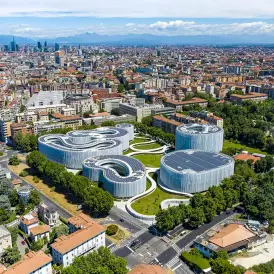
Explore Bocconi's visionary 2026–2030 Strategic Plan, aimed at bolstering executive leadership, management training, and global expansion.

HEC Paris unveils “Dare the Impossible,” a new brand signature highlighting innovation, leadership, and its vision for education in a rapidly changing world.
