
Eduniversal Best Masters 2026 in Marketing in Malaysia
Rankings updated annually. Next full edition: March 2027.
Discover the Eduniversal Best Masters for Marketing

Other programs ranked among master degrees Innovation Awards
Qatar
Discover in detail the Master in Marketing in Malaysia
Summary: As digitalization takes center stage, Malaysia’s Master’s in Marketing programs are being reshaped by emerging tech, labor market evolution, and educational reforms. Below, we explore the sector’s key drivers, challenges, and future directions heading into 2026 and beyond.
Market Overview & Postgraduate Growth Trends
Malaysia's postgraduate education landscape continues to evolve, with Master’s in Marketing programs increasingly attracting mid-career professionals and international students. While exact enrolment figures for marketing by 2026 remain unspecified, the broader Master’s cohort has seen consistent year-on-year growth.
The shift toward flexible formats — including online and hybrid learning — reflects rising demand from digitally-oriented professionals, aligning with broader national ambitions toward a digital economy.
Mid-career upskilling initiatives reinforce Malaysia’s ambition to become a regional education hub, comparable to segments like International Management or growing business verticals such as E-Business and Digital Marketing.
Key Macro Drivers Shaping Master’s in Marketing
Several macroeconomic and policy forces are influencing the structure and design of marketing master’s programs:
- Digitalization & GDP Growth: Growth in e-commerce, which is expected to reach USD 58 billion by 2026, has created demand for professionals skilled in digital tools, automation, and analytics-led marketing.
- Regulatory Frameworks: The Malaysian Qualifications Agency (MQA) ensures programs are accredited and internationally competitive, making Malaysian degrees attractive globally.
- Labor Market Demand: There is a recognized deficit in professionals trained in digital strategy, AI-powered tools, and cross-platform campaign management.
- ESG & Ethics: Curriculum is progressively integrating responsible marketing and CSR principles, in line with adjacent fields like Corporate Social Responsibility.
- Regional & Global Integration: With deeper participation in ASEAN networks and supply chains, the emphasis on cross-cultural strategy and global branding in courses is expanding.
Emerging disciplines such as Data Analytics and AI integration are spurring updates in curriculum and teaching delivery models.
Curriculum Trends & Flexible Learning Models
By 2026, most Master’s in Marketing programs in Malaysia offer forward-looking curriculum changes that emphasize both technical sophistication and soft skill development. They now commonly include:
- Modules on AI, machine learning, and automated customer journey design
- Interdisciplinary components spanning behavioral science, creativity, and sustainability
- Hands-on projects, real-world simulations, and industry collaborations
- Adoption of modular, micro-credential, and stackable learning pathways
These design elements increasingly reflect international trends also seen in domains like Innovation and Project Management.
Hybrid delivery — blending synchronous online coursework with in-person capstones — has become the preferred model, especially among working professionals and regional students seeking flexible formats.
Essential Skills & Graduate Employability
Employers in Malaysia increasingly look for marketing graduates who possess dual competencies in both digital tools and strategic thinking. In-demand technical skills include:
- SEO and performance marketing
- Social media and content strategy
- Big data and consumer analytics
- Use of marketing automation or AI tools
Equally important are transversal skills such as adaptability, cross-cultural communication, storytelling, and creative thinking — quite similar to profiles valued in Creative Industries Management and aligned disciplines.
Typical roles include digital strategist, brand manager, marketing analyst, and growth marketer, with entry to mid-level salary ranges between USD 40,000 and 65,000 annually, offering promising ROI.
Accreditation, International Recognition & Quality Assurance
The Malaysian Qualifications Agency plays a pivotal role in maintaining stringent academic and operational quality across institutions. Accredited programs enjoy cross-border recognition via credit transfer schemes and collaborative joint degrees, bolstering Malaysia’s competitiveness in the Asian postgraduate sphere.
These recognition efforts support pathways similar to those found in General Management and other transnational disciplines, although visa policies and work rights for international graduates remain important factors for inbound enrolment growth.
Cost Structures, Funding Options & Accessibility
Enrollment costs for marketing master’s programs in Malaysia span approximately RM 34,800 to RM 125,000 (USD 8,900 to USD 32,000), with international students typically paying more. While scholarship and sponsorship opportunities exist, access to funding is uneven across institutions.
Nonetheless, tuition remains relatively affordable when considering the strong post-graduation earnings and the sector’s consistent employer demand. Interest in education at the intersection of marketing and sustainability is also rising, echoing trends seen in Sustainable Development programs.
Competitive Landscape & Tech-Driven Learning Ecosystems
Malaysia’s marketing education space is both growing and increasingly competitive. Students now have access to a breadth of dual-degree and cross-border programs, many powered by EdTech innovations. These include:
- AI-driven learning platforms
- Simulated digital campaign labs
- Collaborative projects with international partner schools
Such integrations reinforce Malaysia’s position in a region experiencing concurrent acceleration in fields like Big Data Management and digitally-infused business education.
Future Outlook: 2026–2028
Malaysia is expected to maintain strong momentum in growing its Master’s in Marketing offerings. Contributing factors include the rise of the digital economy, expanding international collaborations, adoption of micro-credentials, and curricular reform emphasizing AI, automation, and sustainability. Favorable government policies that support upskilling and lifelong learning are essential to fully unlock this potential.
Innovations in course delivery, real-time marketing analytics integration, and greater employer-education alignment will keep programs relevant. However, continuous efforts to address affordability, infrastructure disparities, and faculty expertise in emerging technologies will be critical to long-term success.
Latest news

Discover which business schools let you study in 3 different countries within a single degree. Compare ESCP, Skema, EM Normandie, and EDHEC on campus access, costs, and degree recognition.
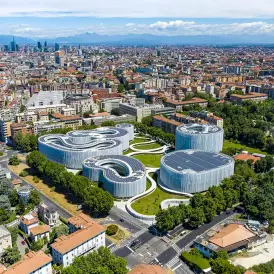
Explore Bocconi's visionary 2026–2030 Strategic Plan, aimed at bolstering executive leadership, management training, and global expansion.

HEC Paris unveils “Dare the Impossible,” a new brand signature highlighting innovation, leadership, and its vision for education in a rapidly changing world.
