
Eduniversal Best Masters 2026 in MBA full time in Turkey
Rankings updated annually. Next full edition: September 2026.
This in-depth article explores the state of full-time MBA programs in Turkey for 2026. It covers market dynamics, curriculum innovations, key skills for employability, funding structures, and the regulatory landscape, offering insight into trends and opportunities in this evolving education sector.
Discover the Eduniversal Best Masters for MBA full time

Turkey
Turkey
Other programs ranked among master degrees Trempline Awards
Lebanon
Discover in detail the Master in MBA full time in Turkey
Summary: Explore the 2026 outlook for full-time MBA programs in Turkey, including student trends, demand shifts, curriculum evolution, job market alignment, institutional recognition, and international partnerships. Learn how digitalization and sustainability themes are shaping Turkey’s future as an emerging hub for business education across Europe and Asia.
Turkish MBA Market Context and Growth Trajectory
The full-time MBA scene in Turkey is integral to the country’s thriving postgraduate education sector, with over 1 million higher ed students and 820 institutions offering a wide range of programs. Approximately 76 universities offer MBAs or related business master’s degrees.
Although precise MBA student numbers are unavailable, the broader management education space is growing, evidenced by a 7% increase in applications across Eurasia. Turkey’s geographical positioning adds to its appeal, connecting Europe, Asia, and the Middle East.
Demographic trends show younger professionals favoring non-thesis MBAs, while seasoned managers often prefer Executive MBAs. There’s a notable rise in the number of women pursuing Turkish MBAs, reflecting global leadership diversity trends.
Macro drivers such as economic integration, regulatory reforms, employer skill expectations, and emphasis on digital competencies like AI and fintech innovation are propelling this growth.
Geopolitical relevance also fuels interest in Turkey as a launchpad for cross-border business expertise. Students interested in global trade are increasingly drawn to this environment, just as they are to other international-focused fields like international management programs.
Curriculum Innovation and Delivery Trends in 2026
Full-time MBAs in Turkey are rapidly evolving in line with global best practices. Finance, marketing, entrepreneurship, supply chain, and tech-infused management dominate the curricular focus for 2026. Fintech, AI, and blockchain are integrated across program modules, driven by workforce digitalization needs.
The inclusion of micro-credentials and modules focused on AI, ESG (Environmental, Social, Governance), and sustainable strategy is increasing. This interdisciplinary and applied learning emphasizes practical skill application through capstone projects and industry internships. For an ESG-focused career track, programs in Sustainable Development and Environmental Management are also popular.
While full-time MBAs remain largely on-campus, hybrid formats are gaining momentum. Hybrid delivery is particularly relevant for Executive MBAs and working learners seeking flexibility without compromising quality. Distance learning infrastructure continues to rapidly improve amid ongoing EdTech investments.
Employment Readiness and Skills Alignment
Turkish MBA programs are tuned to market demands, targeting both technical acumen and soft skills. Data analytics, financial expertise, strategic leadership, and intercultural communication are among the most sought-after graduate capabilities.
Graduates typically secure roles in finance, consulting, IT, or entrepreneurship. They are employed by both regional startups and global corporations based in Turkish economic hubs. Notably, fields such as entrepreneurship and innovation management are key alternatives for those opting out of conventional corporate paths.
Turkish MBA graduates generally enjoy better salary growth compared to bachelor's holders, although remuneration varies by sector and prior experience. Internship components, often embedded in most MBA curricula, ensure students gain real-world insight and workplace readiness.
Regulatory Framework and International Recognition
Top Turkish MBA programs are achieving international quality standards like AACSB, accrediting institutions such as Bilkent University. This improves attractiveness for international candidates and bolsters global comparability.
Many MBA offerings are English-taught and structured to enable smooth credit transfer across Europe and beyond. With growing global mobility, programs are seeing increased participation from foreign students aiming to extend studies or careers abroad.
Thesis-based MBA graduates are often eligible for doctoral programs internationally, reinforcing Turkey’s growing role as a business education gateway. Students considering doctoral advancement might also explore domains such as corporate communication or law-driven business pathways.
Affordability and Financial Access
Tuition costs for MBA programs in Turkey vary widely—from $3,000 to $40,000, depending on university and MBA format. Public institutions are generally more affordable but offer fewer international features. Private schools, though more expensive, often provide enhanced delivery modes and English-taught content.
Scholarships and financial aid—especially merit-based grants—are available but limited in number. Employer sponsorship is more common among working professionals, particularly for Executive MBAs or specialized formats like part-time MBA tracks.
In terms of return on investment (ROI), Turkish MBA graduates benefit from relatively low tuition compared to European or North American peers, while gaining access to rapidly developing economies for employment opportunities.
Competitive Environment and Global Positioning
In-country competition is strong between public and private universities. Private institutions increasingly offer internationalized modules, exchange programs, and joint degrees—often in sync with European standards. EdTech solutions are enhancing accessibility through blended formats targeting executives and upskilling professionals.
Turkey continues to draw international students due to cost-efficiency, location, and high-quality English programs. Yet many Turkish nationals still seek MBA degrees abroad, especially in Western Europe or the US.
Joint degrees and academic-industrial partnerships are multiplying. Some institutions collaborate with foreign business schools or offer sector-specific double degrees in areas such as industrial and operations management, contributing to Turkey’s increasing academic exports.
Challenges and Strategic Risks for MBA Education
Despite growth, several structural constraints persist. Affordability remains a challenge for some domestic students, especially those without scholarship support. Additionally, scarcity of faculty with global or fintech expertise can constrain competitiveness of less-resourced institutions.
Research output among MBA faculties remains uneven, affecting international rankings and collaborative potential. Infrastructure gaps—particularly in experiential learning facilities—could also limit program innovation. Courses must respond dynamically to shifts in digital, sustainable, and AI-driven business needs, including emerging roles in data analytics and ESG compliance.
Future Outlook: 2026–2028 and Beyond
Looking ahead, the Turkish MBA market is geared for consistent expansion. International student influx, digital course transformation, and policy reforms will drive future trajectories. Government emphasis on modernizing skills education—including hybrid delivery and green finance—is likely to accelerate these gains.
Innovation zones include fintech specialization, AI modular courses, and lifelong stackable learning formats. Looking broadly, Turkey’s potential as a continental business education connector may soon rival traditional European centers—especially if synergies with ESG and digitalization trends continue.
Latest news

Discover which business schools let you study in 3 different countries within a single degree. Compare ESCP, Skema, EM Normandie, and EDHEC on campus access, costs, and degree recognition.
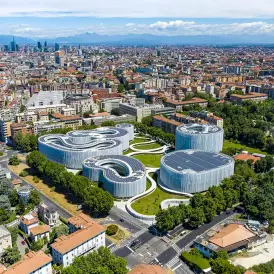
Explore Bocconi's visionary 2026–2030 Strategic Plan, aimed at bolstering executive leadership, management training, and global expansion.

HEC Paris unveils “Dare the Impossible,” a new brand signature highlighting innovation, leadership, and its vision for education in a rapidly changing world.
