
Eduniversal Best Masters Ranking 2026 in Event and Leisure Management TOP 40 Worldwide
Rankings updated annually. Next full edition: September 2026.
Master in Event and Leisure Management: Design Experiences That Inspire. A Master in Event and Leisure Management trains future leaders to create impactful events, festivals, and leisure experiences. In 2026, top programs combine creativity, sustainability, and digital innovation equipping graduates to lead in a global industry where entertainment meets strategy.
Discover Eduniversal Best Masters Ranking in Event and Leisure Management

Italy
Belgium
United Kingdom
U.S.A.
Australia
Australia
United Kingdom
Australia
Hong Kong (S.A.R.,China)
Spain
United Kingdom
Spain
United Kingdom
Hong Kong (S.A.R.,China)
U.S.A.
Ireland
France
Senegal
United Kingdom
United Kingdom
Denmark
U.S.A.
France
Australia
United Kingdom
Colombia
France
Spain
United Kingdom
South Korea
New Zealand
Austria
U.S.A.
U.S.A.
Other programs ranked among master degrees Innovation Awards
France
Master’s in Event and Leisure Management: Specialization, Application and Career Opportunities.
Event and Leisure Management is one of the most dynamic and operationally demanding fields in postgraduate education. From international MICE conferences and music festivals to e-sports arenas and leisure destination venues, the sector requires professionals who combine strategic vision with the precision to coordinate complex, high-stakes live experiences.
The Eduniversal Best Masters Ranking brings together the leading MSc, MS, and MBA programs in Event and Leisure Management from across the world, evaluated annually through three independently verified criteria: reputation on the job market, first employment salary, and student satisfaction. Whether you are entering the field for the first time or looking to move into a senior role, this ranking offers a structured, market-grounded starting point for your research.
The programs listed here span a wide range of formats, specializations, and geographic hubs, from full-time programs in Western Europe to executive and online formats designed for working professionals in North America, Far East Asia, and beyond. Use the ranking as a comparative lens, then go deeper into the dimensions that matter most for your goals: specialization track, location, format, tuition, and alumni network.
What Is the Eduniversal Ranking for Event and Leisure Management?
The Eduniversal Best Masters Ranking is an independent annual ranking of master's and MBA programs, now in its 12th edition (2026), covering nearly 6,000 programs in 137 countries across 9 world regions. For the Event and Leisure Management specialization, the 2026 edition covers 40 programs worldwide, with the strongest concentration in Western Europe (18 programs), followed by Far East Asia and Oceania (10 programs) and North America (5 programs), making it a genuinely international reference for prospective students comparing programs across regions.
Programs are ranked using the Eduniversal Best Masters Ranking methodology, which scores each one on three criteria: reputation on the job market, first employment salary, and student satisfaction.
How Schools Are Evaluated
Every program in the Eduniversal Best Masters Ranking is assessed through a single, consistent methodology built on three criteria, each worth 5 points for a maximum final score of 15.
- Reputation on the job market (5 points) - Half of this score reflects the opinions of recruiters, and half reflects the level of the school's Palme d'Excellence.
- First employment salary (5 points) - Reported by each program and verified by Eduniversal, weighted by country and by the average annual salary of executives, with three scales applied according to the type of program (full-time MBA, Executive MBA, and all other programs).
- Student satisfaction (5 points) - Measured through an 11-question survey sent to graduating students, scored only when at least 10% of a program's graduating cohort responds.
The combined score places each program on a four-star scale: 1 star (1-5.99), 2 stars (6-8.99), 3 stars (9-11.99), and 4 stars (12-15). This is the Eduniversal Best Masters Ranking methodology applied identically to every program worldwide.
Why Use an International Ranking to Choose an Event Management Program?
The global offer of Event and Leisure Management programs has grown considerably, with programs now available across dozens of countries, in formats ranging from intensive full-time MSc degrees to part-time executive tracks and fully online options. Sorting through this landscape, each program with different specialization tracks, industry partnerships, and entry requirements, is a genuine challenge for prospective students.
The Eduniversal Best Masters Ranking offers a practical first filter. It narrows the field to programs that have earned genuine recognition from employers, giving you a shortlist grounded in measurable outcomes rather than promotional material. That said, a ranking is a starting point, not a final decision. The right program for you depends on factors no ranking can capture alone: your career focus, your preferred location, your budget, and where you want to build your professional network.
What Does a Master in Event and Leisure Management Cover?
A Master in Event and Leisure Management is an interdisciplinary postgraduate program covering event strategy, operations, marketing, finance, and experience design, preparing graduates to lead in corporate events, MICE, festivals, sports, entertainment, and leisure venues. The scope is deliberately broad, reflecting the diversity of the sector itself.
Programs typically span 12 to 18 months in a full-time format, though executive and part-time tracks are increasingly available for professionals already working in the industry. Cohorts are generally multicultural, drawing students from hospitality, tourism, marketing, and communications backgrounds.
The 2026 generation of programs places particular emphasis on hybrid event production, responsible event planning aligned with ESG priorities, and the use of technology, including artificial intelligence for audience engagement, AR/VR for immersive experiences, and data analytics for impact evaluation. These are not peripheral electives but core competencies increasingly expected by employers.
Core Curriculum Areas
While curricula vary across institutions, the following areas appear consistently across top-ranked programs in the Eduniversal Best Masters Ranking:
- Event Strategy and Design: planning methodologies, concept development, and stakeholder management from brief to delivery
- Marketing, Branding, and Sponsorship: audience targeting, brand activation, and commercial partnerships in event contexts
- Financial and Budget Management: cost planning, revenue models, ticketing strategy, and sponsor ROI
- Legal, Safety, and Risk Management: permits, contracts, health and safety compliance, and crisis planning for live events
- Experience Design and Audience Engagement: the principles behind creating memorable, participatory experiences for diverse audiences
- Technology and Innovation: AI-powered tools, AR/VR applications, RFID and data collection, live-streaming production
- Sustainability and Responsible Event Planning: carbon footprint reduction, waste management, and social impact frameworks
- Data Analytics and Impact Evaluation: measuring event performance, attendee behavior, and commercial outcomes
Many programs also include field projects, internship placements with event agencies or venues, and access to industry professionals as guest lecturers and mentors.
Specializations and Tracks Within Event and Leisure Management
Top-ranked programs often allow students to specialize within the broader field. The most common tracks include:
- Music, Cultural, and Entertainment Events: festivals, concerts, arts events, and live performance production
- Sports and eSports Event Management: from large-scale international competitions to emerging digital-native sports formats
- Corporate, Business, and MICE Events: meetings, incentives, conferences, and exhibitions for corporate and institutional clients
- Leisure and Experience Design: theme parks, family entertainment centers, resort experiences, and leisure destinations
- Digital and Hybrid Event Production: combining physical and virtual formats, streaming strategy, and digital audience experience
For students whose interests sit at the intersection of culture, arts, and event production, programs in cultural management and creative industries offer an adjacent specialization worth comparing.
Career Paths After a Master in Event and Leisure Management
Graduates of top-ranked Event and Leisure Management programs work across corporate, cultural, sports, and entertainment sectors, in roles from Event Manager and MICE Planner to Experience Designer and Digital Event Producer. The sector rewards professionals who can balance creative vision with operational precision and commercial awareness.
Employers range from global event agencies and tourism boards to corporate in-house event teams, sports organizations, entertainment groups, e-sports companies, destination venue operators, and lifestyle brands. The breadth of the field means that no two career paths look identical, which is part of its enduring appeal.
Demand for roles in digital and hybrid event production has grown significantly as organizations have embedded virtual and hybrid formats into their permanent event strategies. Roles in experience curation and audience engagement are also expanding, particularly in leisure destinations, branded experiences, and the intersection of entertainment and hospitality. Graduates with a strong background in hospitality management will find significant overlap with event-facing roles in luxury hotels, resorts, and destination venues.
Key Roles in Event and Leisure Management
The roles most frequently targeted by graduates of top-ranked Event and Leisure Management programs include:
- Event Manager / Festival Director: end-to-end coordination of events from concept to delivery, managing teams, suppliers, and logistics
- MICE Planner and Coordinator: specialist in meetings, incentives, conventions, and exhibitions for corporate and institutional clients
- Experience Designer / Production Lead: designing audience journeys and managing technical production for live and hybrid events
- Event Marketing and Sponsorship Specialist: developing audience acquisition strategies and commercial partnership programs
- Venue and Leisure Manager: operations management for concert halls, convention centers, theme parks, FECs, and entertainment destinations
- Digital and Hybrid Event Producer: managing the intersection of physical events and digital audience experience, including live-streaming and virtual platforms
- Corporate Hospitality Consultant: advising organizations on event strategy, client entertainment, and brand activation
- Community and Brand Engagement Manager: building long-term audience relationships through event programming, brand activation, and community experiences
Industries and Employers
The diversity of the sector is one of its defining features. Event and Leisure Management graduates work in a range of industries that includes:
- Event agencies and production companies
- Tourism boards and destination management organizations
- Sports federations, clubs, and e-sports organizations
- Corporate in-house event and communications teams
- Entertainment groups, music labels, and festival organizers
- Luxury hospitality groups with significant event programming
- Family entertainment centers, theme parks, and leisure venues
- Creative start-ups and brand experience agencies
Salary Outlook
Compensation in Event and Leisure Management varies significantly by region, seniority, sector, and the scale of the employer. Entry-level positions in Western Europe and North America offer competitive graduate packages, with progression tied to project scope, network, and specialization. Senior roles in corporate event strategy, digital event production, and venue operations command considerably higher packages, particularly in markets where large-scale events are a significant economic driver. Salaries vary widely depending on the market and the function: a digital event producer at a global brand and a festival coordinator at a regional not-for-profit operate within very different compensation structures.
How to Use This Ranking to Choose Your Event Management Program
Beyond the ranking score, choosing the right Event and Leisure Management program requires weighing specialization track, geographic location, program format, tuition, and alumni network. The Eduniversal ranking is your shortlist tool, not the final answer.
The ranking tells you which programs have earned the strongest professional recognition and delivered the best outcomes for their graduates. But it cannot tell you which specialization track aligns with your career goals, which location will build the professional network you need, or which format fits your current life situation. Here are the key dimensions worth examining once you have your shortlist.
Specialization depth: some programs position themselves as broad Event and Leisure Management degrees, covering all sectors from corporate MICE to festival production and leisure destination management. Others are tightly focused on a single vertical, such as sports events or digital production. If your goal is specifically in one of those areas, a specialized program will likely offer more relevant curriculum content, stronger industry connections, and a more targeted alumni network.
Location and industry access: geographic proximity to the sector matters in event management. Programs based in cities with active event industries offer direct access to internship placements, guest lecturers from the field, and alumni already working in the local market.
Format and duration: full-time programs are the standard route for candidates without prior sector experience. Executive and online formats cater to professionals looking to formalize expertise or move into more senior roles without interrupting their careers.
Alumni network and industry placement: in event management, professional relationships are foundational. Examine where alumni from each program are working three to five years after graduation, and whether the school has structured placement partnerships with employers in your target sector.
Specialisation vs Generalist Programmes
A generalist Master in Event and Leisure Management gives you a broad foundation across formats, sectors, and functions, which is particularly valuable if you are not yet certain which part of the industry interests you most. A specialized program in sports event management, MICE, or digital production offers deeper sector immersion and tends to be preferred by employers with very specific profiles to fill.
For students whose interests overlap with leisure tourism and destination experiences, programs in tourism management offer an adjacent specialization with significant overlap in careers and curriculum.
Regional Strengths in Event and Leisure Management
Different regions have developed distinct strengths in Event and Leisure Management education, reflecting the structure of their local industries.
Western Europe is home to a strong concentration of top-ranked programs, particularly in the United Kingdom, France, Spain, and the Netherlands. Programs in this region benefit from direct proximity to major cultural events, festival circuits, corporate event markets, and hospitality-adjacent industries. Schools in France and Spain have historically been well-represented in the Eduniversal ranking for this specialization, though positions should always be verified against the current edition.
North America is represented in the Eduniversal Best Masters Ranking for this specialization, with 5 programs in the current edition. The US market is particularly strong for corporate events, MICE, and sports event management, reflecting the scale of the meetings industry and professional sports ecosystem. Programs in this region often combine event management with tourism and hospitality tracks.
Far East Asia and Oceania account for 10 ranked programs in the current edition, reflecting the growth of the events industry across markets including South Korea, Hong Kong, Australia, and New Zealand. The region offers growing opportunities in corporate events, entertainment, and large-scale public events, alongside significant investment in leisure destinations and themed entertainment.
For the most accurate view of which schools lead in each region, consult the current edition of the Eduniversal Best Masters Ranking directly, as positions are updated annually.
FAQ: Frequently Asked Questions About Master's in Event Management
Can you get a Master's degree in Event Management?
Yes. Master's degrees in Event Management are available worldwide, offered as Master of Science (MSc), Master in Management (MiM), and MBA programs with event management specializations. The Eduniversal Best Masters Ranking covers programs in this specialization across 9 regions and 137 countries, with the 2026 edition covering 40 programs worldwide. The largest concentration is in Western Europe (18 programs), followed by Far East Asia and Oceania (10 programs) and North America (5 programs). Programs range from 12-month full-time degrees to part-time and online formats designed for working professionals.
What is the difference between Event Management and Leisure Management?
Event Management focuses on the planning, coordination, and execution of specific events, whether corporate conferences, music festivals, sports competitions, or brand activations. Leisure Management focuses on the ongoing operations of recreational facilities, entertainment destinations, theme parks, and leisure venues. Combined programs in Event and Leisure Management cover both disciplines, preparing graduates to work either in project-based event delivery or in the permanent management of leisure and entertainment organizations. The overlap is significant: venue managers oversee events, and event professionals increasingly work within leisure destination contexts.
What careers can you pursue with a Master's in Event and Leisure Management?
Graduates of top-ranked programs move into a wide range of roles. The most common career paths include Event Manager, MICE Planner, Experience Designer, Event Marketing and Sponsorship Specialist, Venue and Leisure Manager, Digital and Hybrid Event Producer, Corporate Hospitality Consultant, and Community and Brand Engagement Manager. Employers span event agencies, tourism boards, sports organizations, entertainment groups, e-sports companies, luxury hospitality groups, corporate in-house teams, and leisure venue operators.
What are the top regions for Event and Leisure Management programs?
Based on the Eduniversal Best Masters Ranking 2026 (12th edition), the three regions with the highest number of ranked programs in this specialization are Western Europe (18 programs), Far East Asia and Oceania (10 programs), and North America (5 programs). Western Europe leads in cultural and experiential events, Far East Asia and Oceania in a rapidly growing events and entertainment market, and North America in corporate event management and MICE. The ranking covers programs across all 9 world regions, including Latin America, Africa, Central and Eastern Europe, Eurasia and the Middle East, and Central Asia.
How is the Eduniversal Event Management ranking built?
The Eduniversal Best Masters Ranking evaluates each program on three independently verified criteria: reputation on the job market (combining recruiters' opinions at 50% and the school's Palme d'Excellence level at 50%), first employment salary (reported by each program and verified by Eduniversal against national and executive salary averages), and student satisfaction (from an 11-question survey requiring responses from at least 10% of graduating students). The 2026 edition is the 12th edition of the ranking, covering nearly 6,000 programs in more than 50 specializations across 137 countries. Rankings are updated annually, so they reflect current program standing and graduate outcomes rather than historical prestige.
Latest news

Discover which business schools let you study in 3 different countries within a single degree. Compare ESCP, Skema, EM Normandie, and EDHEC on campus access, costs, and degree recognition.
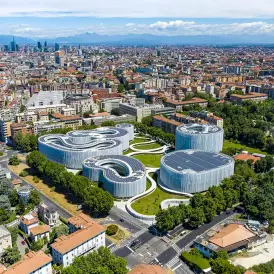
Explore Bocconi's visionary 2026–2030 Strategic Plan, aimed at bolstering executive leadership, management training, and global expansion.

HEC Paris unveils “Dare the Impossible,” a new brand signature highlighting innovation, leadership, and its vision for education in a rapidly changing world.
