
Eduniversal Best Masters 2026 in Public Administration / Management in Italy
Rankings updated annually. Next full edition: September 2026.
Italy's Master's in Public Administration (MPA) landscape is expanding in 2026, with rising enrollment, modernized curricula, and growing global appeal. This article explores current trends, market dynamics, employability, and future opportunities within MPA programs across Italy.
Discover the Eduniversal Best Masters for Public Administration / Management

Italy
Italy
Other programs ranked among master degrees Trempline Awards
Lebanon
Discover in detail the Master in Public Administration / Management in Italy
Market Overview and Demographic Trends
Italy’s public administration graduate education sector is experiencing robust growth. In 2026, between 12,000 to 15,000 students are participating in Master’s in Public Administration (MPA) or related degrees across the country. This accounts for a 10–15% increase over three years, outpacing broader university enrollment growth.
Italian students still form the majority of the MPA body, making up around 70% of enrollments. However, international student participation has surged to 30%, aided by Italy’s commitment to academic excellence in governance and the proliferation of English-taught programs.
This aligns with increasing interest in public governance globally, as highlighted in master's programs like Public Administration / Management.
Important demographic shifts include a decrease in the average age of MPA entrants to just 24.2 years, the youngest among EU nations. Notably, over 55% of students are women, reinforcing broader shifts in public service and education equity.
Macro-level forces reshaping the market include:
- Digitalization: Streamlined digital governance systems.
- Sustainability: ESG and climate policy put public roles in the spotlight.
- Skills shortages: Many municipalities lack data-literate policy specialists.
- Geopolitical factors: EU funding and migration pressures demand agile administrative leadership.
Curriculum Developments and Learning Models
Digital policy, green governance, and innovation top the list for students pursuing MPA degrees in Italy. These domains are now firmly embedded within most program curricula, shaping a more future-ready public sector.
Today’s programs are inherently interdisciplinary – blending economics, public law, data science, and communication. Real-world learning is prioritized through internships, capstone projects, and industry collaboration.
Modular options, such as micro-certifications in data analytics, compliance, or AI for public sector use, offer students flexibility and immediate value.
Students can choose from:
- On-campus courses: Remain popular among full-time students.
- Hybrid delivery: Rapidly growing with appeal to professionals.
- Fully online: Ideal for part-time learners or international registrants.
Programs are also piloting lifelong learning paths, allowing sector professionals to upgrade specific competencies without committing to full-time study, aligning with trends in Executive MBA education.
Career Readiness and Skills Outlook
Graduates from Italy’s MPA programs are highly employable, with over 80% securing sector-relevant jobs within six months of graduation. Entry-level salaries span from €25,000 to €35,000, with consultancy roles and international organizations offering the upper range.
Key skill areas in demand include:
- Technical: Policy analysis, datacentric decision-making, project planning.
- Transversal: Leadership, adaptability, resilience, and stakeholder communication.
Career destinations include public administration (local to national levels), NGOs, private service enterprises, and consulting firms. For those interested in developing private-sector skills that intersect with public services, programs in Consulting and Strategy further boost market relevance.
Another major advantage is the structured internship component, now mandatory or highly recommended across most MPA programs. These placements enhance employability by exposing students to real-world administrative challenges early in their academic journey.
Accreditation, Quality Assurance, and Recognition
Italy’s MPAs are regulated by ANVUR— the National Agency for the Evaluation of Universities and Research Institutes, ensuring uniform program quality and academic rigor.
The MPA degrees align with the Bologna Process, which standardizes European higher education. This harmonization ensures that Italian MPA holders can pursue careers or further studies across EU member states with minimal barriers.
International graduates also benefit from favorable post-study work policies. Most are eligible to stay and work in Italy for up to 12 months under existing visa frameworks, paving the way toward permanent residence and broader European integration.
With public management demanding compliance with new technological and ethical standards, supplementary studies in corporate social responsibility or international law offer competitive advantages.
Financing, Cost Structures and Funding Options
MPA tuition in public universities ranges from €1,000 to €4,000 per year, while private institutions may charge up to €10,000 annually. The relatively low tuition, especially at public universities, makes it one of the more accessible graduate pathways compared to other countries in Western Europe.
Financial aid and public scholarship options are available to both domestic and international candidates, supporting inclusivity and opportunity. Additionally, employer-sponsored degrees are becoming more common, particularly in public sector roles seeking to upskill internal talent.
The ROI for an Italian MPA is impressive—graduates generally regain their financial investment within 3 to 5 years, a compelling argument for affordability and long-term value.
Students focused on green innovation may want to research complementary programs in Sustainable Development and Environmental Management.
Internationalization and Competitive Landscape
Italy has emerged as a top European destination for MPA studies. The existing academic ecosystem offers multiple specialized tracks, compelling student exchanges, and dual-degree options with partner universities across the EU.
Increasing flows from Eastern Europe, North Africa, and Asia reflect Italy’s growing academic influence. Outbound mobility remains consistent, with Italian students seeking master’s programs in countries such as Germany, the UK, and the US.
Innovation is also bolstered by partnerships with digital learning providers and EdTech platforms. This is helping institutions deliver modular, hybrid, and online MPA formats more efficiently, mirroring developments in E-Business and Digital Marketing education.
Universities offering dual degrees, including interdisciplinary connections with fields like Innovation and Project Management, are especially attractive in a global context.
Sector Challenges and Strategic Risks
Despite strong momentum, some challenges persist in the MPA ecosystem:
- Affordability: While public tuition is low, living costs and administrative fees deter some international applicants.
- Faculty recruitment: Programs struggle to attract experts in areas like digital governance and AI integration.
- Research capacity: Most programs emphasize teaching over policy research output.
- Private sector competition: Top graduates may be drawn away from public roles, particularly given the pay gap.
Although curricula are evolving, full alignment with fast-changing labor-market demands remains a work in progress. Strengthening this connection through more practical training and sector-tailored skills can help address these constraints.
Future Outlook: 2026–2028 and Strategic Innovation
The MPA sector in Italy is positioned for moderate to strong growth through 2028. Several indicators suggest acceleration may occur in specific focus areas, including green governance, digital policy, and cross-border education models.
Major influencers shaping the future include:
- EU funding: Expanding support for digital transformation at municipality and regional levels.
- Sustainability policy: Introduction of mandatory green frameworks for governance.
- AI/data impact: Increased use of analytics to improve public decision-making efficiency.
Further expansion into niche domains, such as Green Finance or international diplomacy, will likely reinforce Italy’s status as an MPA destination.
Latest news

Discover which business schools let you study in 3 different countries within a single degree. Compare ESCP, Skema, EM Normandie, and EDHEC on campus access, costs, and degree recognition.
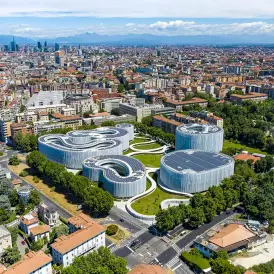
Explore Bocconi's visionary 2026–2030 Strategic Plan, aimed at bolstering executive leadership, management training, and global expansion.

HEC Paris unveils “Dare the Impossible,” a new brand signature highlighting innovation, leadership, and its vision for education in a rapidly changing world.
