
Eduniversal Best Masters 2026 in Information Systems Management in Pakistan
Rankings updated annually. Next full edition: March 2027.
This article explores the evolving landscape of Master's in Information Systems Management (ISM) in Pakistan in 2026. Covering trends, curriculum shifts, employability factors, challenges, and future outlook, it offers a strategic view for students, institutions, and policymakers navigating this critical field.
Discover the Eduniversal Best Masters for Information Systems Management

Pakistan
Discover in detail the Master in Information Systems Management in Pakistan
Summary: This article explores the evolving landscape of Master's in Information Systems Management (ISM) in Pakistan in 2026. Covering trends, curriculum shifts, employability factors, challenges, and future outlook, it offers a strategic view for students, institutions, and policymakers navigating this critical field.
Overview of Pakistan’s ISM Landscape (2026)
The landscape for Information Systems Management (ISM) master's programs in Pakistan is experiencing a critical transformation.
Expanding higher education offerings are aiming to match economic demands and digital evolution. While exact enrollment figures are scarce, ISM and interconnected IT programs are now estimated to attract thousands of students annually across both public and private universities.
Government oversight, especially policy changes by the Higher Education Commission (HEC), supports this expansion and curriculum modernization.
Programs now intersect closely with related fields such as data analytics and business intelligence. The demographic is mostly working professionals in their late twenties, complemented by growing but still modest international participation, which remains limited compared to regional competitors.
The revised educational frameworks, including the 2026 Computer Science curriculum, aim to ensure alignment with industry demands across AI, cloud computing, and cybersecurity—key ISM pillars recognized globally, such as in the Eurasia & Middle East ISM rankings.
Curriculum Evolution and Industry Alignment
Across Pakistani institutions, ISM programs are now constructed with a balanced mix of theory and practical exposure. Data Science, Artificial Intelligence, and Cybersecurity are no longer electives but central components. This shift enhances alignment with global Information Systems Management standards.
Programs emphasize capstone projects, live cases, and internships as essential components. Institutions like UMT reflect this shift, integrating IT with organizational and strategic management contexts. Interdisciplinary learning also supports dual-credential pathways, in which degrees are layered with industry certifications from vendors like Microsoft or AWS—mirroring trends seen in innovation hotspots like innovation and project management.
Delivery Formats and Access Expansion
To accommodate the diversity in student profiles, delivery models are expanding. While full-time, on-campus tracks remain common, hybrid and part-time formats are increasingly popular among mid-career professionals.
However, fully online programs remain rare due to restrictions linked to hands-on labs and experiential course components.
The accessibility of programs influences socioeconomic diversity. Tuition for public universities ranges from PKR 300,000 to 600,000 over 2–3 years, while elite private institutions command fees upwards of PKR 3 million.
Though demand rises, programs face an affordability ceiling, limiting access to underprivileged segments.
Some funding is available through HEC and merit-based university scholarships.
Moreover, employer-funded education is increasingly common among technology and banking sector employees, similar to patterns in other regions focused on corporate finance and digital upskilling.
Skills Trends and Graduate Employability
Technical and strategic skills are paramount in shaping ISM graduate employability. Employers prioritize knowledge in Python, Java, database systems, and IT project management. Advanced knowledge in enterprise systems and machine learning delivers a career edge. Notably, Business Intelligence platforms and enterprise data solutions significantly influence salary bandings.
Graduates also need co-curricular exposure in business strategy and organizational leadership. Communication, stakeholder management, and financial literacy are increasingly vital for ISM professionals—paralleling roles seen in business intelligence and hybrid business technology domains.
Entry-level roles commonly include IT managers, business analysts, consultants, QA engineers, and information systems auditors. Salaries range from PKR 800,000–1.2 million annually for entry roles and PKR 2–3.5 million in senior roles at MNCs or tech startups, often accompanied by profit-sharing or equity benefits.
Institutional Quality, Accreditation & Global Recognition
Quality assurance is anchored by Pakistan's HEC, which mandates standardized curricula across Computer Science and Business/Management programs. However, the consistency of quality implementation varies sharply. Elite programs, often linked with international accreditation bodies like ABET and EQUIS, outperform mid-tier institutions—similar to disparities seen globally across general management categories.
On the global stage, Pakistani ISM degrees find moderate recognition within the Commonwealth and emerging tech-hub nations such as UAE, Singapore, UK, and Canada. Work visa pathways have become more accessible in these destinations, particularly for candidates supplemented with certifications or region-compliant equivalency credentials.
Competitive Dynamics and Regional Trends
ISM education in Pakistan faces growing competition domestically and regionally. India’s IIM network and Bangladesh’s improving tech landscape exert reputational pressure. Despite cost advantages, domestic institutions must now compete on curriculum relevance, faculty quality, and tangible outcomes.
An estimated 15–20% of eligible students continue to pursue advanced ISM degrees abroad due to perceptions of value and credibility—but the gap is narrowing. Increasingly, affordable domestic master's programs are integrating cross-border exposure via joint certifications, exchanges, and global project collaborations—building pipelines seen in maturing sectors like industrial and operations management.
Ongoing Challenges Hindering Scalability
Despite the momentum, several structural barriers constrain ISM capacity growth:
- Faculty shortages: Pakistan faces a deficit of experienced, research-qualified professors in advanced ISM areas, caused in part by brain drain to Gulf and Western countries.
- Technical infrastructure gaps: Public institutions often lack modern laboratories and cloud resources needed for hands-on teaching in AI, cybersecurity, and data analytics.
- Curriculum-labor market lag: While HEC’s recent reforms are encouraging, real-world implementation remains slower than tech market evolutions—typically lagging by 2–3 years.
Until addressed systematically, these challenges risk compromising the quality pipeline needed to meet both domestic and international demand for capable ISM professionals.
Forecast 2026–2028: Growth Scenarios and Policy Outlook
The future for ISM education in Pakistan hinges on several plausible scenarios:
- Baseline: Steady 8–12% annual enrollment growth, with consistent quality improvements and increased specialization focus.
- Upside: Market expansion fueled by government digital transformation, foreign investment, and public-private partnerships could drive 18–20% growth, attracting inbound students and expert faculty.
- Downside: Economic instability or currency devaluation could challenge private university enrollments, stretching public capacity without infrastructure upgrades.
In the medium term, micro-credentials and AI/data specializations will dominate. ISM will increasingly overlap with fields like cybersecurity, ERP, and sustainability solutions. Government-backed loans and international accreditation expansion will drive both accessibility and quality control.
Final Thoughts
Pakistan’s Master’s in Information Systems Management sector has entered a pivotal phase. Students must now look beyond generic credentials, seeking programs that offer tight industry linkage, strong faculty, and dual degrees or certifications.
Institutions must raise their game—investing in research, technology, and tier-1 faculty—if they aim to deliver workforce-aligned results. For regulators, sustained focus on systems, not just structures, will be key in translating education reforms into global-ready graduates prepared for tomorrow’s business-tech frontier.
Latest news

Discover which business schools let you study in 3 different countries within a single degree. Compare ESCP, Skema, EM Normandie, and EDHEC on campus access, costs, and degree recognition.
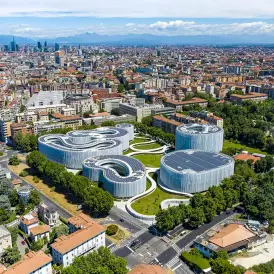
Explore Bocconi's visionary 2026–2030 Strategic Plan, aimed at bolstering executive leadership, management training, and global expansion.

HEC Paris unveils “Dare the Impossible,” a new brand signature highlighting innovation, leadership, and its vision for education in a rapidly changing world.
