Eduniversal Best Masters 2026 in Information Systems Management in Portugal
Rankings updated annually. Next full edition: September 2026.
Explore the evolving landscape of Portugal's Master's in Information Systems Management programs for 2026. This in-depth article covers trends in curriculum design, employability, market dynamics, international appeal, and tuition frameworks. Ideal for prospective students and professionals seeking career growth in the digital domain.
Discover the Eduniversal Best Masters for Information Systems Management

Portugal
Portugal
Discover in detail the Master in Information Systems Management in Portugal
Explore the evolving landscape of Portugal's Master's in Information Systems Management programs for 2026. This in-depth article covers trends in curriculum design, employability, market dynamics, international appeal, and tuition frameworks. Ideal for prospective students and professionals seeking career growth in the digital domain.
Market Expansion and Industry Context
Portugal’s higher education market for Information Systems Management (ISM) Master's degrees is witnessing robust expansion. With around 14 advanced programs offered across Lisbon, Porto, Coimbra, and Santarém, the national ecosystem is taking shape amid growing demand for digital transformation leaders.
Graduates of these programs boast exceptional employability, with placement rates close to 100%. Multiple sectors—including finance, telecommunications, and services—lead hiring initiatives, reinforcing the academic-to-career pipeline established in these Master's offerings.
The growing importance of sustainable development and cross-border data governance also compels organizations to invest in top-tier digital professionals.
Curriculum Trends and Evolving Specializations
In 2026, ISM programs in Portugal increasingly emphasize hybrid curriculums. Core modules now combine technical proficiencies—like enterprise systems and information security—with business essentials such as change management and stakeholder communication.
New specializations are reshaping program structures. Tracks in data analytics, business intelligence, and enterprise architecture emerge as high-demand fields. Digital transformation no longer exists as an elective—it’s a foundational pillar across top programs.
Formats are flexible: full-time, part-time, and blended delivery options allow working professionals to upgrade skill sets without career interruption. This follows models already adopted by programs in Information Systems Management across other regions.
Skills Development and Career Opportunities
The 2026 landscape highlights a dual focus on technical and transversal competencies. While students master database design, IS architecture, and cybersecurity protocols, equal emphasis is placed on leadership, communication, and project management skills—the latter crucial for progression toward CIO and IT director roles.
Practical application is core to the learning process. Programs require participation in capstone projects, and most include long-term internships facilitated through corporate partnerships and recruitment networks.
Real-world enterprise projects (e.g., SAP lab implementation) integrate classroom learning with industry demands.
Students often land roles in finance and consulting sectors, with many graduates progressing toward project management and technical consulting tracks. This is comparable to fields like consulting and strategy or cybersecurity.
Program Quality and Global Reach
Portugal's ISM programs are rigorously regulated by A3ES, the national accreditation authority. This ensures consistent academic quality and international recognition across European institutions.
English-language programs have become standard, facilitating Erasmus+ exchange compatibility and attracting non-native speakers.
International rankings directly shape student decision-making. According to Eduniversal 2026, NOVA IMS leads the Portuguese and Western European market. Programs like theirs also compete globally—ranking as high as 14th worldwide within the ISM category.
Graduates benefit from favorable visa and work policies within the EU, allowing sustained regional mobility following completion. Graduates often pursue careers in hubs like Dublin, London, or Frankfurt, with some reversing flows to Portugal via career reorientation.
Affordability, ROI, and Funding Availability
Studying a Master's in Information Systems in Portugal is competitively priced. EU residents pay between €2,000–€3,900 annually, while non-EU students typically encounter fees from €3,000–€4,900. Average total program costs remain under €8,000—significantly below equivalent programs in Northern Europe or the U.S.
Merit-based grants—such as Erasmus+—offer limited but growing avenues for financial support. Additionally, corporate sponsorship is common, especially for mid-career professionals within talent development tracks. These mechanisms make ISM programs more financially accessible than those in adjacent fields like MBA full-time programs.
Given the high placement rates and above-average tech salaries, most students report return on investment (ROI) within 2–3 years post-graduation.
Competitive Positioning and Internationalization
Portuguese institutions face moderate domestic competition among the 14 active programs. The market is not yet saturated—unlike in Spain or Germany—leaving room for differentiation in niche areas such as sustainable IT and AI governance.
International recruitment is on an upward curve, driven by English programs, EU status, and affordable tuition. However, domestic enrollment remains dominant. Cross-border collaboration, especially in the form of dual degrees and exchange modules, is expected to grow through 2028.
Interestingly, while online bootcamps and edtech players disrupt markets elsewhere, Portugal maintains a traditional academic delivery model—meeting employer preference for university-based ISM degrees.
This model mirrors strategies seen in adjacent domains like innovation and project management.
Challenges and Forward Outlook (2026–2028)
Three main obstacles stand out: a talent shortage in faculty with real-world experience, curricular agility constrained by rapid tech advancements, and limited public scholarships for broader socioeconomic access. Universities attempt to bridge these gaps via industry advisors and elective flexibility.
The upside scenario through 2028 includes new specializations in AI operations, quantum systems, and sustainable IT. Modular micro-credentials may be embedded within full degrees, enhancing adaptation, similar to evolutions in quality management education.
Policy makers monitoring EC digital regulations and skill upskilling frameworks may introduce expanded incentives, unlocking broader graduate participation across OECD and EU-member populations.
Final Thoughts
Portugal’s Master's in Information Systems Management market shows strong fundamentals: high graduate employment, institutional investment, and growing regional prestige. As employers continue to prioritize digitally resilient leadership and hybrid skill sets, Portuguese ISM programs are well-positioned to respond.
Students seeking affordable, high-value alternatives to established Northern European or U.S. programs will find Portugal particularly compelling. Universities that pivot quickly to emerging domains—AI governance, sustainability, advanced analytics—and leverage flexible delivery formats will lead the next phase of market evolution.
Learn more about complementary areas like business intelligence & strategy and interdisciplinary pathways involving public administration management in Portugal.
Latest news

Discover which business schools let you study in 3 different countries within a single degree. Compare ESCP, Skema, EM Normandie, and EDHEC on campus access, costs, and degree recognition.
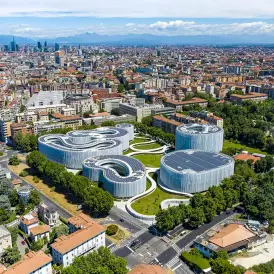
Explore Bocconi's visionary 2026–2030 Strategic Plan, aimed at bolstering executive leadership, management training, and global expansion.

HEC Paris unveils “Dare the Impossible,” a new brand signature highlighting innovation, leadership, and its vision for education in a rapidly changing world.
