
Eduniversal Best Masters 2026 in Economics in France
Rankings updated annually. Next full edition: September 2026.
Take a fresh look at France’s evolving Master’s in Economics landscape for 2026. This overview examines shifts in enrolment, emerging skill requirements, curriculum modernisation, and France’s position in the global academic arena. It also highlights how institutions are responding to globalization, technological change, and labour-market demands, while addressing ongoing challenges related to access and educational quality.
Discover the Eduniversal Best Masters for Economics

France
France
France
Discover in detail the Master in Economics in France
Discover the dynamic landscape of Master's programs in Economics in France for 2026. This article explores trends in enrollment, skill demands, curriculum evolution, and global competitiveness. Learn how France is adapting to globalization, tech integration, and labor market needs while facing pressing challenges in accessibility and quality.
Current Landscape and Market Size
France's Master's programs in Economics are experiencing notable growth, driven by local and international student demand. As of the 2024/25 period, approximately 443,500 international students are enrolled in French higher education institutions, comprising 15% of the total student body.
Among 25–34-year-olds, 26% have attained a Master's degree—an impressive figure compared to the 16% OECD average.
The field of economics, recognized as a leading social science in France, sees tens of thousands of Master’s students nationwide. This rise aligns with digital transformation trends and the relevance of data-driven economic methodologies.
The enrollment demographic is broad, with over 50% of international students hailing from African countries, and significant numbers from Asia and Europe. Women entering fields linked to STEM and quantitative economics are slowly increasing. The average entry age into a Master’s program remains low at 24.2 years.
Several macroeconomic factors contribute to the momentum, including the stable performance of the French economy, tightened visa and labor integration policies, widespread digitalization, and heightened focus on sustainability. For related programs, students may also consider options in Green Finance or Sustainable Development.
Trends in Curriculum and Program Delivery
Modern Master's programs in Economics prioritize cutting-edge subfields such as econometrics, statistical modeling, and AI-driven economic analysis. Students are increasingly drawn to interdisciplinary studies combining economics with technology, such as data analytics and machine learning.
Beyond traditional disciplines, applied policy and experimental economics have found a solid footing, reflecting the demand for real-world relevance. Many programs embed practical experiences like internships, group projects, and capstone assignments, often leveraging software tools such as R, Python, and Stata.
The modularization of programs via stackable micro-credentials facilitates lifelong learning. Technology integration is also being advanced through hybrid and online formats, especially in the first year or in niche modules.
Increased use of English-taught courses supports global student recruitment. For a broader interdisciplinary experience, see programs in Business Intelligence and Strategy.
Core Competencies and Career Outcomes
The skills most valued in today's economics graduates include advanced statistical techniques, data modeling, and proficiency in widely used programming languages. Communication and analytical thinking remain essential soft skills.
Popular employment destinations for economics graduates include research centers, consultancy firms, financial institutions, and public policy labs. Roughly 42% find work in academic or applied research, and over 95% secure employment within three months post-graduation.
Starting salaries average around €35,000 annually, though this varies by industry and location. Internship programs and apprenticeship schemes embedded in studies play a pivotal role in career readiness. To explore high-salary alternatives, check out our ranking in Financial Markets.
Quality Assurance and International Appeal
France’s Master's degrees in Economics adhere to rigorous national standards and meet the European Bologna Process framework, ensuring international compatibility and credit transferability across Europe.
Recent steps taken to attract and retain international talent include government-backed visa policy reforms, improved residence permits, and streamlined labor integration processes. International recognition of France's academic excellence further consolidates its appeal to global candidates. Parallel fields worth exploring include International Management.
Accessibility, Tuition, and Financial Support
One of France’s most appealing attributes in graduate education is its cost-effectiveness. Public university tuition ranges from €200 to €4,000 annually, while elite private schools may charge up to €30,000. Despite this, the public sector’s affordability significantly boosts accessibility.
Financial aid options abound: Eiffel Excellence and Erasmus Mundus are among the most prominent scholarships targeting international students. Apprenticeships and sponsored internships also receive public or employer funding, albeit in competitive environments. With high employability and relatively low fees, the return on investment for studying Economics in France remains favorable. Related ROI-driven fields include Corporate Finance.
France’s Position in the Global Education Market
While France remains a leader in economics education, it faces stiff competition from English-speaking nations and neighboring EU countries. Cross-border educational partnerships and dual degrees are helping address this challenge, offering students broader cultural exposure and academic flexibility.
Collaborations with EdTech platforms introduce more flexible learning models. Institutions actively innovate to distinguish themselves globally through branding, digital presence, and curriculum distinctiveness. Aspiring entrepreneurs may explore complementary programs in Entrepreneurship.
Risks and Forward-Looking Projections
The future of Economics Master's programs in France depends on tackling persistent challenges. High living expenses, particularly in urban hubs like Paris, can burden international students. There are also concerns about aligning academic output with rapidly changing labor market demands.
Although France boasts a strong research tradition, faculty shortages, especially in quantitative and tech-intensive fields, may impede long-term growth.
Nevertheless, governmental focus on internationalization, digital education, and sustainability offers promising opportunities for advancement. Innovation efforts—particularly in hybrid formats and micro-credentials—could reshape the education delivery model significantly.
Additionally, students interested in blending creativity and strategy with economics might consider programs in Creativity Management, Innovation and Design Thinking.
Latest news

Discover which business schools let you study in 3 different countries within a single degree. Compare ESCP, Skema, EM Normandie, and EDHEC on campus access, costs, and degree recognition.
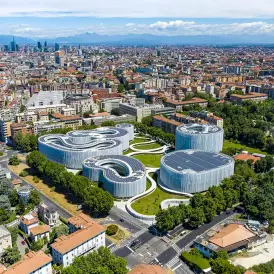
Explore Bocconi's visionary 2026–2030 Strategic Plan, aimed at bolstering executive leadership, management training, and global expansion.

HEC Paris unveils “Dare the Impossible,” a new brand signature highlighting innovation, leadership, and its vision for education in a rapidly changing world.
