
Eduniversal Best Masters 2026 in Marketing in France
Rankings updated annually. Next full edition: September 2026.
Explore the thriving Master’s in Marketing landscape in France for 2026, characterized by international growth, digital transformation, and strong employability outcomes. This article analyzes market size, curriculum trends, regulatory frameworks, and future outlook—offering insights for prospective students, educators, and industry stakeholders.
Discover the Eduniversal Best Masters for Marketing

France
France
France
France
France
France
France
Discover in detail the Master in Marketing in France
Summary: France’s Master’s in Marketing offerings in 2026 are thriving thanks to internationalisation, the rise of digital-driven learning, and strategically oriented programs. In this article, we discuss market dynamics, demand and curriculum shifts, skills development, cost, and future challenges—including which specializations and emerging fields are on the rise.
Context and Market Size of Master’s in Marketing in France
The Master’s in Marketing sector in France is undergoing significant growth in 2026, driven by increased demand for specialized, digital-savvy marketing skills. Although aggregated student numbers specific to the marketing field are not published, top-tier French institutions report enrollment rates where international students form up to 73% of the cohort. France's global branding in Luxury Management and digital communication is especially influential in attracting students globally.
Competitive tuition pricing—compared to other Western nations—as well as access to scholarships and apprenticeships, further reinforce this appeal.
This market growth coincides with shifting student demographics. Digital-native learners seek tech-forward programs with a strong emphasis on ethical, experiential, and sustainability themes. These evolving expectations play a pivotal role in shaping curriculum design and learning models in 2026.
Macroeconomic and Policy Drivers
The French economy’s digital pivot and robust business expansions are major catalysts for the growing demand in marketing education. Regulatory frameworks such as GDPR have led institutions to bolster training in data ethics and privacy. Furthermore, courses are increasingly incorporating corporate social responsibility topics, sustainability practices, and environmental accountability.
The significant lack of talent in digital marketing, analytics, and sustainable brand management continues to push institutions to introduce enhanced modules in Data analytics, AI integration, and ethical branding. These new offerings aim to close the global digital skills gap and prepare graduates for future-oriented roles, both in France and abroad.
Curriculum and Demand Trends Through 2026
In 2026, the most in-demand specializations include Marketing Analytics, AI-powered and digital marketing, sustainable branding, and luxury sector-focused strategies. Additionally, creativity and innovation-based marketing fields are emerging—leading to curriculum models that blend technology, creative strategy, and social awareness.
Many institutions now offer real-world projects, extended internships of up to 9 months, and interdisciplinary capstones. These experiential components are supported by modular and hybrid course designs, which respond to increasing interest in flexible and stackable qualifications. Marketing curricula now also leverage AI and predictive analytics tools to develop data-informed decision-making capabilities.
Programs aligned with high-growth industries such as Food & Beverage Marketing or experiential retail are gaining traction, unlocking value in creative consumer marketing approaches.
Key Skills and Job Market Outcomes
Employability remains a major strength for marketing Master’s programs in France, with employment rates exceeding 90% within six months post-graduation. Average entry-level salary packages range between €70,000 and €80,000, supported by notable international placement—around 60%.
Recruiters increasingly look for candidates with technical skills in marketing automation, AI application, and digital content creation—supplemented by strategic acumen, problem-solving, and ethical leadership abilities. Career paths span across brand management, data insights roles, and digital campaign strategy. Work-based pathways such as apprenticeships continue to bridge education and industry integration effectively.
Growing intersections with areas like Business Intelligence and Strategy and digital systems further widen the career horizon for graduates.
Quality Assurance, Regulatory Frameworks, and Recognition
French marketing degrees are held to high academic and professional standards through national oversight bodies such as the Commission d’Évaluation des Formations de Gestion. Most top-ranked programs are also internationally accredited with frameworks like AACSB and EQUIS, enhancing degree recognition and facilitating credit mobility worldwide.
This global compatibility appeals to international learners and supports post-study work opportunities, which are further amplified by France’s labor shortage in marketing functions. Institutions align their programs with national employment needs, helping students take advantage of favorable visa extensions and transition smoothly into professional roles.
Graduates interested in global or cross-industry pursuits often complement their studies with dual qualifications in domains like Consulting and Strategy or general management fields.
Costs, Funding, and ROI of Marketing Master’s Programs in France
French business schools offer competitive pricing: public institutions have subsidized tuition, while private schools typically charge between €10,000 and €20,000 per year. This investment becomes more accessible through diverse funding options, which include state-backed scholarships, merit funding, apprenticeship earnings, and employer-sponsored graduate education plans.
Given the strong career outcomes, ROI is generally high. Students also benefit from France’s ecosystem, rich in luxury brands, green enterprises, and tech startups—industries that demand skilled marketers. Furthermore, programs with overlapping expertise in domains like Green Finance or sustainability-oriented industries offer additional revenue streams for graduates.
Global Positioning and Competitive Dynamics
France remains a prime destination for marketing education, both in Europe and globally. Its institutions are innovating not only in learning solutions but also in delivery formats—offering more hybrid and modular options through EdTech-enabled platforms. This agility helps French schools compete actively with hubs in North America and Asia.
Inbound international student numbers continue to grow, supported by outreach programs and English-taught offerings. At the same time, many French students pursue international rotations or dual degrees, enhancing their mobility and value in the global job market.
Prominent schools collaborate internationally, forging dual diplomas and leveraging the ECTS credit system for seamless transitions—especially relevant for expanding disciplines like International Management and digital marketing strategies abroad.
Risks, Challenges, and Long-Term Outlook (2026–2028)
Despite the positive trajectory, challenges persist. Key concerns include balancing affordability with rising costs, scaling faculty capability in frontier fields like AI and ethical tech, and upgrading infrastructure to support advanced data-tech deployments. Research innovation in marketing tools and consumer behavior modeling remains crucial to sustaining program relevance.
Policy support, academia–industry cooperation, and global branding of French marketing programs must continue to evolve proactively. Otherwise, France risks slipping amid fierce competition from global digital ecosystems.
Between 2026 and 2028, the outlook is optimistic. Growth is expected around areas like AI-enhanced personalization, sustainable commerce, and immersive consumer engagement—including upcoming frontiers like metaverse branding. Emerging ethical frameworks in marketing and expansion into lifelong learning formats represent some of the most exciting possibilities.
Latest news

Discover which business schools let you study in 3 different countries within a single degree. Compare ESCP, Skema, EM Normandie, and EDHEC on campus access, costs, and degree recognition.
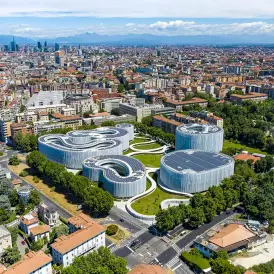
Explore Bocconi's visionary 2026–2030 Strategic Plan, aimed at bolstering executive leadership, management training, and global expansion.
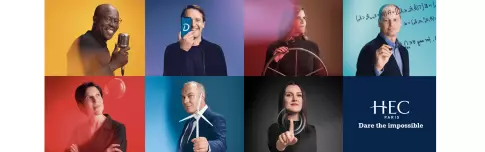
HEC Paris unveils “Dare the Impossible,” a new brand signature highlighting innovation, leadership, and its vision for education in a rapidly changing world.
