
Eduniversal Best Masters 2026 in MBA full time in Pakistan
Rankings updated annually. Next full edition: September 2026.
Explore a comprehensive analysis of full-time MBA programs in Pakistan for 2026, focusing on market growth, curriculum innovations, key skills, and future outlook. This article also discusses regulatory aspects, cost structures, and international collaborations shaping the MBA education ecosystem. Learn how Pakistan’s evolving MBA landscape aligns with global trends, preparing graduates for leadership in a dynamic job market.
Discover the Eduniversal Best Masters for MBA full time

Pakistan
Pakistan
Other programs ranked among master degrees Trempline Awards
Lebanon
Discover in detail the Master in MBA full time in Pakistan
Explore the evolving MBA landscape in Pakistan in 2026 with a focus on full-time programs, market opportunities, curriculum innovations, skill development, affordability, quality control, and international competitiveness in a rapidly modernizing higher education environment.
Market Context and Demographic Trends
Pakistan's postgraduate business education sector is on a steady rise, aligning with global shifts in management education. The country houses over 269 universities and 2,500 degree colleges that collectively serve millions of students. Among these, full-time MBA programs hold a significant share, driven by increasing enrollment across disciplines.
The Pakistani market remains largely local, though a modest number of outbound students pursue internationally ranked MBAs (MBA full time), contributing to diversity in exposure and experience. Demographically, most MBA aspirants are young professionals around 25, with near-equal gender representation emerging in leading business schools.
Academic diversity adds further strength. Applicants hail not only from business backgrounds but also from engineering, marketing, and economics — reflecting well-rounded demand. Economics continues to be a key feeder discipline, implying integrated academic pipelines.
Curriculum Innovation and Delivery Modes
Modern MBA curricula in Pakistan increasingly include interdisciplinary components, showcasing global in-demand subfields such as finance, business analytics, international management, and sustainability.
These shifts are in line with broader global trends seen in areas like data analytics and sustainable development. With experiential learning at the center, many institutions integrate case methods, internships, corporate capstones, and real-time industry projects.
AI-driven curriculum components, such as simulation-based decision-making and digital tools for analytics, are also gaining ground. Stackable modules and micro-credentials foster lifelong learning and flexibility, supporting part-time professionals and career switchers alike.
Skills, Employability & Career Pathways
As Pakistan's digital and entrepreneurial economy grows, recruiters seek MBAs with technical proficiencies and soft skills. Financial acumen, cross-cultural communication, strategic leadership, and project management top the employability matrix.
Graduates frequently take roles in finance, telecom, consulting, FMCGs, and increasingly in startups and the technology space. The landscape also aligns closely with domains such as entrepreneurship and consulting and strategy.
Internships are becoming standard within MBA programs, often structured as mandatory modules to bridge the academic-business divide. Salaries are competitive relative to national income averages and increase post-internship or initial placement phase.
Regulatory Environment and Recognition Metrics
The Higher Education Commission (HEC) regulates quality standards through equivalency procedures and admission criteria, such as GRE or GMAT scores. Schools with national and international accreditations like AACSB or AMBA fare better in credibility and employer preference.
Yet, the global recognition of Pakistani MBAs remains modest. However, dual-degree arrangements and syndicated programs with international stakeholders—including those in emerging areas such as international management—are emerging to enhance visibility.
Cost Structures, Scholarships, and ROI
Full-time MBA tuition in top Pakistani institutions ranges from PKR 1.7 to 2.2 million (~USD 7,000–9,000). While this is more affordable than Western counterparts, affordability remains a barrier for many prospective students.
Financial assistance options such as merit-based scholarships, government schemes, and limited employer funding exist but do not scale adequately. That said, ROI remains favorable for most students, especially in growing segments like financial markets and corporate roles.
Competitive and International Landscape
The competition within Pakistan’s MBA space is intensifying as local programs elevate quality through partnerships and EdTech integrations. The inbound international student population remains limited, keeping it primarily a domestic market.
However, outbound Pakistani students seek advanced programs abroad, particularly where dual-degrees or flexible study formats are available. Hybrid delivery models combining online and on-campus modules enhance flexibility and access for underserved regions outside metropolitan areas.
Programs with strengths in digital delivery, such as those offering e-business and digital marketing, are expanding their footprint through international MOUs and online platforms.
Key Challenges and Strategic Outlook (2026–2028)
Pakistan faces several systemic challenges in its MBA education space: high tuition costs versus income levels, brain drain of experienced faculty, and slow adaptation in public-sector curriculum updates.
Limited infrastructure for research, variation in digital adoption, and disconnects between job market skills and academic offerings also impede student outcomes. As such, aligning business education with market realities has never been more critical.
Yet, the outlook remains positive. Continued investments in technology-backed learning tools, experiential modules, and targeted reforms by HEC could drive Pakistan’s MBA sector to global competitiveness. Areas like green finance and leadership could become focal points for transformation.
Latest news

Discover which business schools let you study in 3 different countries within a single degree. Compare ESCP, Skema, EM Normandie, and EDHEC on campus access, costs, and degree recognition.
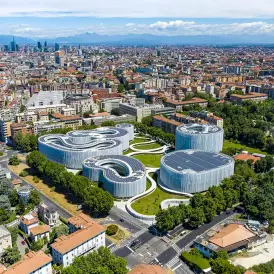
Explore Bocconi's visionary 2026–2030 Strategic Plan, aimed at bolstering executive leadership, management training, and global expansion.

HEC Paris unveils “Dare the Impossible,” a new brand signature highlighting innovation, leadership, and its vision for education in a rapidly changing world.
