
Eduniversal Best Masters 2026 in MBA full time in Poland
Rankings updated annually. Next full edition: September 2026.
Explore Poland's full-time MBA landscape in 2026 with this in-depth, data-backed guide. Learn about market trends, curriculum innovations, employability, global recognitions, and investment returns. Discover why Poland is positioning itself as a major management education hub in Central and Eastern Europe.
Discover the Eduniversal Best Masters for MBA full time

Poland
Other programs ranked among master degrees Trempline Awards
Lebanon
Discover in detail the Master in MBA full time in Poland
Poland’s Growing MBA Market: Size, Context & Macroeconomic Trends
Poland’s higher education system is experiencing a resurgence. In the 2024/2026 academic year, 1.28 million students enrolled in higher education, representing a 2.8% increase from the previous year. This growth reverses a previous demographic decline and continues a steady upward trend since 2020/21.
While statistics specifically for full-time MBA enrollment remain undisclosed, the broader Master’s-level market is strong. An impressive 31% of Polish adults aged 25–34 hold a master’s or equivalent degree, nearly double the OECD average. This cultural emphasis on postgraduate education has helped sustain the demand for MBA programs.
Business remains a top draw across disciplines. Business, administration, and law collectively account for 22.6% of all enrollments and 29% of bachelor’s graduates, constituting a sizeable pipeline of future MBA applicants. These subjects also attract international students: in 2024/25, Poland welcomed 108,600 foreign students, with a notable 32.2% choosing business-related majors.
Women represent a majority in higher education, accounting for 58.2% of students and 56% of new tertiary entrants. This is reflected in business schools as well, particularly in full-time formats. However, other programs such as the Executive MBA tend to show a more gender-balanced enrollment.
Several macro trends are shaping the MBA market in Poland:
- Skills gaps, especially in STEM and digital fields
- Ongoing digital and green economic transitions
- EU incentives supporting lifelong learning
- Geopolitical shifts amplifying the need for adaptable leaders
Full-Time MBA Curriculum & Demand Trends in 2026
The demand for full-time MBAs in Poland is increasingly tied to strategic, operational, and digital readiness. Programs are evolving rapidly to meet the complex demands of 2026’s business environment.
Key subfields experiencing high demand include:
- Digital transformation
- Innovation and entrepreneurship
- Sustainability and ESG
- International business models
- Project and program management
More specialized interests are also gaining traction through paths such as:
- Cybersecurity management
- AI and data analytics in business
- FinTech innovations
- Health sector management
Most MBAs integrate hands-on experiential elements including final managerial projects, simulations, and real-world industry cases. Internships and consulting partnerships are foundational. Meanwhile, short-format micro-credentials—such as modules in pricing strategy or career branding—offer stackable, flexible learning solutions.
Program delivery is diversifying with more hybrid and modular options, making it easier for working professionals and international learners to adapt MBA studies to their schedules.
Skills Development & Post-MBA Employability
Employers in Poland are actively seeking MBA-trained professionals who bring both strong technical knowledge and refined leadership capabilities. These skill sets help them navigate today's competitive and digitized landscape.
Top technical competencies include:
- Financial and strategic analysis
- Data analytics and business intelligence
- Project and program management
- Risk and compliance
- Digital marketing strategies
Transversal, soft skills are equally emphasized:
- Strategic decision-making
- Leadership and team management
- Negotiation and communication
- Cross-cultural fluency and resilience
Common career paths for graduates include operations management, finance, consulting, marketing leadership, and intrapreneurship roles. High-demand sectors include FinTech, IT, manufacturing, and NGOs.
Though exact salary metrics are limited, broad estimates suggest:
- Early-career: PLN 12,000–18,000/month
- Mid-career: PLN 18,000–30,000+/month
- Senior roles: PLN 30,000–50,000+/month
These figures often trend higher in multinational companies and consulting firms.
Accreditation, Policy Framework & Global Recognition
All higher education in Poland is governed by the Ministry of Education and Science and quality-checked by the Polish Accreditation Agency (PKA). MBA programs must comply with these national standards.
However, international accreditation—especially AMBA—is increasingly seen as a mark of excellence in MBA programs. Accreditation indicates quality assurance in curriculum, faculty, and student outcomes. AMBA is particularly notable for global MBA program recognition.
Poland’s integration with the European Higher Education Area (EHEA) supports credit transfer via the ECTS, which facilitates international collaborations, dual-degrees, and academic mobility.
Post-study migration policies are also student-friendly. Graduates from Polish universities can remain in the country for 18 months to seek employment and benefit from smoother visa transitions.
These measures align with Poland’s ambition to establish itself as a regional business education hub.
Affordability, Access & Funding for Polish MBA Students
Cost remains one of Poland’s biggest advantages in the global MBA market. Tuition varies by institution type:
- Public universities: PLN 10,000–25,000/year
- Private and global programs: PLN 25,000–60,000+/year
In contrast to the US or Western Europe, these costs are highly competitive. The return on investment is even more appealing when considered alongside low living costs and a strong local labor market.
Students can access growing financial support options:
- State scholarships and merit aid
- Employer sponsorships for mid-career learners
- Non-EU global scholarships
- Flexible installment plans
Graduates often experience faster career acceleration, improved international mobility, and higher earnings over time—proving the MBA to be a worthwhile strategic career move.
Especially for those looking to pivot from areas such as accounting or law into strategic leadership, Poland’s MBA programs offer a cost-effective transition.
Global Competition & International Opportunities
Polish MBA programs face a dual imperative: satisfy strong domestic demand while attracting international applicants.
Poland’s educational offerings appeal to overseas students due to:
- Affordability and cost-efficiency
- Programs delivered in English
- Post-study visa support
- Increasing global accreditations
Outbound flows persist—many Poles continue to pursue MBAs in Western institutions. However, the quality, branding, and global reach of Polish business schools are improving, narrowing the prestige gap.
International collaborations are thriving. Cross-border and dual-degree programs with foreign universities and multinational firms are now commonplace. Institutions are also partnering with EdTech platforms to introduce innovative teaching formats and impoved career services.
Notable innovation hubs such as Poland's growing scene in innovation and project management indicate a shifting perception globally.
Challenges Impacting the Polish MBA Landscape
Despite significant advantages, the Polish MBA market faces several pressing concerns:
- Affordability & access: While tuition is manageable, rent and living costs in urban centers challenge lower-income students.
- Talent acquisition: Increasing competition from Western Europe for faculty and students puts pressure on local institutions.
- Research disparities: Business schools differ wildly in research output and funding capabilities.
- Technology & infrastructure gaps: Disparities persist in digital readiness and program delivery quality across institutions.
- Labor market alignment: Some programs still lag in responding to emerging business needs and practical applications.
To maintain momentum, MBA providers must tighten links with industry, prioritize flexible delivery, and ensure curricula meet modern enterprise needs.
The Outlook for Polish MBA Programs (2026–2028)
Poland’s MBA outlook is optimistic, with significant potential growth—particularly in international appeal and program innovation.
Baseline Expectations
- Rising enrollments in management and business education
- Increased share of English-taught courses
- More specialization in digitalization, sustainability, and entrepreneurship
- Lifelong learning through stackable credentials
Upside Scenario
- Recognition as a Central and Eastern European hub for business education
- Higher global rankings through AMBA or AACSB accreditations
- Integration with EU talent and innovation ecosystems
- Better employer collaboration and elite graduate outcomes
Emerging focus areas include sustainability MBAs, advanced analytics, modular flexibility, and career services enriched through AI and partnerships.
Latest news

Discover which business schools let you study in 3 different countries within a single degree. Compare ESCP, Skema, EM Normandie, and EDHEC on campus access, costs, and degree recognition.
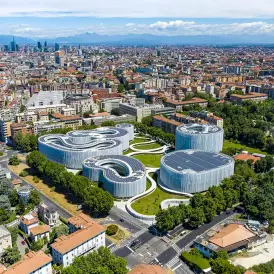
Explore Bocconi's visionary 2026–2030 Strategic Plan, aimed at bolstering executive leadership, management training, and global expansion.

HEC Paris unveils “Dare the Impossible,” a new brand signature highlighting innovation, leadership, and its vision for education in a rapidly changing world.
