
Eduniversal Best Masters 2026 in Economics in Belgium
Rankings updated annually. Next full edition: September 2026.
Take a fresh look at Belgium’s Master’s in Economics offerings in 2026. This data-driven overview analyzes market dynamics, graduate employment outcomes, programme innovation, cost considerations, and Belgium’s position in the international arena. It is aimed at students, working professionals, and policymakers seeking strategic insight into the future of advanced economics education.
Discover the Eduniversal Best Masters for Economics

Belgium
Discover in detail the Master in Economics in Belgium
Explore the evolving Master’s in Economics landscape in Belgium in 2026. This data-rich article covers market trends, employability, curriculum innovation, costs, and international competition. Designed for students, professionals, and policymakers seeking strategic insights into advanced economic education.
Context and Market Dynamics
The Master’s in Economics sector in Belgium is characterized by steady enrolment growth, driven by a shift toward data-driven and policy-relevant training.
Universities nationwide host thousands of Economics Master’s students, forming a core component of the over 40,000 postgraduate student population annually.
Recent years show increased entry from students with quantitative and data science skills, reflecting global digitalization. Belgium’s export-led economy and EU regulatory environment further elevate the demand for specialized economic talent in areas like sustainability and policy design.
Programs increasingly attract a global audience, with up to 40% of students coming from outside Belgium—an internationalization trend common across most postgraduate economics degrees, including those ranked in our Economics Master’s ranking.
Demand, Specializations and Learning Formats
Curricula in 2026 focus on interdisciplinary skills, merging classical economic theory with numerical computation, policy implementation, and societal issues. Core topics include econometrics, quantitative finance, and microeconomic policy analysis.
There is a rapid rise in environmental, energy, and behavioral economics as part of broader sustainability imperatives. These subjects often interface with programs in sustainable development and environmental management and related fields.
Increased flexibility is found through hybrid courses, micro-credentials, and modular structures supporting lifelong learning and career shifts. Integration of AI is especially notable in economic modeling and analytics-heavy disciplines—an approach paralleled in programs like Business Intelligence and Strategic studies.
Graduate Skills and Employment Outlook
Belgian employers are looking for graduates with advanced analytics skills, programming capabilities (Python, R), and robust economic reasoning. Equally important are interpersonal competencies such as communication and team collaboration. This mirrors hiring criteria in fields such as Corporate Finance and public policy advisory roles.
Industry relationships embedded in Economics Master’s programs, including internships and capstone projects, contribute to a healthy employment rate—over 80% of graduates find roles within six months. Starting salaries vary, averaging €35,000–€50,000 depending on sector and location.
Common employment paths include work in consulting, tech startups, NGOs, financial firms, and government institutions. Graduate employability is significantly enhanced by practical experiences and real-world skills integrated throughout the educational journey.
Quality, Recognition and Accreditation
Belgium maintains high education standards through national accreditation and participates in Europe-wide frameworks such as the European Credit Transfer and Accumulation System (ECTS). This supports mobility and comparability for students enrolling in dual programs and exchange initiatives.
Institutions also strive for international recognition by pursuing global accreditations like AACSB and EQUIS. The internationalization of Economics degrees aligns with trends found across disciplines including International Business Law, further validating Belgium as an academic hub.
Additionally, visa and post-study employment pathways make Belgium an appealing choice for international students aiming to integrate into the EU job market upon graduation.
Affordability, Scholarships and ROI
Tuition fees for a Master’s in Economics in Belgium typically range from €900 to €4,000 for EU students, with higher charges for non-European participants. Despite rising living costs—especially in major urban centers—the return on investment remains attractive due to the high employability and competitive wages.
Scholarships, public funding, and training subsidies are available to both domestic and international students. Universities also partner with industries to co-fund skill-building initiatives, similar to those found in emerging programs highlighted in Launching Awards.
This multi-channel financial support system helps maintain equitable access for diverse demographic groups while sustaining Belgium's competitiveness in global education markets.
Competitive and Global Perspectives
Belgian Economics Master's programs compete not only with domestic options but increasingly with offerings in France, the Netherlands, and global online courses. This competition fuels innovation—particularly in delivering hybrid and AI-enhanced curricula.
Cross-border collaborations, Erasmus+ joint degrees, and advanced specialization opportunities contribute to international diversification. Examples can be seen in complementary sectors like Entrepreneurship and innovation-driven management fields, which are closely linked to modern economic challenges.
Students aspiring to expand their horizons internationally post-graduation often pursue further studies or certifications abroad, some in fields overlapping with public governance or human capital, such as Public Administration and Management.
Challenges and Future Outlook
Anticipated obstacles include managing rising living costs, recruiting cutting-edge faculty, and maintaining technological infrastructure suitable for advanced econometric and AI applications. However, stakeholder engagement and policy reforms provide optimism for overcoming these barriers.
By 2028, Belgium’s advanced education system is projected to deepen its interdisciplinary integration, especially in sustainability-aligned topics like Green Finance and Environmental Risk Economics.
Incorporating experiential learning, AI-powered toolkits, and adaptive learning platforms will play a crucial role in making Master’s in Economics programs more personalized and career-relevant—particularly amid global economic volatility and climate imperatives.
Latest news

Discover which business schools let you study in 3 different countries within a single degree. Compare ESCP, Skema, EM Normandie, and EDHEC on campus access, costs, and degree recognition.
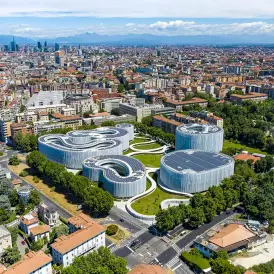
Explore Bocconi's visionary 2026–2030 Strategic Plan, aimed at bolstering executive leadership, management training, and global expansion.

HEC Paris unveils “Dare the Impossible,” a new brand signature highlighting innovation, leadership, and its vision for education in a rapidly changing world.
