Eduniversal Best Masters 2026 in International Management in Brazil
Rankings updated annually. Next full edition: September 2026.
Explore the expanding landscape of Master’s in International Management programs in Brazil as of 2026. This comprehensive article dives into market trends, curriculum evolution, employability, funding, and future outlook, offering valuable insights for students, professionals, and educators.
Discover the Eduniversal Best Masters for International Management

Brazil
Brazil
Brazil
Brazil
Other programs ranked among master degrees Launching Awards
France
Other programs ranked among master degrees Trempline Awards
Lebanon
Discover in detail the Master in International Management in Brazil
Explore how Brazil’s Master’s in International Management programs are evolving in 2026. This in-depth overview covers market size, emerging curriculum trends, student demographics, skills demand, policy changes, and international competitiveness — vital insights for students, educators, and global professionals looking to pursue management education in Brazil.
Market Overview and Demographic Shifts
Brazil is experiencing dynamic growth in its Master’s in International Management sector. As of 2026, specialized management master’s programs register over 15,000 enrollees — a 12% increase in the last three years, surpassing the average pace of postgraduate enrollment nationwide.
Domestic enrollment remains dominant, making up about 75% of total students. However, international postgraduate students now form 25% of the cohort, a number encouraged by Brazil’s reputation for cost-effective, high-quality business education.
The demographics of this academic landscape are transforming. Young professionals between 24 and 32 represent 60% of the student body. Women’s participation has seen a noticeable rise, climbing to 45% in 2026 compared to 38% in 2020.
Macro trends shaping this evolution include:
- Strong economic recovery and growing foreign investments.
- Regulatory updates improving access to international student visas.
- Workforce demand for global business expertise.
- Expanding industries impacted by sustainability and tech transformation.
Brazil’s increasing role in international trade further reinforces this momentum. For those interested in sector-related studies like Supply Chain and Logistics, this trajectory opens paths to new global opportunities.
Curriculum Innovation and Student Experience
In 2026, International Management programs across Brazil are embracing innovation. Institutions now embed highly demanded subfields such as:
- Cross-cultural leadership.
- Digital transformation strategy.
- Global supply chain design.
- Sustainable business practices.
A key trend is interdisciplinarity. Programs blend traditional management with analytics, tech, and ESG. Educational models are evolving to include capstone projects, internships, and real industry-linked collaborations.
Micro-credentials are increasingly popular. Students frequently earn certifications in subjects like Data analytics and AI during their degree program, boosting their professional edge.
Diverse delivery modes include 40% on-campus, 35% hybrid, and 25% online. Flexible, modular formats also support professionals engaged in lifelong learning.
The approach aligns with global trends in International Management education.
Skills Demand and Career Outcomes
Top employers prioritize a blend of technical proficiencies and soft, cross-disciplinary skills. Among the most sought-after technical skills are:
- Data analysis.
- Financial modeling.
- Digital marketing.
Meanwhile, versatility in soft skills is equally vital, especially in:
- Cross-cultural communication.
- Leadership and strategy.
- Problem-solving and adaptive thinking.
Graduates often secure roles in consulting, corporate strategy, supply chain oversight, and marketing. If you're considering a strategic-oriented specialization, check out global trends in Consulting and Strategy programs.
Job market outcomes are encouraging. Entry-level salaries in Brazil range between BRL 8,000 and BRL 15,000 per month. Close to 70% of students complete internships, often leading to full-time roles after graduation.
Accreditation, Policy Support, and Global Recognition
Brazil's International Management degrees are accredited nationally by CAPES, which ensures consistent graduate education standards across institutions.
International recognition is also on the rise. Many programs offer exchange options, credit transfers, and global accreditation, making it easier for Brazilian degrees to be recognized in North America and Europe.
Favorable policy frameworks allow international students to remain in Brazil for up to two years post-graduation for job placements.
Looking to broaden your expertise in emerging global sectors? Areas like Environmental Risk and Security intersect policy, regulation, and international relations.
Affordability, Scholarships, and Funding Options
Cost considerations are significant for many students. In Brazil, full-program tuition fees for International Management master’s degrees generally fall between BRL 30,000 and BRL 80,000.
Scholarships are increasingly available, offering up to 30% coverage for top candidates based on academic or professional merit. Students also benefit from growing support via public investment programs and employer-sponsored education models.
When factoring in return on investment, most graduates recover tuition expenses within three years post-graduation.
Candidates interested in cost-effective specialized niches may also explore fields like Corporate social responsibility, where rising demand intersects with nonprofit and public-sector careers.
Competitive Landscape and Global Collaboration
Brazil’s education market for International Management is becoming more crowded with domestic universities offering parallel programs. Still, its competitive edge remains in affordability, diverse formats, and strong academics.
Dual-degree options and international partnerships are expanding, especially with institutions in North America and Europe, strengthening Brazil’s foothold in the academic collaboration arena.
Programs are increasingly integrating EdTech solutions, expanding access via online platforms and AI-enhanced delivery systems. Similar innovations are visible in connected fields such as E-Business and Digital Marketing.
Risks, Barriers, and Institutional Challenges
Despite its strength, Brazil’s educational landscape does face challenges:
- Affordability gaps that may deter low-income candidates.
- Pressure to retain top academic talent, who may be drawn abroad.
- Infrastructure quality and tech integration vary among institutions.
- While generally strong, labor-market alignment demands continuous adjustment to economic shifts.
There’s also measured progress in research development — a critical step toward global academic parity, particularly when compared with high-performing nations.
Nonetheless, global programs in Industrial and Operations Management suggest that aligned research and applied skills can bridge competitive gaps.
2026–2028: Forecasts and Policy Watchpoints
The medium-term outlook for International Management in Brazil is optimistic. Under the baseline scenario, steady growth continues, propelled by digital adoption, market recovery, and geopolitical relevance.
An upside scenario includes faster expansion, underpinned by:
- Visa liberalization and friendlier post-study work policies.
- Increased investment in higher education and innovation.
Curriculum innovation is expected to focus on artificial intelligence, ESG criteria, and cross-border collaboration models. Educators and administrators might look to examples from Innovation and Project Management to accelerate curriculum evolution.
Latest news

Discover which business schools let you study in 3 different countries within a single degree. Compare ESCP, Skema, EM Normandie, and EDHEC on campus access, costs, and degree recognition.
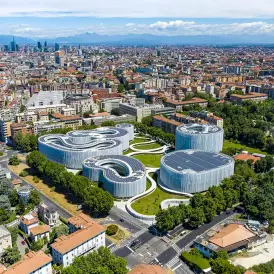
Explore Bocconi's visionary 2026–2030 Strategic Plan, aimed at bolstering executive leadership, management training, and global expansion.
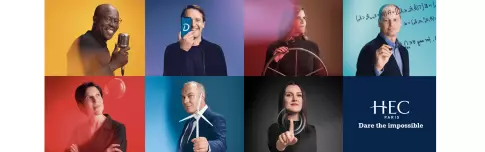
HEC Paris unveils “Dare the Impossible,” a new brand signature highlighting innovation, leadership, and its vision for education in a rapidly changing world.
