
Eduniversal Best Masters Ranking 2026 in Real Estate Management (Construction) TOP 85 Worldwide
Rankings updated annually. Next full edition: September 2026.
Master in Real Estate Management – Construction: Build the Future Sustainably. A Master in Real Estate Management with a focus on Construction prepares leaders in development, investment, and project delivery. In 2026, graduates are driving smart, sustainable, and tech-powered real estate solutions across global markets.
Discover Eduniversal Best Masters Ranking in Real Estate Management (Construction)

U.S.A.
U.S.A.
Finland
Australia
France
France
Spain
Canada
New Zealand
Latvia
Chile
Peru
China
Singapore
Canada
Russia
U.S.A.
U.S.A.
Portugal
U.S.A.
France
Hong Kong (S.A.R.,China)
France
U.S.A.
Poland
Bosnia-Herzegovina
U.S.A.
U.S.A.
U.S.A.
South Africa
United Kingdom
U.S.A.
Hawaii (U.S.A)
China
Canada
China
Thailand
U.S.A.
U.S.A.
Spain
South Africa
Spain
Chile
Ireland
France
United Kingdom
United Arab Emirates
Lithuania
Australia
Poland
Saudi Arabia
France
United Kingdom
Barbados
Israel
France
United Kingdom
Dominican Rep.
Mexico
China
South Korea
France
Peru
France
United Kingdom
Romania
Thailand
Master’s in Real Estate Management (Construction): Specialization, Application and Career Opportunities.
Real estate management with a construction focus is one of the most operationally complex and internationally active fields in postgraduate education. From large-scale urban development projects in Western Europe to infrastructure-driven growth across Far East Asia and Latin America, the sector demands professionals who can bridge finance, project delivery, sustainability, and law in a single role.
The Eduniversal Best Masters Ranking brings together the top MSc, MS and MBA programmes in Real Estate Management (Construction) from across the world, evaluated annually through three independently verified criteria: reputation on the job market, first employment salary, and student satisfaction. Whether you are entering real estate and construction for the first time or looking to formalise your expertise at a senior level, this ranking offers a structured, market-grounded starting point for your research.
The programmes listed here cover a broad range of formats, specialisations, and geographic hubs, from full-time MSc programmes focused on real estate development and project delivery to executive tracks designed for professionals already working in construction management, urban planning, or property development. Use the ranking as a comparative lens, then examine the criteria that matter most for your own goals: specialisation depth, geographic location, language of instruction, accreditation, and professional network.
What Is the Eduniversal Ranking for Real Estate Management (Construction)?
The Eduniversal Best Masters Ranking is built on a methodology that sets it apart from institution-driven or media-based rankings: three independently verified market criteria evaluated each year across 137 countries. This approach ensures that the ranking reflects professional recognition and measurable outcomes rather than promotional spend or admission selectivity. For a field like real estate and construction, where employer recognition and starting salary vary considerably across markets, this market-grounded model is particularly relevant.
The Real Estate Management (Construction) category is evaluated alongside more than 50 other specialisations, with results updated annually to reflect shifts in programme quality, international reputation, and graduate outcomes.
How Schools Are Evaluated
Every program in the Eduniversal Best Masters Ranking is assessed through a single, consistent methodology built on three criteria, each worth 5 points for a maximum final score of 15.
- Reputation on the job market (5 points) - Half of this score reflects the opinions of recruiters, and half reflects the level of the school's Palme d'Excellence.
- First employment salary (5 points) - Reported by each program and verified by Eduniversal, weighted by country and by the average annual salary of executives.
- Student satisfaction (5 points) - Measured through an 11-question survey sent to graduating students, scored only when at least 10% of a program's graduating cohort responds.
The combined score places each program on a four-star scale: 1 star (1-5.99), 2 stars (6-8.99), 3 stars (9-11.99), and 4 stars (12-15). This is the Eduniversal Best Masters Ranking methodology applied identically to every program worldwide.
The ranking covers 137 countries across 9 geographic regions, giving it genuinely international coverage that no single-country or single-region publication can replicate.
Why Use a Ranking to Choose a Real Estate Management (Construction) Master's?
The global offer of real estate and construction management programmes has expanded substantially over the past decade. Sorting through programmes across multiple continents, each with different specialisations, accreditation frameworks, and entry requirements, is a genuine challenge for prospective students.
A ranking like Eduniversal's offers a practical first filter. It narrows the field to programmes that have earned genuine recognition from recruiters and verified graduate outcomes, giving you a shortlist grounded in something more reliable than promotional material. That said, a ranking is a starting point, not a final decision. The right programme depends on factors no ranking can capture alone: your career focus, your preferred learning environment, your budget, and the professional network you want to build.
What to Expect from a Master in Real Estate Management (Construction)
A Master in Real Estate Management with a Construction focus is a specialised postgraduate degree designed to prepare students for leadership roles in real estate development, construction project delivery, and the broader built environment. Programmes typically span 12 to 18 months in a full-time format, though executive and part-time tracks are available for professionals already working in construction management, urban planning, or development finance.
The thematic scope is broad but operationally grounded. These programmes combine real estate finance and investment with the technical realities of construction project management, legal compliance, sustainability regulations, and emerging digital tools such as BIM (Building Information Modelling) and PropTech platforms. Students gain both the conceptual framework for understanding real estate markets and the practical tools to manage complex development projects from feasibility to delivery.
Professional accreditation is an important consideration in this field. The RICS (Royal Institution of Chartered Surveyors) is the leading professional body globally for real estate and construction practitioners. A number of top-ranked programmes in this specialisation are RICS-accredited, which can provide a direct pathway to chartered status and is recognised by employers across Western Europe, North America, the Middle East, and Far East Asia.
Core Curriculum Areas
While curricula vary across institutions, the following areas appear consistently across top-ranked programmes in this specialisation:
- Real estate finance and investment analysis: valuation methods, development appraisal, capital markets, and the financial structuring of construction projects
- Construction project management: project scheduling, cost management, procurement strategies, risk allocation, and contract law
- Sustainable construction and ESG compliance: energy performance standards, green certification frameworks (BREEAM, LEED), ESG reporting, and climate-resilient design
- BIM and PropTech: Building Information Modelling as a project delivery tool, and the growing role of digital platforms in asset management, smart buildings, and construction data analytics
- Urban planning, law, and land use regulation: planning law, compulsory acquisition, land development frameworks, and compliance with local and international regulatory requirements
- Asset and portfolio management: long-term management of completed real estate assets, including commercial, residential, and mixed-use portfolios
Formats and Locations
Full-time MSc and MS programmes remain the dominant format for students entering the real estate and construction sector without prior industry experience. These programmes are concentrated in Western Europe, particularly in the United Kingdom, France, the Netherlands, and Germany, where the density of large property developers, construction firms, and public-sector infrastructure agencies provides direct access to internships and industry networks.
Executive and part-time formats cater to professionals already working in construction management, architecture, civil engineering, or commercial property who want to formalise or extend their expertise. These programmes are more frequently found in major urban centres with active real estate markets, including London, Paris, Singapore, and New York.
Career Paths After a Real Estate Management (Construction) Master's
Graduates of Real Estate Management (Construction) programmes move into roles that sit at the intersection of finance, project delivery, sustainability, and urban development. The sector rewards professionals who combine analytical rigour with operational awareness and the ability to manage multiple stakeholders across long project cycles. For students interested in the financial and portfolio side of real estate, the Eduniversal ranking also covers real estate and wealth management programmes, which focus on investment, asset management, and private capital allocation.
Employers include large construction and infrastructure groups, real estate development companies, investment funds with property portfolios, public-sector planning authorities, international consultancies, and sustainability advisory firms. The profile demanded is increasingly cross-functional: technical understanding of construction processes combined with strong financial and legal literacy.
Key Roles in Real Estate Development and Construction
The roles most frequently targeted by graduates of this specialisation include:
- Real Estate Development Manager: overseeing development projects from site acquisition and planning through to completion and asset handover
- Construction Project Manager: managing cost, schedule, quality, and risk across large-scale construction projects for private developers or public infrastructure clients
- Property Asset Manager: managing income-generating real estate assets post-completion, including lease management, capital expenditure planning, and stakeholder reporting
- Sustainability and ESG Manager (Built Environment): leading the integration of ESG standards into development projects and existing portfolios, a role growing rapidly in response to regulatory pressure and investor expectations
- PropTech and Digital Project Lead: implementing BIM, construction management platforms, and smart building technologies across development projects
- Urban Planning and Development Consultant: advising public and private clients on land use, planning consents, and community impact across complex urban development schemes
- Investment Analyst (Real Estate): supporting acquisition decisions, development appraisals, and fund reporting within real estate investment management firms
Salary Outlook
Compensation in real estate development and construction management varies considerably based on geographic market, specialisation, level of seniority, and the scale of the employer. Entry-level roles in Western Europe and North America typically offer competitive graduate packages, with meaningful progression as professionals take on greater project responsibility and international mobility.
Senior roles in development management, sustainability leadership, and PropTech carry compensation that reflects both the scarcity of cross-functional expertise and the capital values involved in the projects managed. Markets in the Middle East, Far East Asia, and North America have seen sustained demand for internationally trained real estate professionals with sustainable construction credentials, which has translated into attractive packages for candidates with RICS accreditation or equivalent professional recognition.
How to Use This Ranking to Choose Your Programme
The Eduniversal Best Masters Ranking identifies the leading programmes in Real Estate Management (Construction) globally, but choosing the right programme requires a second layer of analysis. Here are the key dimensions worth examining beyond rank position.
Accreditation and professional recognition: RICS accreditation is the single most recognised professional marker in this field globally. Check whether a programme is RICS-accredited or offers a recognised pathway to professional membership, particularly if you plan to work in the UK, the Middle East, or internationally mobile roles.
Construction vs pure real estate emphasis: some programmes lean more heavily toward financial analysis, asset management, and investment. Others place equal or greater weight on construction project management, procurement, and project delivery. Review the curriculum carefully to ensure the balance matches your intended career path.
Language and location: the language of instruction shapes both your learning experience and your professional network. Programmes taught in English in the UK or the Netherlands will connect you to an international cohort and employer base. Programmes taught in French or German may offer more direct access to Continental European real estate markets. The ranking covers sustainable development and green building programmes as a related specialisation for students with a strong ESG and environmental focus.
Industry connections and placements: in real estate and construction, the quality of internship placements and the strength of the alumni network are critical. Look at where graduates from each programme are working three to five years after graduation, not just immediately after.
Specialisation vs Generalist Programmes
A generalist MSc in Real Estate Management provides broad exposure to finance, law, development, and construction, which is valuable if you are not yet certain which part of the built environment sector interests you most. A tightly focused programme in construction project management or sustainable development offers deeper immersion and is often preferred by employers looking for candidates with a specific operational skill set.
For students drawn to the intersection of logistics, infrastructure, and supply chain in construction projects, Eduniversal's ranking of supply chain and procurement management programmes offers a complementary perspective on the technical and operational dimensions of large-scale project delivery.
Regional Strengths
Several regions have established leadership in Real Estate Management (Construction) education:
- Western Europe: a high concentration of RICS-accredited programmes, particularly in the United Kingdom, France, and the Netherlands, with strong links to active urban development and infrastructure investment markets. The ranking is updated annually, so consult the current edition for exact positions.
- North America: programmes at leading US and Canadian universities combine real estate finance and development with sustainability and urban planning, often with access to strong alumni networks in the investment and development community. Consult the current edition for exact positions.
- Far East Asia: rapid urban growth and large-scale infrastructure investment have created strong demand for real estate and construction management professionals, with an increasing number of internationally recognised programmes in Singapore, Hong Kong, and mainland China. Consult the current edition for exact positions.
- Middle East and Central Asia: markets such as the UAE and Saudi Arabia have driven demand for internationally trained development professionals, with several regional universities building programmes aligned with RICS and international construction standards. Consult the current edition for exact positions.
FAQ: Frequently Asked Questions About Real Estate Management (Construction) Master's
What is the difference between a Master in Real Estate Management (Construction) and a general real estate master?
A Master in Real Estate Management with a Construction focus specifically prepares graduates for the full lifecycle of real estate projects, from site acquisition and planning through to construction project delivery and asset management post-completion. A general real estate master tends to emphasise financial analysis, investment, and portfolio management without covering construction project management in depth. If your career goal involves developing or delivering built assets rather than managing existing investment portfolios, a construction-focused programme offers a more relevant and operationally grounded curriculum.
Is a Master in Real Estate Management (Construction) better than an MBA for a construction career?
For candidates targeting operational roles in real estate development, construction management, or project delivery, a specialised MSc typically offers deeper sector immersion and a more directly relevant curriculum than a general MBA. An MBA with a real estate or construction track is better suited to professionals with several years of experience who want to move into broader management or strategy roles. The choice depends on career stage and career direction: specialised MSc for sector entry and technical expertise, MBA for mid-career transition or senior management ambitions.
What careers can I pursue after this master?
Graduates of Real Estate Management (Construction) programmes move into roles including Real Estate Development Manager, Construction Project Manager, Property Asset Manager, Sustainability and ESG Manager in the built environment, PropTech and Digital Project Lead, Urban Planning Consultant, and Real Estate Investment Analyst. Employers include large construction and infrastructure groups, real estate development companies, investment funds with property exposure, public-sector planning authorities, and international consultancies specialising in the built environment.
Which professional accreditations are relevant for real estate and construction graduates?
The RICS (Royal Institution of Chartered Surveyors) is the most globally recognised professional accreditation for real estate and construction practitioners, covering surveying, development, project management, and asset management. A number of top-ranked programmes in this specialisation offer RICS-accredited pathways or direct routes to the Assessment of Professional Competence (APC). Other relevant bodies include the Chartered Institute of Building (CIOB) for construction project management and the Urban Land Institute (ULI) for real estate development.
How does the Eduniversal ranking assess programmes in this specialisation?
The Eduniversal Best Masters Ranking evaluates each programme on three independently verified criteria: reputation on the job market (combining recruiters' opinions at 50% and the school's Palme d'Excellence level at 50%), first employment salary (reported by each programme and verified by Eduniversal against national and executive salary averages), and student satisfaction (from an 11-question survey requiring responses from at least 10% of graduating students). These criteria apply identically across all more than 50 specialisations covered, including Real Estate Management (Construction). The ranking is updated annually, reflecting the current professional standing and graduate outcomes of programmes rather than historical legacy.
Which regions offer the strongest programmes in Real Estate Management with a Construction focus?
Western Europe, particularly the United Kingdom, France, and the Netherlands, has the highest concentration of RICS-accredited programmes and well-established links to active property development and infrastructure markets. North America offers strong programmes combining real estate finance, development, and sustainability. Far East Asia is an increasingly active region, with programmes in Singapore, Hong Kong, and mainland China aligned with rapid urban growth. The ranking is updated annually; consult the current edition for exact positions of programmes by region.
Latest news

Discover which business schools let you study in 3 different countries within a single degree. Compare ESCP, Skema, EM Normandie, and EDHEC on campus access, costs, and degree recognition.
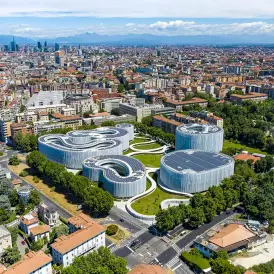
Explore Bocconi's visionary 2026–2030 Strategic Plan, aimed at bolstering executive leadership, management training, and global expansion.

HEC Paris unveils “Dare the Impossible,” a new brand signature highlighting innovation, leadership, and its vision for education in a rapidly changing world.
