
Eduniversal Best Masters 2026 in MBA full time in India
Rankings updated annually. Next full edition: September 2026.
In 2026, India’s full-time MBA sector showcases significant growth, rising international appeal, and ever-evolving tech curriculum adaptations. This comprehensive overview explores market trends, curriculum innovations, employability, and future outlook for MBA aspirants and educators alike.
Discover the Eduniversal Best Masters for MBA full time

India
India
India
India
India
India
India
India
India
India
Other programs ranked among master degrees Trempline Awards
Lebanon
Discover in detail the Master in MBA full time in India
Overview of India’s Full-Time MBA Landscape in 2026
The Indian full-time MBA market has experienced rapid evolution, marked by growing student demand, rising employability rates, and a curriculum increasingly focused on technology and sustainability. As of 2026, India is cementing its position as a global destination for advanced management education. This article presents a detailed assessment of the current state of MBA programs in India, covering market dynamics, curriculum trends, skills demand, institutional quality, accessibility, and future prospects.
Market Growth and Changing Demographics
The MBA education sector in India has seen robust growth in recent years. In 2026, the employability of MBA graduates reached an impressive 78%—up sharply from 47% in 2021. India continues to host hundreds of thousands of business and management Master’s students, reflecting steady growth fueled by industrial expansion and demand for managerial expertise.
Interestingly, this growth isn't limited to urban students. There's a rise in participation from tier-2 and tier-3 cities, alongside a modest increase in female representation.
Applications from international students rose by 26% in 2026 alone, signaling India's emergence as a management education hub. Strong macroeconomic forces—digital transformation, rising entrepreneurship, and sustainability initiatives—greatly contribute to this upward trend.
For those exploring focused fields like Entrepreneurship or Corporate social responsibility in India, India offers a fertile ground for aspirants to thrive and contribute.
Evolving Curriculum and Specialized MBA Domains
Indian MBA programs in 2026 are undergoing significant curriculum reform. Business schools are pivoting towards specialized, tech-integrated tracks, equipping students for real-world challenges. The trending MBA concentrations include Business Analytics, FinTech, Digital Marketing, Healthcare Management, Technology, and Environmental Sustainability. Programs increasingly embed AI, machine learning, blockchain, and advanced financial tools into their teaching methodologies.
The learning experience is becoming highly experiential with live simulations, incubators, internships, and sector-driven projects now central to the pedagogy. Many institutions are also implementing modular formats allowing stackable micro-credentials, promoting continuous learning and flexibility. Hybrid and AI-driven online delivery continues to reshape the MBA landscape in India.
Explore options related to Data analytics and Health Management for insights into these fast-rising domains.
Skills Development and Employability Surge
Indian MBA graduates are today better equipped than ever before. The industry is prioritizing a blend of technical, digital, and soft skills. High-demand competencies include digital fluency, data visualization using tools like Power BI and Tableau, leadership, negotiation, and sustainability literacy. Programs are increasingly focused on applied learning, ensuring graduates are 'job-ready' upon completion.
Top-tier institutes report near-perfect placement rates, with average starting packages ranging around ₹35 lakh, and high achievers commanding over ₹1.10 crore—especially in BFSI, consulting, IT services, and startups. Internships and apprenticeships are integral to the MBA journey, with many corporate partners offering rotational programs and pre-placement offers.
Those targeting roles in Consulting and Strategy or Financial Markets will find India’s contemporary MBAs aligned with global hiring standards.
Quality Assurance, Global Benchmarking, and Recognition
India’s full-time MBA programs are governed by quality and accreditation bodies such as AICTE and NBA. Greater alignment with global standards is being prioritized through international partnerships and benchmarking. This helps ensure wider recognition, portable credits, and global employability for Indian MBA graduates.
Favorable government policies further the appeal for international students. Visa reforms and geopolitical shifts have turned attention toward India as a cost-effective, stable, and globally integrated management education ecosystem. Student mobility is increasing, with many Indian MBA students securing internships and collaborative global projects across continents.
Consider pursuing globally recognized domains such as International Management or General Management to enhance international employability prospects.
Access, Tuition Costs, and Return on Investment
Tuition costs for full-time MBA programs in India span a broad spectrum, ranging from ₹5 lakh to ₹30 lakh, depending on factors including location, reputation, and school infrastructure. Scholarships, although limited, are increasingly supplemented by employer-sponsored programs as corporates align learning with workforce upskilling strategies.
The return on investment (ROI) has improved, especially from institutions reporting close to 100% placements. Yet, access remains limited for lower-income students, and affordability remains a barrier, potentially impeding equitable access to opportunity. Several public sector reforms are underway to expand eligibility for financial aid.
For aspirants considering hybrid or flex programs, the growing popularity of MBA part time formats offers a balanced alternative to manage costs and maintain career progression.
Competition and International Integration
Full-time MBAs in India are becoming increasingly competitive—not only domestically but on a global scale. International applicants are attracted by affordability, innovation, and the diversity of India’s market. Meanwhile, the outbound flow of Indian students is stabilizing as many prefer high-quality Indian MBAs or global collaborations.
Institutions are collaborating with foreign universities on dual-degree and global exchange programs, infusing global and local perspectives. EdTech partners are utilizing AI, AR/VR, and immersive learning innovations to enhance interactive pedagogy, which mirrors the shifts seen in global institutions. Aspirants interested in the intersect of business and tech may explore aligned fields like Energy and Natural Resources or Innovation Awards.
Key Challenges and Emerging Risks
Despite optimistic trends, the Indian MBA ecosystem faces several structural hurdles. High tuition costs hinder social mobility. Faculty shortages—especially in emerging domains like sustainability and AI—affect content delivery. Infrastructure gaps in rural or non-metro areas are hampering expansion, particularly for on-campus programs. Moreover, constant labor market transformation warrants dynamic and iterative curriculum updates to stay relevant.
The successful future of MBA education in India depends heavily on ongoing investment in tech infrastructure, faculty development, and inclusive education funding to scale impact without compromising quality.
The Road Ahead: Outlook 2026–2028
Between 2026 and 2028, India’s MBA landscape is expected to grow steadily, incorporating advanced fields like ESG, digital transformation, and AI-enabled learning. Emerging models will include sustainability-driven leadership courses, green business incubators, and AI-personalized adaptive curricula supporting lifelong learning.
Policy measures supporting innovation, digital infrastructure investment, and expanded funding could serve as catalysts for broader inclusion and global stature. Indian business education is likely to become increasingly interdisciplinary, ethical, and innovation-led—preparing graduates for 21st-century complexities.
For professionals and students ready to pivot into future-proof careers, exploring specialized areas like Sustainable Development or Leadership can offer impactful pathways aligned with global and local demands.
Latest news

Discover which business schools let you study in 3 different countries within a single degree. Compare ESCP, Skema, EM Normandie, and EDHEC on campus access, costs, and degree recognition.
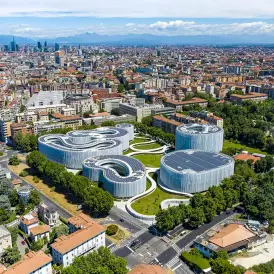
Explore Bocconi's visionary 2026–2030 Strategic Plan, aimed at bolstering executive leadership, management training, and global expansion.

HEC Paris unveils “Dare the Impossible,” a new brand signature highlighting innovation, leadership, and its vision for education in a rapidly changing world.
