Eduniversal Best Masters 2026 in Data analytics in South Korea
Rankings updated annually. Next full edition: March 2027.
This article provides a comprehensive overview of pursuing a Master's in Data Analytics in South Korea by 2026. It explores current market trends, curriculum evolution, skill demands, employability, regulatory landscape, funding options, and the outlook through 2028. Learn how South Korea is becoming a strategic hub for analytics education.
Discover the Eduniversal Best Masters for Data analytics

South Korea
South Korea
Discover in detail the Master in Data analytics in South Korea
Thinking about a Master’s in Data Analytics in South Korea? This guide explores the South Korean graduate education market, focusing on data analytics for 2026. It reveals academic trends, skills demanded by employers, tuition costs, job outcomes, and policy developments shaping this fast-growing field.
Market Context and Education Demand Growth
The South Korean graduate education sector continues its upward trajectory, with over 200,000 Master’s students annually and technology-focused disciplines like data analytics growing at a swift pace. Between 2020 and 2026, enrollment in analytics-related programs has seen annual growth of 10–15%—especially fueled by the nation's digital economy goals and AI innovation strategy.
Data analytics sits alongside other advanced fields like Cybersecurity and Big Data Management, riding South Korea’s strong public and private investment in these areas.
Key demographic insights:
- The student population is becoming younger and more digital-native, demanding dynamic, interdisciplinary learning.
- International students make up 15–20% of data-related Master’s programs in 2026, a number expected to rise with government-sponsored globalization efforts.
- Increased participation from women and mid-career professionals pursuing upskilling via evening or online learning formats.
South Korea’s position as a tech hub is further advanced by sustainability goals and ethical data-use regulation, invigorating the demand for analytics professionals with multidimensional expertise.
Curriculum Trends and Program Structure
By 2026, analytics Master’s programs in South Korea have matured beyond classical statistics and now feature cutting-edge specializations in:
- Natural Language Processing
- Predictive Analytics
- Machine Learning
- Sustainability and Data Ethics
Interdisciplinary education is fundamental, crossing areas such as computer science, business management, and engineering. Programs are increasingly project-based and emphasize experiential learning through partnerships with start-ups and multinational firms.
Flexibility in delivery formats is rising:
- Traditional face-to-face models remain prominent.
- Hybrid and online formats are gaining popularity due to the rise of micro-credentials and stackable certificates.
Similar approaches are also seen in growing interdisciplinary programs like Innovation and Project Management and Creativity & Design Thinking.
Graduate Skills and Industry Demand
A defining strength of South Korean data analytics graduates is their ability to bridge technical proficiency with essential soft skills. Top competencies sought by employers include:
- Statistical modeling
- Python and R programming
- Machine Learning methodology
- Data visualization and storyboarding
- Database architecture and querying
Just as important, transversal skills in communication, teamwork, and ethical computing are emphasized in both core coursework and internship experiences.
Graduates are primarily absorbed into industries such as finance, governance, health analytics, and ICT. Entry-level salaries fall between KRW 35–60 million (~$26,000–$45,000), competitive across East Asia. Like peers in Accounting or Health Management, analytics professionals can quickly scale with further credentialing.
Over 60% of analytics Master's candidates graduate with real-world capstone project or internship experience, significantly boosting employability.
Accreditation and International Recognition
Master's programs in South Korea are monitored by stringent national accrediting bodies, ensuring quality and alignment with the nation's industry needs. With compatibility to international standards like the Bologna Process, many universities participate in global exchange and dual-degree programs.
Visa and employment policies are evolving to support post-study work opportunities, especially for foreign students with STEM qualifications – a major incentive for international enrollees.
These measures help South Korea align competitively with countries offering strong programs in International Management and related fields.
Cost and Financial Accessibility
Tuition for Data Analytics Master’s programs in South Korea ranges between KRW 7 million and 15 million (approx. USD 5,000–11,500) per year, varying by institution and delivery format.
Despite concerns over affordability, financial support is increasing:
- University- or government-led scholarships
- Research assistantships
- Corporate sponsorships, especially from tech conglomerates
The strong ROI—as evidenced by the robust job market—makes these investments worthwhile, especially when compared to programs in Green Finance or Environmental Risk.
Global Landscape and Competitive Dynamics
South Korean institutions increasingly face both inbound competition from foreign joint degrees and outbound migration of domestic students. However, the trend is beginning to reverse due to improvements in local program quality, affordability, and global partner collaborations.
Factors enhancing South Korea's competitive edge include:
- Innovative cross-border initiatives (e.g., dual degrees)
- Online course integration from global universities
- Academic partnerships with EdTech platforms
This hybrid innovation model is also growing in fields like Entrepreneurship and Leadership.
Challenges and Forward Outlook (2026–2028)
Despite optimistic trends, the sector faces obstacles that could cap future potential if left unaddressed:
- Affordability limitations among underserved populations
- Faculty shortages in emerging AI and data science domains
- Infrastructure lags in university-level computing environments
However, several positive scenarios lay ahead:
- Strong policy reforms supporting AI, sustainability, and ethical data governance
- Greater personalization via micro-credentials and lifelong learning
- Elevated international partnerships and faculty exchange programs
South Korea’s Master’s market, particularly in data-driven disciplines, is attuned to innovation and geared toward global scalability. As demonstrated in sectors like Data Analytics, this foundation ensures that graduates are well-prepared to lead digital transformation across Asia and beyond.
Latest news

Discover which business schools let you study in 3 different countries within a single degree. Compare ESCP, Skema, EM Normandie, and EDHEC on campus access, costs, and degree recognition.
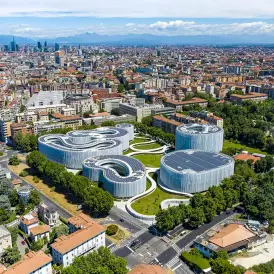
Explore Bocconi's visionary 2026–2030 Strategic Plan, aimed at bolstering executive leadership, management training, and global expansion.

HEC Paris unveils “Dare the Impossible,” a new brand signature highlighting innovation, leadership, and its vision for education in a rapidly changing world.
