
Eduniversal Best Masters 2026 in Accounting in Switzerland
Rankings updated annually. Next full edition: September 2026.
Explore the growing field of Master’s in Accounting in Switzerland in 2026 with this comprehensive SEO-optimized analysis. Discover current trends, demand drivers, skills in high demand, cost structures, and international competitiveness. Learn how the Swiss education system secures quality and prepares graduates for a tech-driven financial future.
Discover the Eduniversal Best Masters for Accounting

Switzerland
Switzerland
Switzerland
Discover in detail the Master in Accounting in Switzerland
Explore the evolving landscape of Master's in Accounting in Switzerland for 2026, analyzing its scale, educational trends, job relevance, and economic drivers. From curriculum innovation to employability and international appeal, this analytical overview equips prospective students and industry stakeholders with essential market insights.
Accounting Master’s in Switzerland: Market Size and Context
Switzerland maintains a respected position in global education, with 19% of young adults aged 25–34 having completed a master’s degree—surpassing the OECD average. Accounting degrees form a vital part of this landscape, particularly within master’s in business programs recognized for practical and market-relevant orientation.
Over the past 3–5 years, the market for accounting master’s programs has grown steadily. This has been catalyzed by Switzerland’s resilient economy and its central role in industries like banking and manufacturing, which need sophisticated accounting skills. Most students are domestic, but international enrollment is significant, especially given Switzerland’s strong position as a global finance hub.
Demographic shifts include a rising proportion of female students and increased cultural diversity. These changes mirror broader trends in international management and reflect the integration of global perspectives into accounting education.
Key macro trends include:
- Economic stability and innovation across high-value sectors.
- Strong compliance measures following global financial reforms.
- Increased demand for AI and tech-savvy accountancy skills.
- Non-financial disclosures aligned with sustainability frameworks.
- A stable political climate drawing cross-border talent and students.
Trends in Curriculum and Student Demand for 2026
The Swiss master’s curricula in accounting continue to evolve, integrating both core and emerging areas. While traditional disciplines such as financial accounting and audit remain foundational, new streams are capturing attention.
Trending specialization areas: forensic auditing, big data integration, AI applications in accounting, and environmental accounting. These evolutions reflect trends similar to those seen in data analytics and sustainability programs.
Programs now emphasize interdisciplinary inputs—blending legal, tech, and statistical learning. Most institutions adopt experiential formats like capstone projects and internships, embedding real-world learning heavily into the academic experience.
Other curriculum innovations include:
- Modular tracks and micro-credentialing (digital badges)
- Integration of lifelong learning and professional pivots
- Blended delivery combining face-to-face sessions and digital components
Accountancy Skills and Graduate Employability
Employers in industries such as banking, consulting, and fintech are seeking robust technical skills alongside key soft skills:
Technical expertise: IFRS, Swiss GAAP, tax compliance, data platforms, automated analytics, and sustainability reporting frameworks.
Transversal capabilities: critical reasoning, communication, ethical leadership, and agile learning—traits increasingly emphasized in general management programs.
Graduates from Swiss accountancy master’s programs are highly employable, often securing roles as:
- Financial and forensic analysts
- Controllers and compliance managers
- Auditors and AI-integrated systems advisors
Sustainability governance and finance are emerging frontiers, expanding job opportunities in ESG and impact measurement.
Salaries range between CHF 75,000 to 110,000 for early-career professionals. Employer-linked internships provide a real stepping-stone to permanent positions, especially in firms collaborating through industry-university partnerships.
Quality Assurance and Global Recognition
Switzerland’s higher education system deploys a high-standard accreditation framework across cantonal and federal lines. Accounting master’s programs are further enhanced by alignment with the Bologna Process, boosting recognition across Europe and enabling seamless credit transfer and comparison.
Students from globally recognized institutions benefit from easier post-study visa and residency options. Those interested in career mobility gain exposure to international content and multilingual instruction, comparable to graduates of high-ranking MBA programs.
Costs, Scholarships, and Return on Investment
Swiss public institutions are known for relatively low tuition, especially for local students:
- Annual fees for domestic students: ~USD 1,400 (CHF ~1,500)
- For international students: ~USD 3,200 (CHF ~3,300)
Funding support is available through scholarship programs and federal aid. Switzerland’s well-connected corporate sector also supports employer sponsorships. The overall ROI remains positive, with high salaries offsetting moderate education investment.
This affordability, paired with excellent employability prospects, makes the Swiss accounting track competitive with programs in areas such as taxation and corporate finance.
International Positioning and Competitive Dynamics
Swiss accounting master’s programs draw heavy participation from international students, especially from EU nations. The shared appeal lies in Switzerland’s financial leadership, multilingual environment, and international recognition of academic credentials.
The demand for cross-border qualifications has led to:
- Growing dual-degree collaborations
- Industry-coordinated global internships
- Hybrid platforms supported by international EdTech partners
Ongoing collaborations resemble developments seen in the innovation and project management sector, where global reach and tech-forward delivery modes are key success factors.
Risks and Strategic Challenges Ahead
Despite strong fundamentals, some challenges bear watching:
- Affordability issues for students from certain regions with weak currency exchange ratios.
- Shortage of tech-savvy faculty to support AI- and analytics-heavy subjects.
- Infrastructural constraints among smaller institutions.
- Ensuring timely updates in curricula to reflect fast-moving regulatory standards.
- Further investment needed in research capabilities for accounting innovation.
Strategic steps will be required to maintain relevance on both the academic and employer fronts and compete with other specialized domains like big data management.
2026–2028 Outlook for Swiss Master’s in Accounting
Looking ahead, growth in enrollment is expected to continue steadily due to:
- High market demand for digitally skilled accountants
- Curriculum innovations including sustainability and AI integration
- Expanded credentialing models governing life-long learning and modular certification
- Deeper partnerships with industry powering both research and graduate placements
- Visa and work policy shifts potentially favoring international students
In this context, Swiss accounting education aligns strongly with broader education trends around green finance, governance, and data-driven performance auditing—all of which will define the accountant’s role in the next decade.
Latest news

Discover which business schools let you study in 3 different countries within a single degree. Compare ESCP, Skema, EM Normandie, and EDHEC on campus access, costs, and degree recognition.
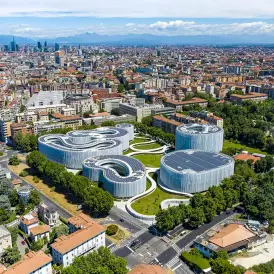
Explore Bocconi's visionary 2026–2030 Strategic Plan, aimed at bolstering executive leadership, management training, and global expansion.
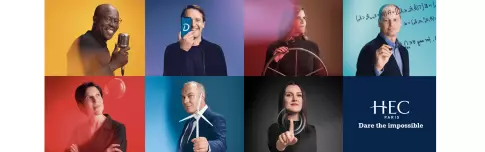
HEC Paris unveils “Dare the Impossible,” a new brand signature highlighting innovation, leadership, and its vision for education in a rapidly changing world.
