
Eduniversal Best Masters 2026 in International Management in Taiwan Region, China
Rankings updated annually. Next full edition: March 2027.
Get a concise 2026 snapshot of studying for a Master’s in International Management in Taiwan. This guide explores shifts in market demand, recent changes to programme content, graduate career prospects, quality assurance mechanisms, and Taiwan’s standing in the global education arena. It also offers practical information on tuition, funding possibilities, and the main opportunities available to both students and mid-career professionals.
Discover the Eduniversal Best Masters for International Management

Taiwan Region, China
Taiwan Region, China
Other programs ranked among master degrees Launching Awards
France
Other programs ranked among master degrees Trempline Awards
Lebanon
Discover in detail the Master in International Management in Taiwan Region, China
Summary:
Explore the comprehensive 2026 guide to pursuing a Master's in International Management in Taiwan. Learn about market trends, curriculum updates, employment outlook, quality assurance, and how Taiwan compares globally. Find insights into tuition, funding, and key opportunities for students and professionals alike.
Market Context and Sector Growth
Taiwan’s higher education system has experienced a strong post-pandemic resurgence. In 2024, the number of international students reached 123,190—a five-year high, reflecting a growth of over 7% from 2023. This rebound places enrollments near the historical peak of 130,000 seen in 2019.
The Taiwanese government has set an ambitious target: reaching 320,000 international students by 2030, with an added emphasis on integrating graduates into the local workforce. International management programs are poised to be a leading contributor to this growth.
Although specific numbers are unavailable for this field, business and management remain among the top disciplines for both domestic and international students.
The top source countries for foreign enrollees are Malaysia, Indonesia, and Vietnam, collectively comprising 76% of the total international student population. This shift underscores Taiwan’s strategic recruitment across Southeast Asia, where proximity and cultural affinity play influential roles.
Sector-wide diversity is deepening; more students now come from South and Southeast Asia, alongside a notable increase in mid-career professionals looking to upskill for better employment prospects.
Moreover, Taiwan's powerful tech and manufacturing base, combined with favorable immigration and employment policies, creates a fertile landscape for global talent.
Taiwan’s focus areas align with key economic and education trends, drawing attention to Supply Chain and Logistics and digital innovation.
Curriculum Evolution and Learning Trends
The evolution of international management education in Taiwan is geared toward deeper global insights and localized application. In-demand program themes for 2026 include global supply chain management, digital transformation, sustainability, and multicultural leadership development.
Modern curricula are increasingly interdisciplinary. Institutions blend core management studies with analytics, AI integration, and sustainable practices.
These academic advances mirror industry expectations and are reflected in the growing availability of hybrid courses, AI-product pathways, and performance-based micro-credentials.
Most programs incorporate capstone projects, consultancies, internships, or corporate collaborations. These practical components equip students with real-world frameworks and the chance to contribute directly within local and multinational environments.
Learning delivery is becoming flexible. On-campus remains the standard, but hybrid and online alternatives are gaining momentum, particularly among working professionals. Modular and stackable pathways now allow students to incrementally work toward degrees over time.
For learners eager to align their education with impactful sectors such as data and environment, Taiwan offers integration similar to programs in Sustainable Development and E-Business and Digital Marketing.
Career Outcomes and Skills Development
Graduates of international management programs in Taiwan are well-positioned in a job market that values both technical expertise and soft skills. Technical capabilities such as data analytics, digital marketing, supply chain optimization, and financial modeling are in high demand. Alongside these, companies seek strategic competencies like adaptability, problem-solving, and leadership.
Industries absorbing these graduates include multinational corporations, innovative startups, financial institutions, and Taiwan’s robust tech and manufacturing sectors.
Prominent roles pursued by graduates involve business consulting, project/operations management, and entrepreneurship—roles that often intersect with sectors like sustainability, innovation, and Corporate Strategy.
Annual starting salaries generally range between NT$600,000 and NT$800,000 (USD 19,000–25,000), with mid-level professionals earning up to NT$1,500,000 (USD 47,000). Many universities now integrate internships into the core curriculum, fostering both experience and professional network growth before graduation.
Regulatory Landscape and Global Recognition
Quality assurance in Taiwan’s higher education is governed by rigorous national standards. Many institutions achieve additional prestige through global business school accreditations such as AACSB, EQUIS, and AMBA.
Graduates benefit from strong international recognition. Credit systems are increasingly compatible with foreign institutions, and the degrees themselves are accepted globally. Policy changes are making it easier for international students to transition into the local workforce post-graduation, supporting the government’s goal of retaining two-thirds of all foreign graduates by 2030.
Visa reforms, evolving residency standards, and improved career pathways are enhancing Taiwan’s appeal within the competitive landscape of Asia’s education hubs.
Fields focusing on organizational leadership and innovation, such as Innovation & Project Management, increasingly intersect with international management offerings in Taiwan.
Cost Considerations and Funding Options
Tuition for international management master’s programs in Taiwan typically ranges between NT$120,000 and NT$250,000 per year (USD 3,800–7,900)—making them more affordable than comparable programs in many Western countries.
This affordability, combined with Taiwan’s relatively low cost of living, makes for a strong return on investment. Financial support is available through national scholarships and university grants. Merit-based aid is common, while employer-sponsored education is growing in popularity among mid-career applicants.
The affordability edge positions Taiwan advantageously alongside options in sectors like Economics and Marketing, which also emphasize global relevance and employability.
Competitive Advantage and International Partnerships
Despite stiff competition from other regional education hubs like Hong Kong, South Korea, and Singapore, Taiwan stands out due to its political stability, industry linkages, and geographic proximity to talent-rich Southeast Asia.
Inbound student flows are on the rise and accompanied by rising interest in dual-degree and cross-border academic partnerships, many of which include European and North American institutions. Institutions in Taiwan are increasingly adopting edtech solutions and launching digital credentials alongside their degree programs, further widening access and visibility.
Cross-institutional alliances in digital law, analytics, and international administration mirror Taiwan’s broader push into global education leadership.
Fields like International Management in Taiwan are particularly benefiting from this integration, offering globally-informed programs anchored in practical, local insight.
Risks and Areas for Improvement
While Taiwan is an attractive study destination, certain challenges persist. These include cost of living concerns in major cities like Taipei, increased global competition for international students, and the need to enhance faculty development and research infrastructure.
Uneven technological adoption between institutions also limits the consistency of digital learning experiences. Furthermore, schools must stay synchronized with evolving labor market expectations to ensure graduates remain employable.
Areas such as Data Analytics and Health Management can serve as benchmarks for innovation in complementary programs.
Forecast and Strategic Moves (2026–2028)
Looking ahead, Taiwan is primed for further transformation in its international management education sector. Key developments to expect include increased integration of AI and analytics across curricula, continued growth in dual-degree and global partnerships, and the expansion of digital platforms and micro-credential options.
Government policies are expected to keep evolving, particularly around residency pathways, scholarships, and employer-sponsored education opportunities.
These policy directions will bolster Taiwan's positioning in Asia-Pacific and increase its attractiveness to international talent.
Emerging domains such as Green Finance and sustainable innovation present strong synergy opportunities across academic and corporate sectors.
Latest news

Discover which business schools let you study in 3 different countries within a single degree. Compare ESCP, Skema, EM Normandie, and EDHEC on campus access, costs, and degree recognition.
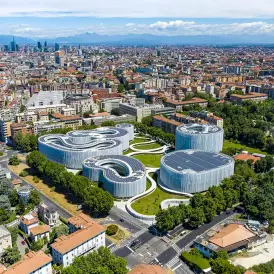
Explore Bocconi's visionary 2026–2030 Strategic Plan, aimed at bolstering executive leadership, management training, and global expansion.

HEC Paris unveils “Dare the Impossible,” a new brand signature highlighting innovation, leadership, and its vision for education in a rapidly changing world.
