Eduniversal Best Masters 2026 in Accounting in Ireland
Rankings updated annually. Next full edition: March 2027.
Explore an in-depth analysis of Master’s in Accounting programmes in Ireland in 2026. This article covers market trends, curriculum updates, employability factors, tuition costs, and global opportunities, providing insights for prospective students and academics. Discover how Ireland is shaping future-ready accounting professionals in a digitally transforming economy.
Discover the Eduniversal Best Masters for Accounting

Ireland
Ireland
Ireland
Discover in detail the Master in Accounting in Ireland
Explore an in-depth analysis of Master’s in Accounting programmes in Ireland in 2026. This article covers market trends, curriculum updates, employability factors, tuition costs, and global opportunities, providing insights for prospective students and academics. Discover how Ireland is shaping future-ready accounting professionals in a digitally transforming economy.
Market Landscape and Educational Context
Ireland boasts a robust higher education system with consistent demand for postgraduate business programmes, especially in accounting. In 2024, 11.3% of higher education students pursued taught Master’s degrees. While precise figures for accounting are undetailed, programmes typically accommodate 25–30 students, with over 20 institutions offering master’s level study in the field across the country.
Approximately 12% of Ireland’s student population comprises international learners—an increase from 9.6% in 2018—driven by the country’s English-speaking environment, economic vitality, and global recognition across finance disciplines. With 21% of 25–34 year-olds holding a Master’s degree (surpassing OECD averages), Ireland stands out as a highly educated market for professional studies.
Key drivers influencing growth include the digital transformation of the corporate world, significant regulatory evolution (such as ESG reporting), a nationwide skills shortage in accounting analytics and ICT, and broader EU regulatory integration. These forces push universities to continually revise curricula to meet future professional requirements and global business demands.
Prospective students interested in strategic business outcomes might also explore related domains such as Accounting or Consulting and Strategy.
Curriculum Trends and Emerging Specializations
Accounting Master’s programmes in Ireland are progressively integrating cross-disciplinary themes such as analytics, sustainability, and AI-driven financial modeling. The contemporary curriculum prioritizes intersections between accounting and big data, offering specializations like:
- Forensic accounting
- ESG and sustainability reporting
- Financial analytics using AI
- Cloud-based digital finance transformation
Experiential learning remains a vibrant pillar of programme delivery. Students often engage in internships, workshops, and real-world capstone projects linked directly to industry needs. Innovative models like stackable micro-credentials are beginning to appear—allowing learners flexibility in customizing qualification pathways geared toward lifelong learning.
While traditional on-campus instruction remains common, hybrid formats have gained traction, enhancing accessibility and engagement for both domestic and international students. Related programmes that emphasize such interdisciplinary development include Data Analytics and Sustainable Development.
Graduate Skills and Market Employability
Employers in Irish accounting firms, financial institutions, and multinational corporations increasingly demand hybrid skill profiles. These broadly include:
- Technical competencies: Taxation, auditing, ESG compliance, financial analytics, forensic accounting
- Digital fluency: AI-enabled auditing tools, cloud accounting systems
- Soft skills: Communication, ethical reasoning, agility in regulation-heavy environments
Graduates pursue careers in audit, financial consultancy, taxation, and management accounting. A growing contingent enters data-related finance roles. An estimated 80% advance into training contracts with reputed bodies like Chartered Accountants Ireland (CAI), which significantly boosts employability and global mobility.
Given Ireland’s alignment with international standards and emphasis on professional accreditations, students are well prepared for cross-border roles. Tangential fields such as Corporate Finance and Financial Markets also benefit from Ireland’s analytical workforce pipeline.
Regulation, Recognition, and Quality Assurance
The structure and quality of Ireland’s higher education are regulated by Quality and Qualifications Ireland (QQI), ensuring consistent academic standards. Most accounting Master’s programmes hold professional accreditations recognized throughout the EU and often globally, including those from ACCA, CIMA, and CAI.
This ecosystem supports synergies between academia and industry, encouraging mutually beneficial partnerships. Additionally, the Irish government supports student employment via generous graduate visa policies, allowing international students time to find relevant work after course completion.
Those exploring legal or regulatory crossovers might find value in programmes in International Business Law or Digital Technologies Law.
Tuition, Access, and Funding Opportunities
Tuition for accounting Master’s degrees in Ireland varies depending on the institution type and specialization. Standard fee ranges include:
- Public universities: €7,000–€12,000 per year
- Specialized/private schools: Up to €15,000–€20,000 per year
To alleviate financial barriers, students can access a variety of support mechanisms, including scholarships, bursaries, and even employer partnerships. These models reflect labor market efforts to incentivize retraining and professional development.
The return on investment remains attractive due to fast-track employability, integrated professional qualifications, and meaningful internship opportunities embedded in curricula. Similar affordability-to-value ratios can often be found in programmes such as MBA full time.
Global Competition and International Reach
Irish universities operate in a globally competitive landscape but also maintain academic collaboration across borders. Institutions in Ireland often forge student exchange and joint-degree agreements with top schools across the UK and EU.
Inbound international student numbers continue to grow, lured by global financial connections, English language delivery, and the country’s innovation-friendly economy. In tandem, EdTech platforms facilitate expanded reach, especially in delivering hybrid content for lifelong learners and mid-career professionals.
Students interested in deeper global integration might also consider related programmes in International Management.
Industry Challenges and Strategic Risks
Ireland’s accounting education ecosystem faces several structural and operational challenges, including:
- Escalating tuition and cost-of-living burdens for students
- Shortage of faculty with interdisciplinary expertise (especially data analytics and ESG)
- Institutional gaps in adopting AI, cloud, and digital-first tools across all programmes
- Lag between curriculum development and fast-evolving industry priorities (particularly digital finance and sustainability)
To mitigate these risks, universities are increasingly advised to deepen dialogue with enterprise stakeholders and policymakers. Building robust, digitized infrastructure will be essential to future-proof Irish Master’s offerings within competitive fields like Innovation and Project Management.
Future Outlook: 2026–2028
Forecasts for the accounting Master’s market in Ireland suggest gradual yet consistent expansion. The outlook is driven by:
- Continued sector growth (financial services, tech, and sustainable enterprise)
- Growing international student demand aligned with favorable visa options
- Policy enhancements under frameworks like Ireland’s National Skills Strategy 2026
Upside scenarios envision broader use of AI in coursework, expansion of modular learning, and strategic industry integration. Monitoring new standards—especially related to ESG and EU finance disclosures—will be critical in staying relevant and ahead of the curve.
The capacity of Ireland’s education system to nurture leaders in finance, technology, and governance is well represented in categories including Leadership and Environmental Risk and Security.
Latest news

Discover which business schools let you study in 3 different countries within a single degree. Compare ESCP, Skema, EM Normandie, and EDHEC on campus access, costs, and degree recognition.
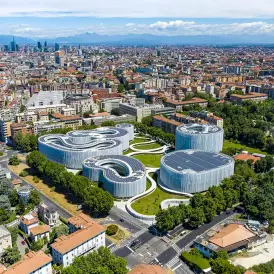
Explore Bocconi's visionary 2026–2030 Strategic Plan, aimed at bolstering executive leadership, management training, and global expansion.

HEC Paris unveils “Dare the Impossible,” a new brand signature highlighting innovation, leadership, and its vision for education in a rapidly changing world.
